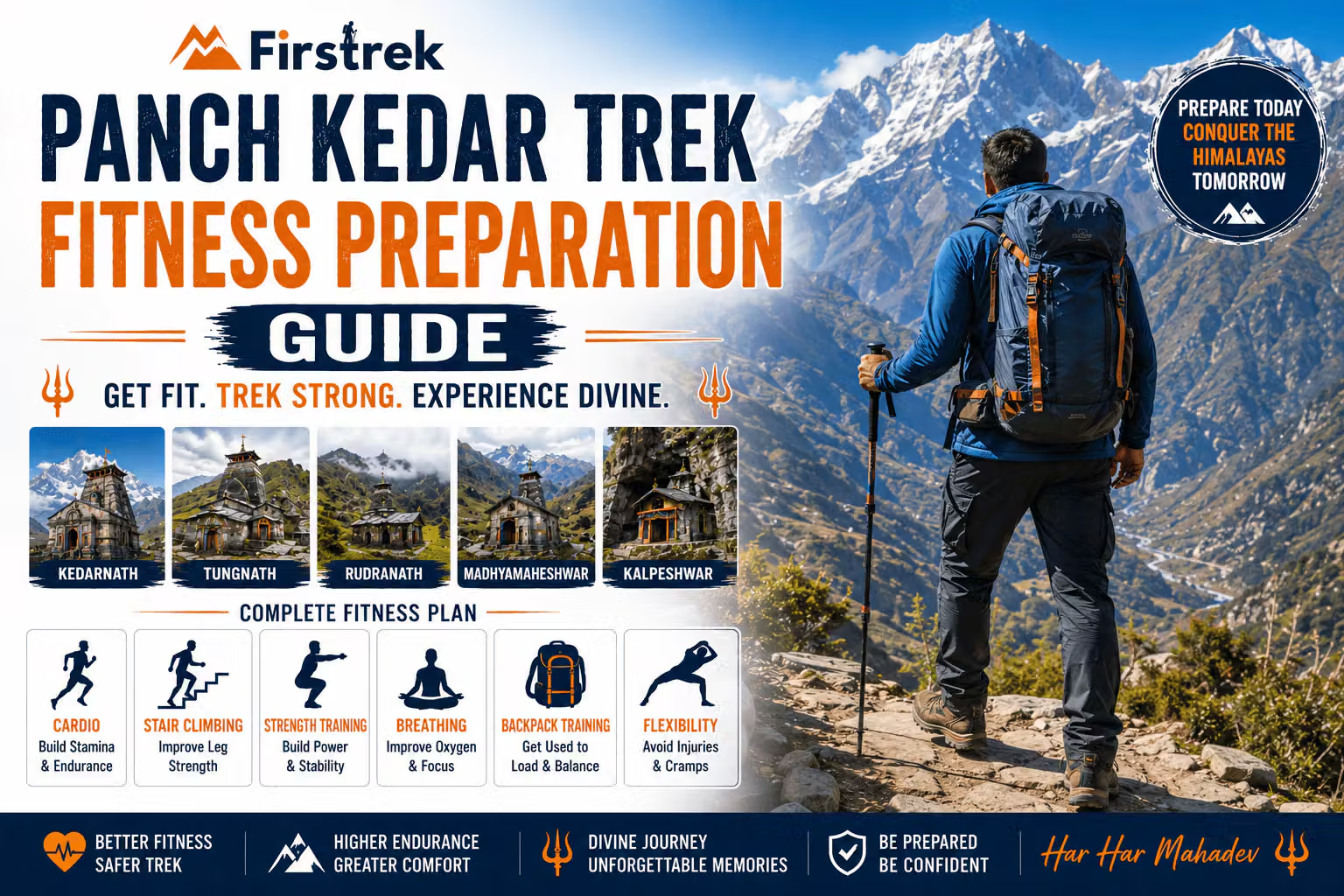
The Panch Kedar Trek is not just a spiritual journey — it is a true Himalayan adventure that tests your stamina, patience, and mental strength. Many people dream of completing all five sacred Kedars, but one of the biggest mistakes travellers make is ignoring fitness preparation before the trek.
The truth is simple: You do not need to be an athlete to complete Panch Kedar, but basic fitness preparation is extremely important.
The journey includes:
- Long trekking hours
- Steep ascents
- Rocky Mountain trails
- High altitude walking
- Sudden weather changes
Proper preparation can make your trek safer, easier, and much more enjoyable.
In this guide, we will cover everything you need to know about Panch Kedar Trek fitness preparation — especially for beginners.
Why Fitness Matters in the Panch Kedar Trek
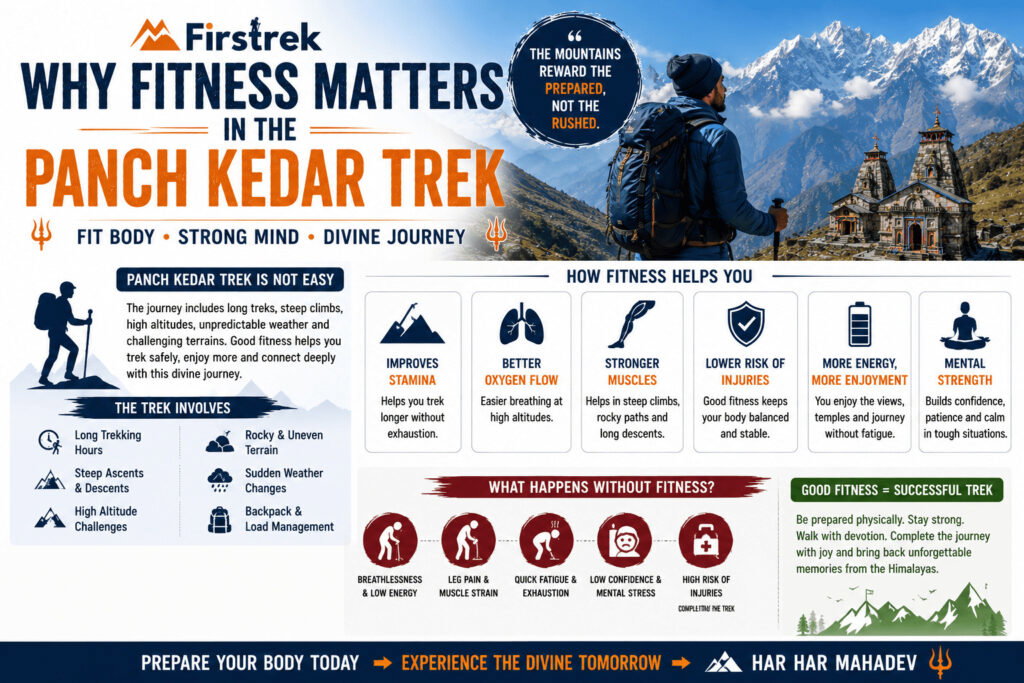
Unlike normal vacations, Panch Kedar involves continuous trekking across the Himalayas.
The routes to:
- Kedarnath Temple
- Rudranath Temple
- Madhyamaheshwar Temple
require stamina and endurance.
Without preparation, travellers often face:
- Breathlessness
- Leg pain
- Fatigue
- Low energy
- Difficulty walking uphill
Fitness training helps your body adapt better to mountain conditions.
Is Panch Kedar Trek Difficult?
The Panch Kedar Trek is generally considered:
| Difficulty Level | Trek Type |
|---|---|
| Moderate to Difficult | High Altitude Himalayan Trek |
Some sections are beginner-friendly, while others are physically demanding.
You might be interested in these treks
Roopkund Trek
₹15,500
Hampta Pass Trek
₹7,500

Ranthan Kharak Trek
₹9,500
Kagbhusandi Lake Trek
₹29,500
Bhrigu Lake Trek
₹8,599
Difficulty Level of Each Panch Kedar Trek
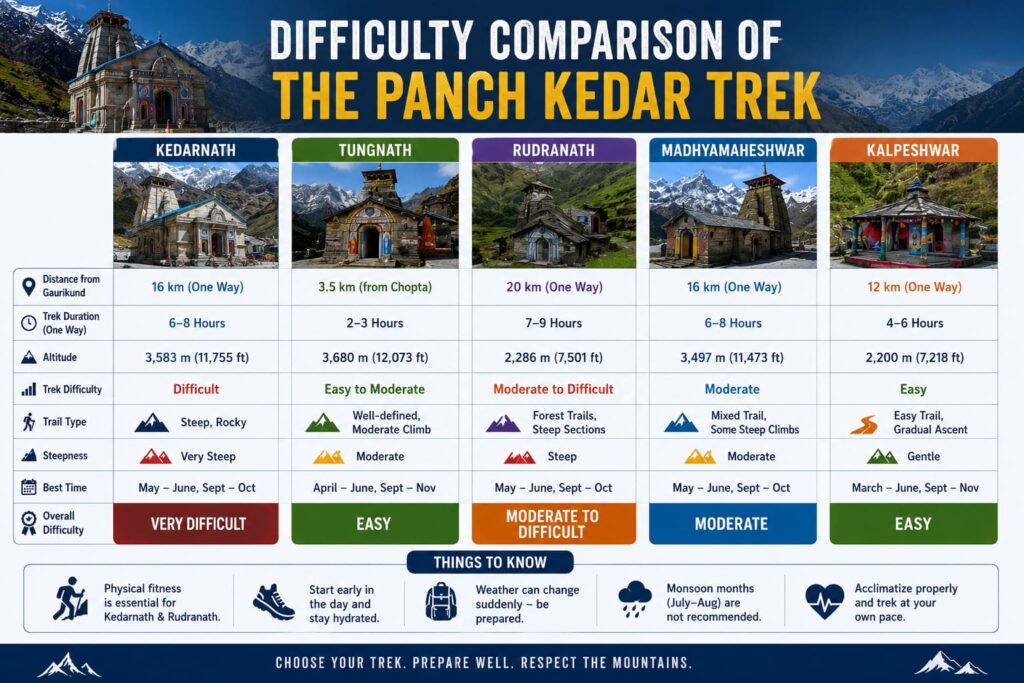
| Temple | Difficulty Level | Suitable For |
|---|---|---|
| Kalpeshwar Temple | Easy | Beginners & Families |
| Tungnath Temple | Easy to Moderate | First-time Trekkers |
| Kedarnath Temple | Moderate | Beginners with fitness |
| Madhyamaheshwar Temple | Moderate | Active trekkers |
| Rudranath Temple | Difficult | Experienced trekkers |
Rudranath especially requires strong stamina because of long trekking hours and steep climbs.
How Early Should You Start Preparation?
The earlier you start, the easier your trek becomes. Ideally, start preparing at least before weeks ago, check below recomended time:
Recommended Preparation Time
| Fitness Level | Preparation Duration |
|---|---|
| Beginner | 6–8 Weeks |
| Average Active Person | 4–6 Weeks |
| Experienced Trekker | 2–3 Weeks |
Main Fitness Areas to Focus On
Preparing for Panch Kedar is not only about walking.
You should focus on:
- Stamina
- Leg strength
- Breathing control
- Endurance
- Recovery
1. Walking Practice
Walking is the most important part of preparation.
Daily Walking Target
| Week | Walking Goal |
|---|---|
| Week 1 | 3–4 km daily |
| Week 2 | 5 km daily |
| Week 3–4 | 6–8 km daily |
| Final Weeks | 8–10 km with incline/stairs |
Try walking on:
- Slopes
- Inclined roads
- Staircases
This helps simulate mountain trekking.
2. Stair Climbing Practice
Mountain trekking mostly involves uphill climbing.
Stair practice improves:
- Leg strength
- Lung capacity
- Endurance
Recommended Stair Training
| Activity | Target |
|---|---|
| Stair Climbing | 15–30 minutes daily |
| Rest Breaks | Minimal |
| Backpack Training | Optional after Week 3 |
If possible, practice while carrying a small backpack.
You might be interested in these yatras

3. Cardio Exercises
Cardio training improves stamina and breathing during high-altitude trekking. Do cardio at least 4–5 days per week.
Best Cardio Exercises
| Exercise | Duration |
|---|---|
| Jogging | 20–30 mins |
| Cycling | 30 mins |
| Fast Walking | 45 mins |
| Jump Rope | 10–15 mins |
4. Leg Strength Training
Strong legs reduce trekking fatigue significantly. Strong legs help during: Continuous uphill sections, Long descents, Rocky trails.
Recommended Leg Exercises
| Exercise | Repetitions |
|---|---|
| Squats | 15–20 |
| Lunges | 15 each leg |
| Step-Ups | 20 |
| Wall Sit | 30–60 seconds |
5. Breathing & Oxygen Training
High altitude trekking becomes difficult mainly because oxygen levels decrease. Practice for 10–15 minutes daily. Breathing exercises improve lung efficiency.
Helpful Breathing Exercises
| Exercise | Benefit |
|---|---|
| Deep Breathing | Better oxygen intake |
| Pranayama | Lung strength |
| Anulom Vilom | Breathing control |
| Meditation | Mental calmness |
6. Backpack Training
Many people underestimate backpack weight during trekking. Even a 5–7 kg backpack can feel heavy after long hours.
Backpack Practice Tips
- Start walking with light weight
- Gradually increase the load
- Practice balance while climbing stairs
This helps your shoulders and back adapt before the trek.
Best Diet Before Panch Kedar Trek
Your body needs proper nutrition for trekking preparation.
Recommended Foods
| Food Type | Benefit |
|---|---|
| Fruits | Energy & hydration |
| Protein | Muscle recovery |
| Dry Fruits | Long-lasting energy |
| Water | Hydration |
| Green Vegetables | Stamina support |
Avoid:
- Excess junk food
- Smoking
- Alcohol before the trek
Mental Preparation is Equally Important
The Himalayas test mental strength as much as physical fitness.
Sometimes:
- The weather changes suddenly
- Trekking becomes exhausting
- Routes feel long
- Cold temperatures affect energy
A calm mindset helps you handle challenges better.
Common Mistakes Beginners Make
1. No Fitness Training
The biggest mistake is starting the trek without preparation.
2. Overpacking
Heavy backpacks increase exhaustion.
3. Walking Too Fast
Mountain trekking is about slow and steady movement.
4. Ignoring Hydration
Dehydration increases fatigue and altitude problems.
Can Beginners Complete the Panch Kedar Trek?
Yes, absolutely. Many first-time trekkers successfully complete Panch Kedar every year. You do not need professional trekking experience with:
- Basic fitness
- Proper preparation
- Good shoes
- Positive mindset
The trek becomes manageable and enjoyable.
Recommended Fitness Checklist Before Trek
Before starting the Panch Kedar Yatra, try achieving this basic level:
| Fitness Goal | Target |
|---|---|
| Walking | 8 km comfortably |
| Stair Climbing | 20 mins nonstop |
| Jogging | 2–3 km comfortably |
| Backpack Carrying | 5 kg comfortably |
| Recovery Time | Quick breathing recovery |
If you can comfortably do these activities, you are reasonably prepared for the trek.
Final Thoughts
The Panch Kedar Trek is not only about reaching temples — it is about experiencing the Himalayas with strength, patience, and devotion. Good fitness preparation helps you:
- Enjoy the journey more
- Reduce exhaustion
- Trek safely
- Stay energetic
- Handle altitude better
The mountains reward prepared travellers. Train your body, stay disciplined, and walk into the Himalayas with confidence. The experience of completing Panch Kedar is truly something you carry for life.