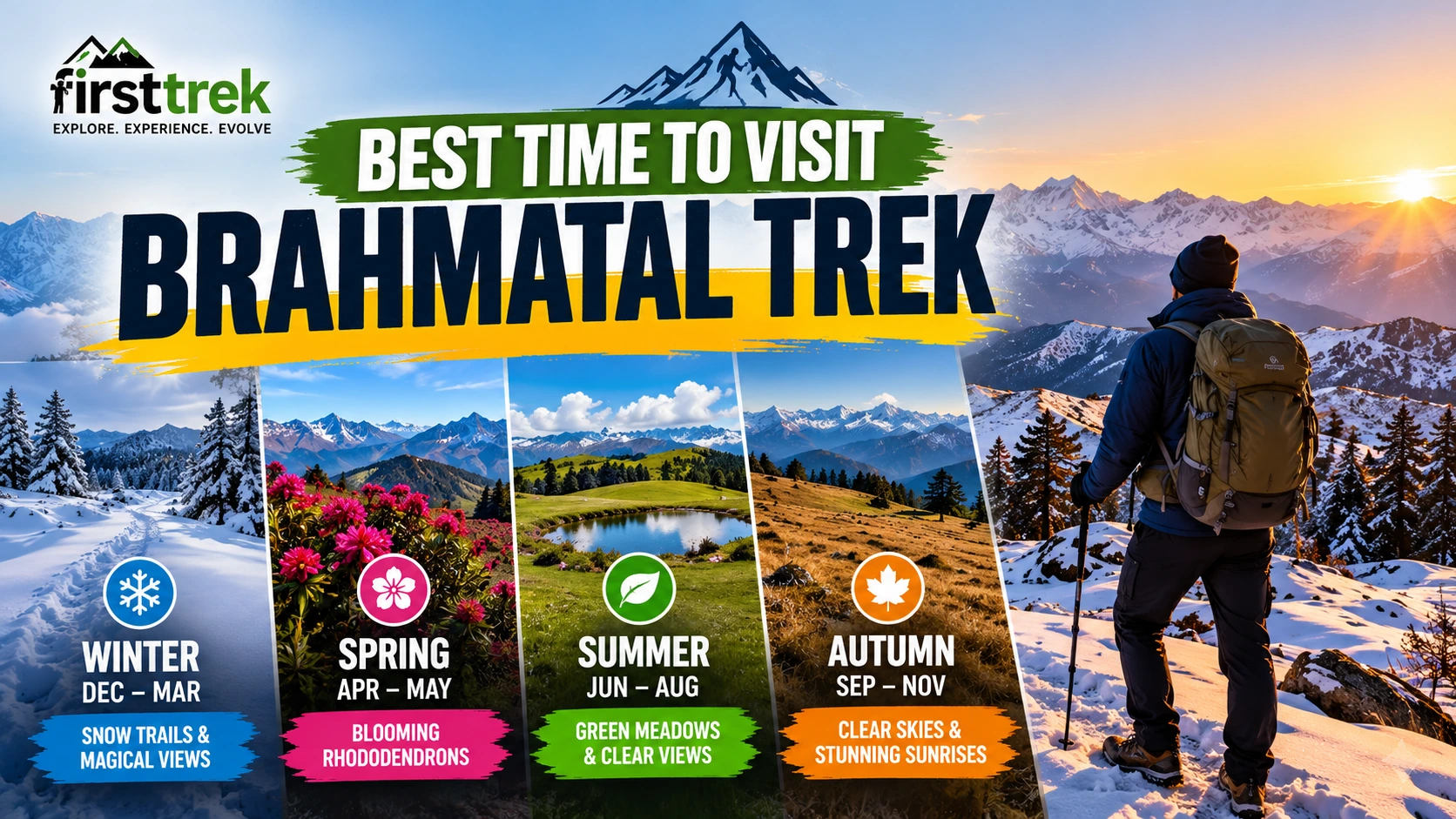
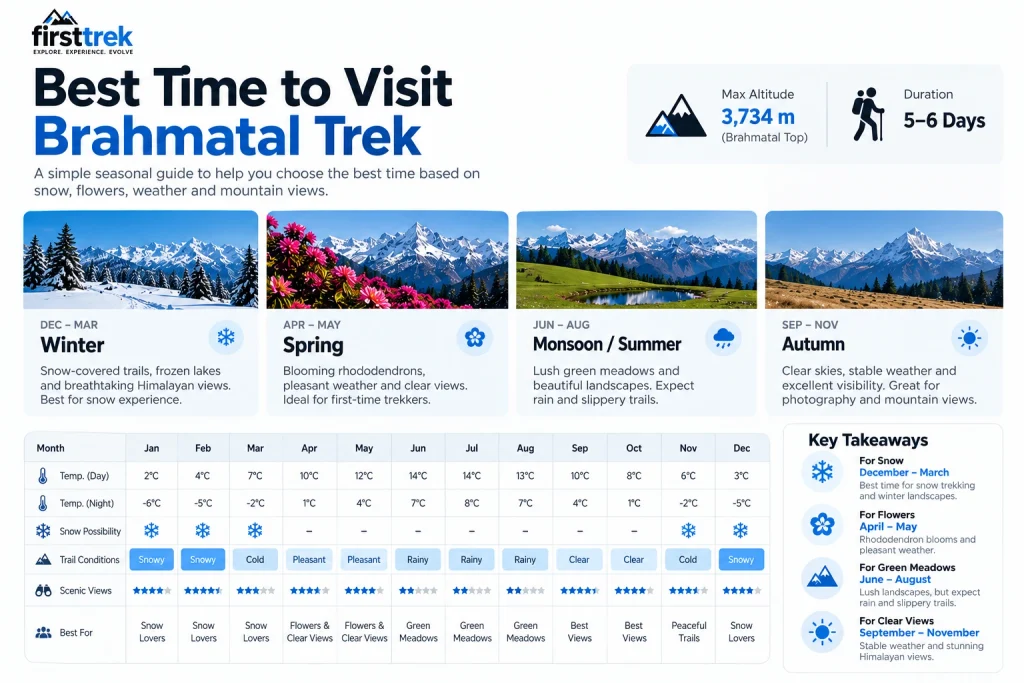
Brahmatal is famous as a winter trek, but it is not only a winter trek. The right month depends on what you want
to see: frozen lakes and a snowy ridge, green forests, or crisp, clear mountain views. Here is a month-by-month
guide, written from what we actually see on the trail
The short answer
For snow, plan for December to March. For fewer clouds and warmer days, choose April to June or September to
October. July and August bring heavy rain and landslide risk on the approach road, and we advise against them.
December
Cold, clear and usually the start of real winter snow. Early December can be dry on the lower trail, with snow
arriving higher up and more consistently from mid month. Bekaltal and Brahmatal Lake begin to freeze. Crowds
are light compared with other popular winter treks.
January
The heart of winter. Expect deep snow on the upper trail, frozen lakes and the coldest nights of the season, often
well below freezing at Tilandi and Brahmatal. This is the best month for the classic white-landscape experience. It
is also the month that demands the best gear.
You might be interested in these treks
Roopkund Trek
₹15,500
Hampta Pass Trek
₹7,500
Ranthan Kharak Trek
₹9,500
Kagbhusandi Lake Trek
₹29,500
Bhrigu Lake Trek
₹8,599
February
Still snowy and cold, with slightly longer days and often better visibility. Many trekkers consider February the
sweet spot: dependable snow, frozen lakes and clear panoramas of Trishul and Nanda Ghunti.
March
Snow lingers on the upper trail while the lower forest starts to thaw. Days are warmer, nights remain cold and
the lakes begin to open up. A good choice if you want snow without the deepest cold of January.
April to June
The snow is mostly gone, replaced by green forest, rhododendron bloom in spring and open ridges with long
views. Daytime temperatures are pleasant and nights are cool rather than freezing. It is a different and equally
rewarding trek, especially if you dislike the cold.
July and August
Monsoon. Heavy rain, slippery trails, leeches in the lower forest and a real risk of landslides on the roads to
Lohajung. We do not recommend trekking here in these months.
You might be interested in these yatras

September and October
Post-monsoon is clear, crisp and beautiful. The air is washed clean, the forests are lush and the views of the high
Himalaya are at their sharpest. Snow returns to the upper trail in late October. A good option for photographers
who want clear skies without the full winter cold.
Month-by-month at a glance
- Dec: Cold, clear, snow arriving. Fewer crowds.
- Jan: Deepest snow and coldest nights. Peak winter.
- Feb: Dependable snow with clearer views.
- Mar: Snow on the upper trail, warmer days.
- Apr to Jun: Green forests, mild days, no snow.
- Jul to Aug: Monsoon. Not recommended.
- Sep to Oct: Clear skies and crisp views.
- Nov: Cold and dry, with early snow at the top.
Will the lakes be frozen?
Bekaltal and Brahmatal Lake usually freeze over through the deep winter months. Exactly when depends on the
year. A cold January is the best bet, and a dry, warm winter can leave the ice thin or patchy. We would never
promise a frozen lake on a specific date, and you should be wary of anyone who does.
How to choose your dates
If you want deep snow and the full winter experience, choose late December to February and bring serious coldweather gear. If you want snow with a little less cold, go in March. If you want clear views and mild weather,
choose spring or autumn. And whichever season you pick, book early, since the best dates fill first.
Temperatures to expect in winter
These are rough ranges to help you pack, not forecasts. Wind chill and conditions shift year to year.
- Lohajung (about 7,600 ft): Cold days and nights that fall close to or below freezing in deep winter.
- Bekaltal and Gujreni (about 9,000 to 9,900 ft): Colder nights, often several degrees below zero.
- Tilandi (about 10,500 ft): Cold, windy ridge campsite with nights well below freezing.
- Brahmatal Top (about 12,250 ft): Very cold in the morning, especially with wind. Layers matter.
Crowds by season
Brahmatal is quieter than the busiest winter treks, but weekends around Christmas and New Year still draw more
people than usual. January and February are generally calmer. In spring and autumn you may share the trail with
only a handful of other groups, which is part of the charm.
Photography and light
Winter mornings give the clearest air and the sharpest views of Trishul and Nanda Ghunti, while afternoons often
bring clouds that soften or hide the peaks. Frozen lakes photograph best in low light at dawn and late afternoon.
In spring and autumn, the forests and open ridges photograph well at any time of day.
Honest answers to common questions
- Is Brahmatal open all year? The trail is trekkable most of the year, but monsoon months are risky and we do
not recommend them. - Is it too cold in January? It is cold but manageable with proper layers and a good sleeping bag. Poor gear is
the real problem, not the temperature. - Can I see snow in March? Often yes on the upper trail, though less than in the middle of winter.
- Which month is best for beginners? February or March usually balances snow, visibility and manageable
cold.
Whichever month you choose, check conditions with your operator a week before departure. Winter trails
change quickly, and a short conversation about recent snowfall and trail conditions helps you pack the right gear
and set the right expectations.
What to pack by season
- Deep winter (Dec to Feb): Thermal base layers, fleece, a down jacket, a windproof shell, insulated gloves,
balaclava, gaiters and microspikes. - Shoulder season (Mar and Nov): A lighter version of the same, with a warm sleeping layer. Snow is possible
at the top. - Spring and autumn: Light layers, a warm jacket for nights, rain protection and sun protection for the open
ridges.
In short, pick your month by the experience you want rather than by habit. A deep January trek and a clear
September trek are two very different trips on the same trail, and both are worth doing for different reasons.