
Brahmatal is one of the best winter treks for beginners in Uttarakhand, and we grade it easy to moderate. It is also one of the more misunderstood. People see a short summit height, assume it is a walk in the snow, and then find the trail steeper, colder and longer than the brochure suggested. Here is how it really feels on the ground, from a team that leads it every winter.
Why Brahmatal is graded easy to moderate
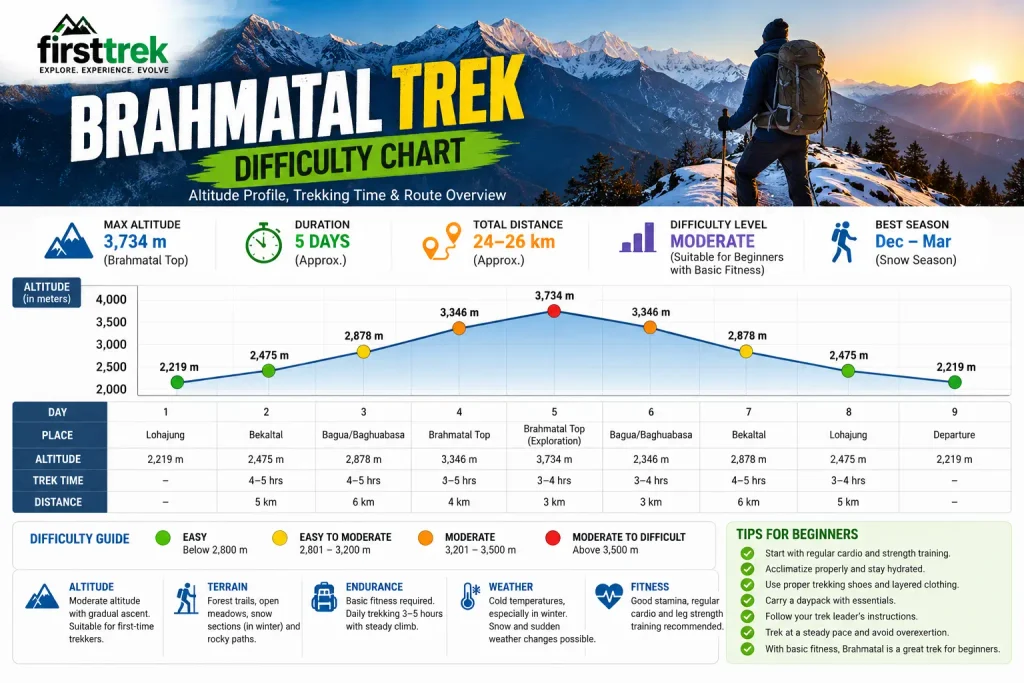
The summit, Brahmatal Top, is at about 12,250 feet. You start from Lohajung at roughly 7,600 feet, and the climb is spread over several days with a sensible stop at Bekaltal or Gujreni and another at Tilandi. The route runs through oak and rhododendron forest for much of its length, and the forest cover helps your body adjust, which is why Brahmatal has a good record with first-timers.
What lifts it above plain easy is the combination of snow, cold and a few long walking days. The total distance is
roughly 23 to 28 km depending on the route, and one or two days run to six or seven hours of walking.
Day-by-day difficulty of Brahmatal Trek
Day 1: Rishikesh to Lohajung: A long drive of around 220 to 250 km that takes 9 to 10 hours. No walking,
plenty of sitting.
Day 2: Lohajung to Bekaltal: About 4 to 6 km and 4 to 5 hours through oak and rhododendron
forest. A steady climb to roughly 9,000 to 9,900 feet. Moderate, with the first view of Nanda Ghunti on a
clear day.
You might be interested in these treks
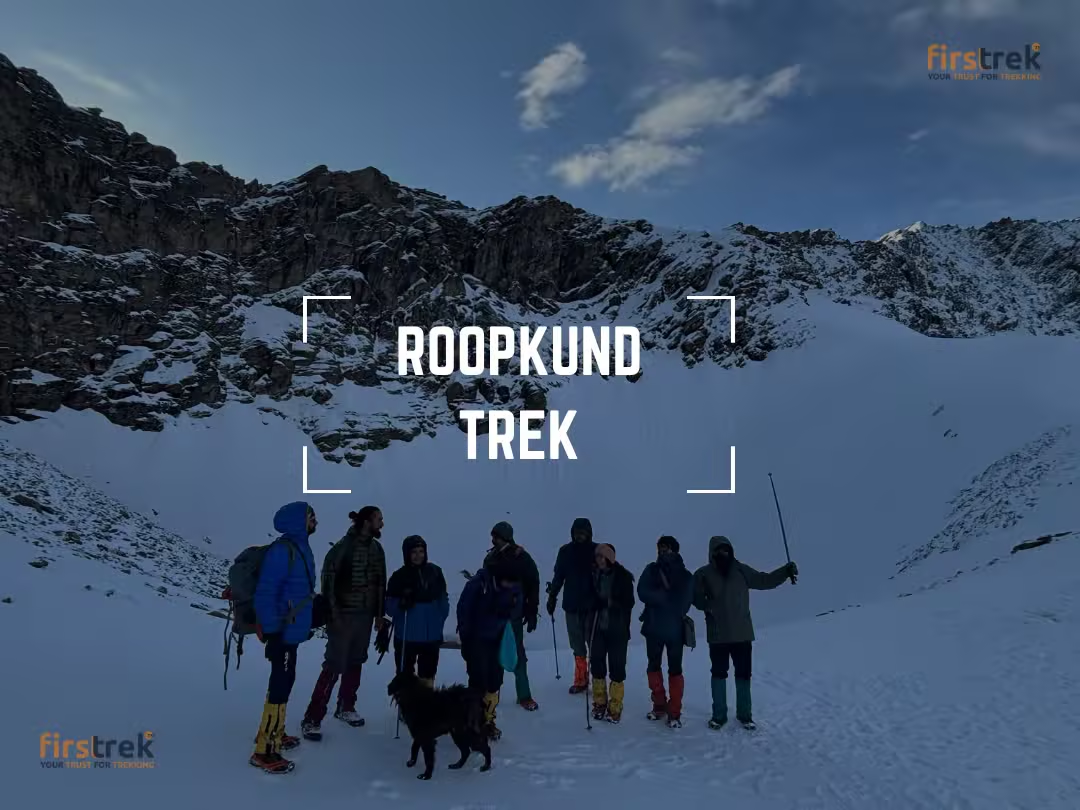
Roopkund Trek
₹15,500
Hampta Pass Trek
₹7,500
Ranthan Kharak Trek
₹9,500
Kagbhusandi Lake Trek
₹29,500
Bhrigu Lake Trek
₹8,599
Day 3: Bekaltal to Brahmatal – A shorter day, roughly 7 to 8 km in some versions, that gains height to about
10,500 feet. Short but deceptive: the altitude does the work, so we keep the pace slow.
Day 4 : Brahmatal to Brahmatal Top and the summit: The big day. A ridge walk with open views, a
climb to Brahmatal Top at 12,250 feet and a descent to the lake campsite. Expect six to eight hours.
Day 5: Brahmatal to Lohajung: A long descent of around 8 to 11 km. Easy on the lungs, hard on the knees.
Day 6: Lohajung to Rishikesh: The long drive back.
What catches first-timers out
- Cold nights: Camps at Bekaltal and Brahmatal are well below freezing in winter. Under-layering is the most
common mistake. - Snow and ice: Packed snow on forest trail is slippery. Microspikes make a big difference.
- The long descent: The final day on the way down is hard on knees, especially without trekking poles.
- Remoteness: Network is patchy to absent and help is hours away, so preparation matters.
The fitness you need
You should be comfortable walking 5 to 6 km in about 40 minutes, and ideally have done a few long weekend
walks with a daypack. Four to six weeks of regular cardio, stair climbing and leg strength work is enough for most
people. If you have never trekked before, add a couple of loaded hikes at a weekend. Brahmatal is gentler than a
high-altitude trek like Roopkund, but it still rewards preparation.
You might be interested in these yatras

Who Brahmatal suits
It suits first-time winter trekkers who are reasonably active, working professionals looking for a manageable fiveday escape, and families with older children. It is also a good second trek after an easy hike. Think twice if you
have knee or back problems, uncontrolled blood pressure, asthma or any heart condition, or a strong dislike of
cold. Talk to your doctor and your trek leader before you book.
Tips from our trek leaders
- Train for the descent. Do squats, lunges and step-downs. Your knees will thank you on Day 5.
- Carry trekking poles. They take a surprising amount of load off your legs on both climbs and descents.
- Layer up early. Add a layer before you feel cold, not after.
- Hydrate. Dry winter air and altitude dehydrate you faster than you notice.
- Tell your leader. A headache or unusual tiredness is information we need, not a weakness.
The verdict
Brahmatal is a great first winter trek: scenic, quiet compared with the busiest routes, and genuinely doable for a
motivated beginner who prepares. If you are choosing between this and another winter classic, our Brahmatal vs
Kedarkantha comparison breaks down the differences honestly.
How Brahmatal compares with other treks
Brahmatal sits at the gentler end of Himalayan treks, similar in grade to Kedarkantha. It asks less of you than a
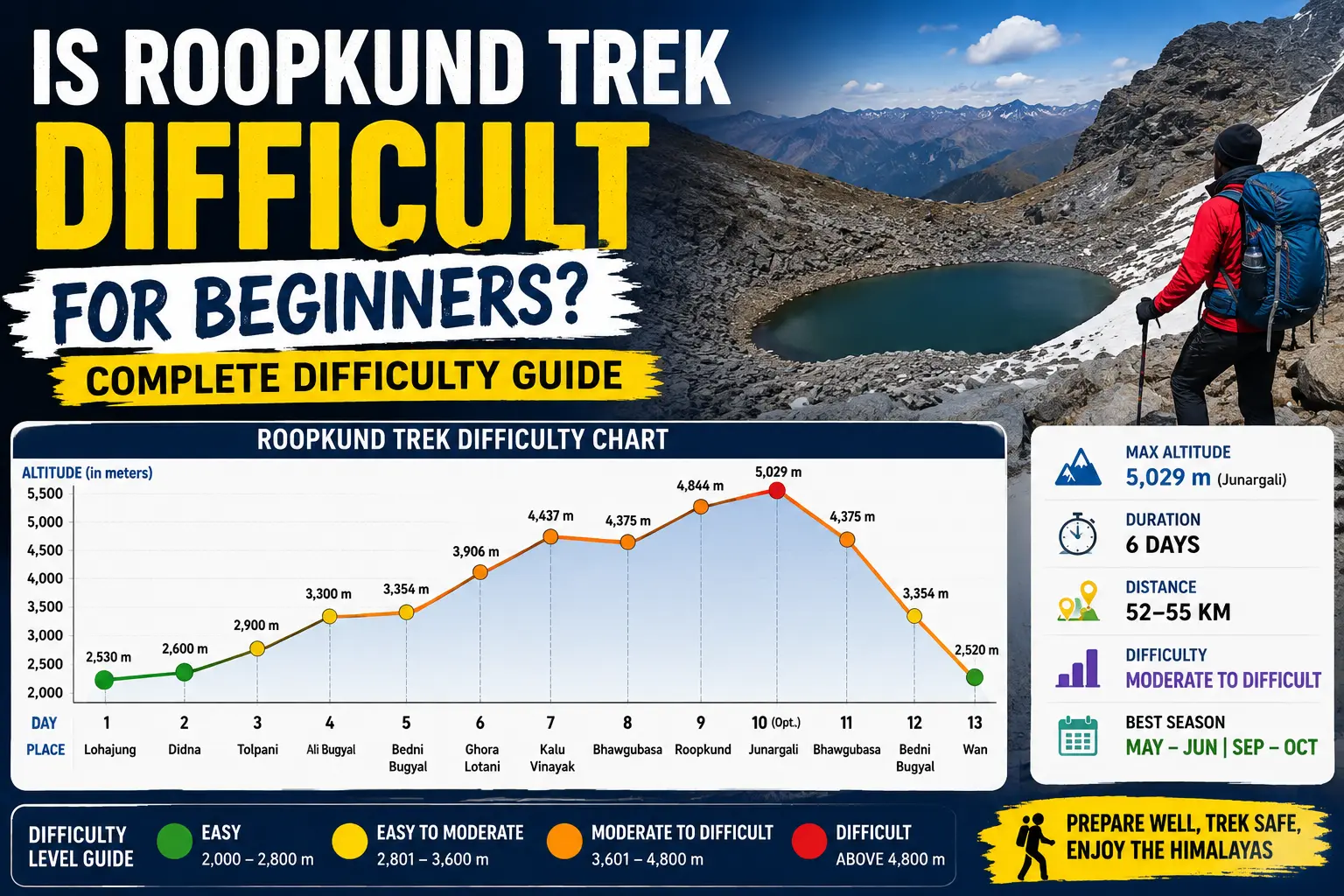
high-altitude trek like Roopkund, which reaches 16,499 feet over eight days with two long walking days back to
back. If you have never trekked and want a first Himalayan experience in snow, Brahmatal is a sensible choice.
A simple four-to-six week training plan
- Cardio: Jog, cycle or swim four days a week, building up to 5 to 6 km without stopping.
- Strength: Twice a week, squats, lunges, step-ups and calf raises. Add a plank block for core strength.
- Stairs with a pack: Once a week, climb stairs for 30 to 45 minutes with 6 to 8 kg in a daypack.
- A long weekend walk: Once every week or two, walk for three to four hours on uneven ground.
What the cold really does
Cold makes everything harder. Your body burns more energy staying warm, small tasks like zipping a jacket take
longer in gloves, and tired trekkers feel it more at night. We see more trouble from poor layering and wet feet
than from the gradient. A good sleeping bag liner, dry socks and a warm hat solve most problems before they
begin.
A few honest warnings
Do not assume an easy grade means no preparation. Do not skip the training because the summit height sounds
modest. And do not ignore early symptoms of altitude sickness such as headache, nausea or dizziness. We would
much rather descend with you early than carry on and make it worse.
Bring a small notebook or a paperback. Evenings at camp are long, quiet and early, and they are a large part of
why people fall for winter trekking. You will sleep well, you will eat more than you expect, and you will be
surprised how much you enjoy the slower pace.
Full itinerary, inclusions and batch dates → https://www.firstrek.in/trek/brahmatal-trek. Also check How to reach brahmatal trek.