
Treks by
March to June and September to November are the best months to visit. The weather is mild and pleasant, making it ideal for darshan and sightseeing. Avoid the monsoon season (July–August) due to potential landslides, and winters (December–February) can be extremely cold with chances of snowfall in nearby areas.
By Road: Guptkashi is well connected by NH 107. You can drive from Rishikesh, Rudraprayag, or Dehradun. State-run and private buses are also available. Nearest Railway Station: Rishikesh (approx. 180 km) Nearest Airport: Jolly Grant Airport, Dehradun (approx. 210 km) From Guptkashi bus stop or parking area, the temple is about 1 km away by foot.
{}
1,319 meters
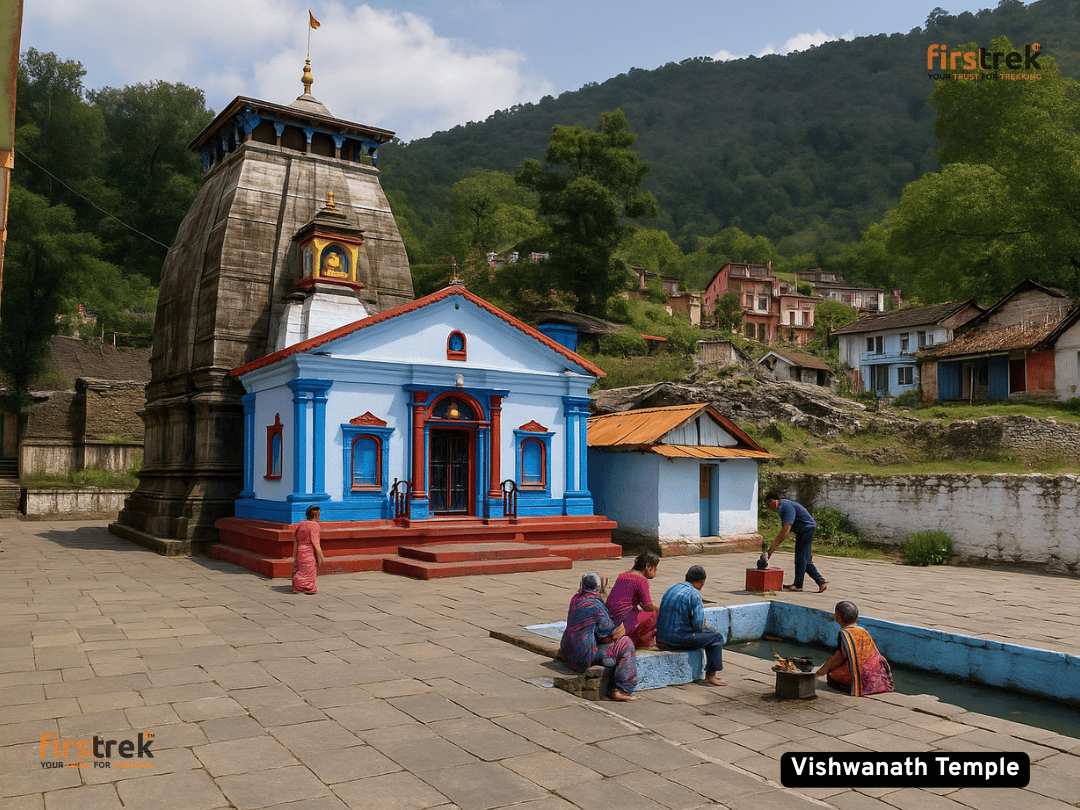
Vishwanath Temple in Guptkashi is a revered Hindu shrine nestled in the Rudraprayag district of Uttarakhand, India. Dedicated to Lord Shiva, the temple holds immense significance for devotees, especially those undertaking the Char Dham Yatra.
Vishwanath Temple in Guptkashi is one of the most revered Shiva temples in Uttarakhand, often referred to as the twin of the famous Kashi Vishwanath in Varanasi. Nestled in the Garhwal Himalayas, this ancient shrine is a sacred stop for pilgrims en route to Kedarnath and part of the Panch Kedar pilgrimage circuit.
Vishwanath Temple in Guptkashi is deeply rooted in Hindu mythology and is often seen as a spiritual twin of Kashi Vishwanath in Varanasi. The name "Guptkashi" (Gupt = Hidden, Kashi = Varanasi) originates from the belief that Lord Shiva once hid here to avoid meeting the Pandavas, who were seeking his blessings after the Kurukshetra war. It is also believed that Lord Shiva proposed to Goddess Parvati at this very spot, and their celestial marriage was later held at the nearby Triyuginarayan Temple. The temple’s connection to these epic tales makes it a revered stop before visiting Kedarnath.