
Treks by
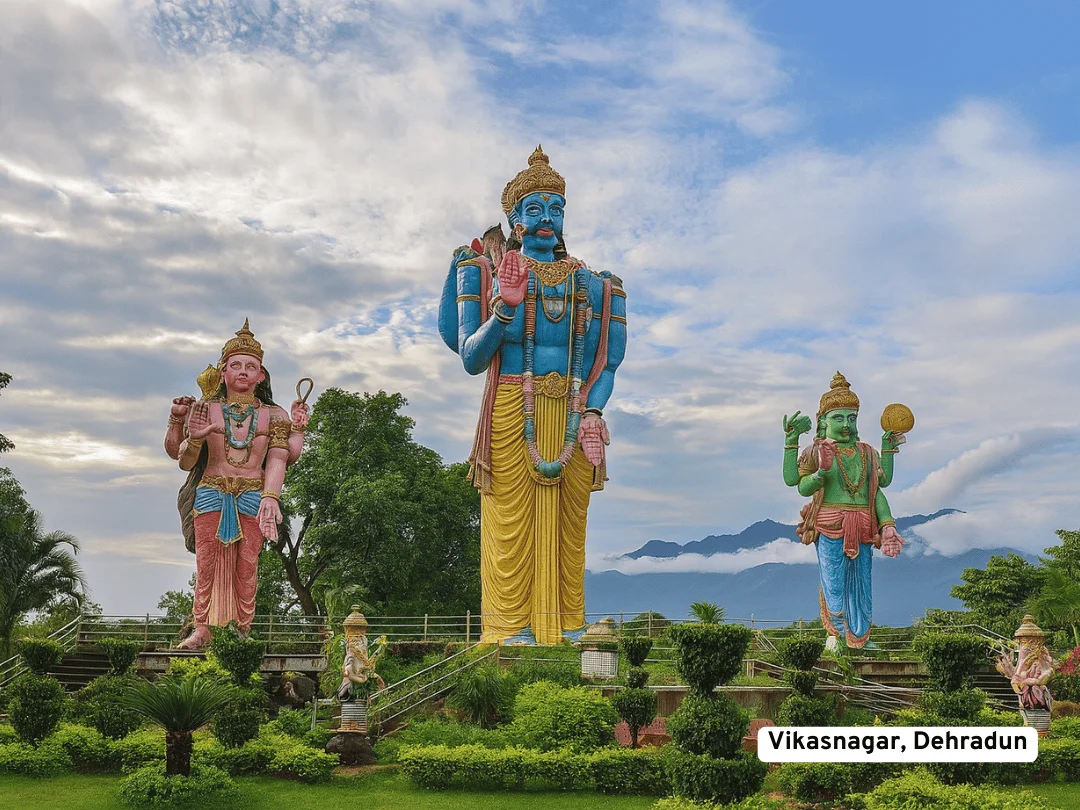
The most pleasant time to visit Vikasnagar is during: Spring to early Summer (March to June): Moderate temperatures, blooming fields, and clear skies make this season ideal for sightseeing and short trips to nearby natural spots like Kalsi and Dakpathar. Autumn (September to November): Post-monsoon greenery and cooler weather offer perfect conditions for exploring the region's cultural sites and riverbanks. Avoid peak monsoon months (July–August) due to potential heavy rainfall and regional flooding near riverbeds.
By Air: The nearest airport is Jolly Grant Airport (Dehradun), around 70 km away. Taxis and buses are easily available from the airport to Vikasnagar via Dehradun city. By Train: The closest railway station is Dehradun Railway Station, approximately 45 km from Vikasnagar. From the station, regular buses and shared taxis serve the route. By Road: Vikasnagar is well-connected by road through National Highway 72. It lies roughly 1.5 hours west of Dehradun by car or bus. State transport buses, private taxis, and shared jeeps operate frequently.
{}
455 meters
Vikasnagar is a vibrant town located in the Dehradun district of Uttarakhand, near the foothills of the Himalayas. Often referred to as the "Gateway to Jaunsar," it connects the plains to the culturally rich Jaunsar-Bawar region. Known for its lush surroundings, tea gardens, and proximity to the Yamuna and Tons rivers, Vikasnagar plays an important role as a trade and transit hub. The town features a mix of urban amenities and traditional lifestyles, with nearby attractions including Kalsi, Dakpathar, and the Asan Barrage. Its strategic location, cultural blend, and natural beauty make it a notable destination in Western Uttarakhand.
Vikasnagar is a prominent town in the western part of the Dehradun district of Uttarakhand. Positioned near the banks of the Yamuna River and surrounded by scenic hills, it serves as a key entry point to the culturally distinct Jaunsar-Bawar region. Strategically located approximately 45 kilometers from Dehradun city, Vikasnagar is a thriving hub that connects the plains with the Himalayan foothills.
Originally known as Chauhadpur Nardid, the town was renamed Vikasnagar in the post-independence era to symbolize development and progress ("Vikas" meaning growth). Over time, it transformed from a rural settlement into a bustling commercial center that supports both the plains and the nearby hilly regions.
Its historical relevance is also tied to nearby Kalsi, home to the famous Ashokan Rock Edict, dating back to the 3rd century BCE. This archaeological marvel underscores the region’s deep-rooted connection to ancient Indian history and governance.
Vikasnagar, once known as Chauhadpur Nardid, has transformed significantly since India’s independence. The town was renamed Vikasnagar—meaning "city of development"—to reflect its growing commercial and infrastructural importance. Historically, it served as a trade link between the plains and the remote Jaunsar-Bawar hills, a region known for its unique tribal traditions. Nearby Kalsi, just a few kilometers away, adds historical weight to the area, housing the famous Ashokan Rock Edict from the 3rd century BCE—India’s only such edict in North India.