
Treks by
The best time to explore Viceregal Lodge is from March to June and September to November. These months bring clear skies and mild temperatures, making it ideal for garden walks and sightseeing. Winters are cold and sometimes snowy, offering a magical view of the heritage structure but may be challenging for some travelers.
By Air: The nearest airport is Jubbarhatti Airport, around 23 km from Shimla. Taxis are available to take you to the city center and onwards to the lodge. By Train: You can take the Kalka–Shimla narrow-gauge train, a scenic journey through the hills. From the Shimla railway station, Viceregal Lodge is just a short drive or a comfortable walk. By Road: Shimla is well connected by road to cities like Delhi, Chandigarh, and Manali. Once in Shimla, you can reach the lodge easily by local taxi or on foot from Mall Road or Boileauganj.
{}
2,150 meters
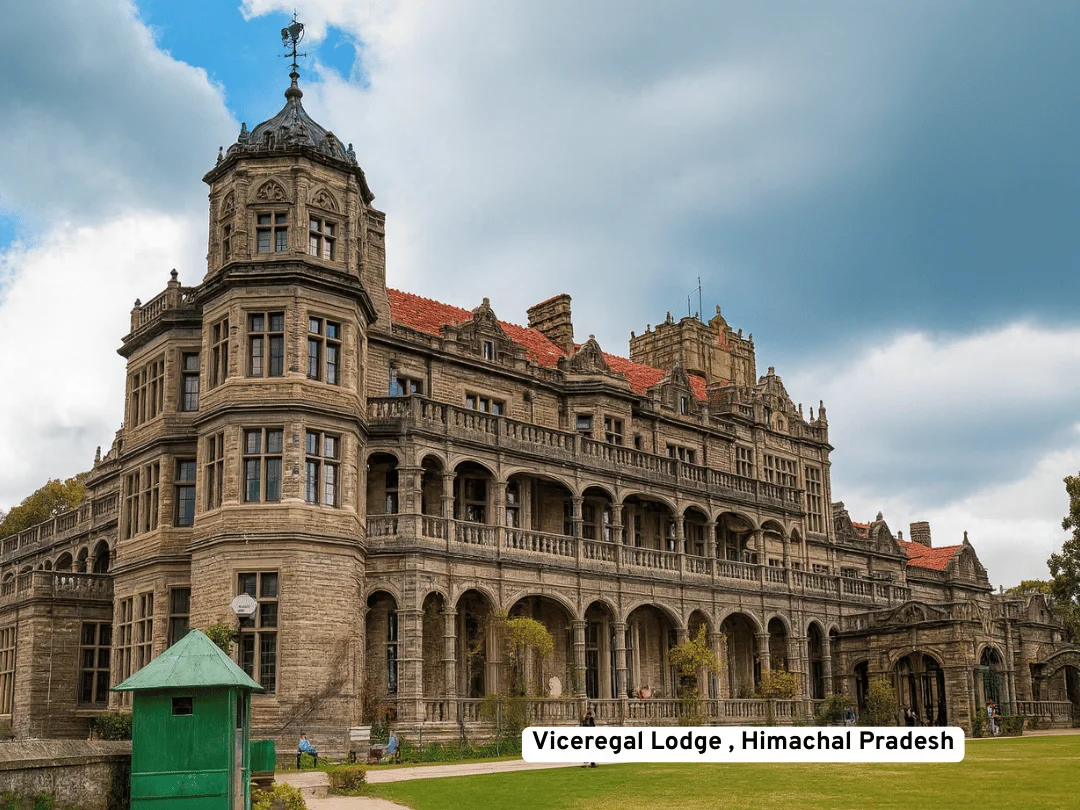
The Viceregal Lodge, also known as Rashtrapati Niwas, is a grand heritage building located on Observatory Hill in Shimla. Built in the late 19th century, it once served as the summer residence of the British Viceroy of India. The structure is an architectural masterpiece, featuring a blend of Scottish Baronial and colonial styles, with stone walls, wooden interiors, and sprawling lawns. Today, it houses the Indian Institute of Advanced Study (IIAS) and remains open to visitors who wish to explore its historical significance and admire its timeless beauty. The lodge is surrounded by lush gardens and offers a peaceful retreat with stunning views of the surrounding hills.
The Viceregal Lodge, also known today as Rashtrapati Niwas, is one of Shimla’s most remarkable colonial-era structures. Situated on Observatory Hill, this magnificent building was constructed between 1880 and 1888 as the official summer residence of the British Viceroy of India. Set amidst lush greenery and commanding panoramic views of the Himalayas, the lodge stands as a symbol of both architectural brilliance and political significance in India’s colonial history.
Built during the tenure of Viceroy Lord Dufferin, the Viceregal Lodge was designed by architect Henry Irwin, who combined elements of Scottish Baronial and Elizabethan Gothic styles. The result is a stately stone structure with steep gabled roofs, grand archways, oak and teak woodwork, and ornate staircases—reflecting the grandeur of British aristocracy and Victorian craftsmanship.
The lodge played a key role in several pivotal events leading up to India's independence. High-level meetings and important policy decisions were made here, including discussions around constitutional reforms and the eventual partition of India. Its conference rooms and corridors echo with the voices of history, making it a living museum of the British Raj.
Today, the building serves as the campus of the Indian Institute of Advanced Study (IIAS), a premier academic institution focused on research in the humanities and social sciences. Though most of the interior is reserved for scholars, parts of the lodge, including its reception hall, gardens, and a guided tour area, are open to the public.
Visitors can stroll through its beautifully maintained English-style gardens, enjoy the crisp mountain air, and soak in the atmosphere of a bygone era. The location is especially popular among history enthusiasts, architecture admirers, and those seeking a peaceful escape in the heart of Shimla.
The Viceregal Lodge is not just a tourist attraction—it is a bridge between India’s colonial past and its academic present, preserving stories that shaped the nation.
Viceregal Lodge, now known as Rashtrapati Niwas, was built between 1880 and 1888 during British rule in India. It served as the summer residence of the British Viceroy, who governed the country from Shimla during the hot months. The building was designed by Henry Irwin, the renowned architect of many colonial-era buildings in India. Constructed with grey sandstone and teak wood, it is a classic example of Scottish Baronial architecture. This majestic structure witnessed several crucial discussions related to India’s independence, including political meetings that eventually led to the creation of Pakistan. After independence, it was handed over to the Government of India and now houses the Indian Institute of Advanced Study (IIAS), a prestigious academic institution.