
Treks by
March to June: Ideal for open-air browsing, with comfortable weather and light foot traffic. September to November: Crisp skies and festive mood—perfect for souvenir shopping and exploring local culture. Avoid: Heavy monsoon (July–August), when frequent rains can dampen the market’s charm. Winter (December–February): Cold mornings, but warm market vibes with local teas and cozy goods.
By Air: The nearest airport is Gaggal (Kangra) Airport, roughly 20 km away. From there, shared taxis and private cabs can take you to McLeod Ganj. By Train: Pathankot Junction, located about 90 km from McLeod Ganj, is the closest rail connection. From Pathankot, taxis and buses serve the route. By Road: Frequent state and private buses connect major cities such as Delhi, Chandigarh, and Shimla to Dharamshala ISBT. From the bus stand, it’s a quick 3–4 km ride uphill to McLeod Ganj and the Tibetan Market—you can also walk and enjoy the hill-town atmosphere.
{}
1,800 meters
The Tibetan Market in Dharamshala is a vibrant blend of culture, color, and craftsmanship. Nestled near McLeod Ganj, this market is run mostly by Tibetan refugees and showcases an array of traditional handicrafts, woollens, jewelry, thangka paintings, and prayer items. It's not just a shopping destination but a cultural walk through Tibetan lifestyle and resilience. The peaceful vibe, smiling vendors, and Himalayan backdrop make it a must-visit for travelers seeking unique souvenirs with soul.
Tibetan Market in Dharamshala is more than just a bustling marketplace—it’s a cultural heartbeat of McLeod Ganj, echoing the artistic spirit and heritage of Tibetan refugees who settled here after fleeing their homeland. Located near the Tsuglagkhang Complex and the main square, the market is a colorful stretch of stalls and tiny shops selling handcrafted goods that reflect deep-rooted Buddhist traditions.
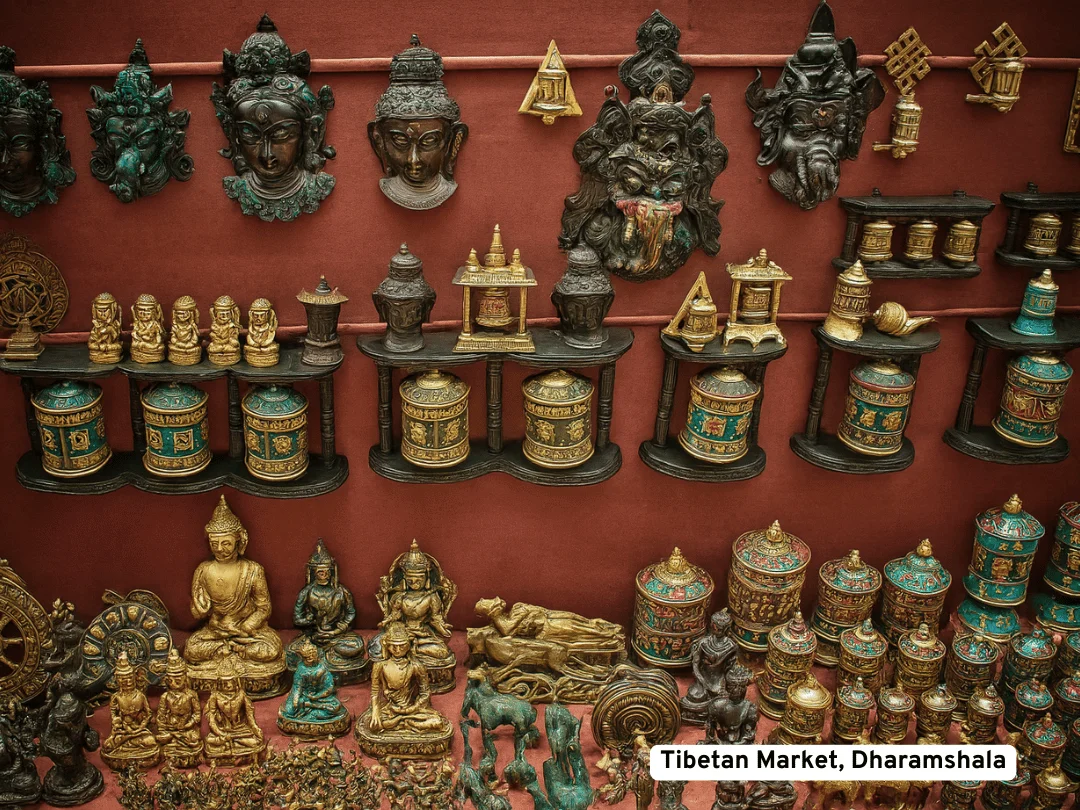
Visitors can browse a wide range of products—handwoven woolen scarves, jackets, and sweaters; prayer wheels, singing bowls, and incense sticks; handmade jewelry with semi-precious stones; thangka scrolls; and traditional Tibetan masks. Many of the items here are handmade by local artisans or sourced from Tibetan settlements across Himachal.
The market is not just a commercial zone but a preservation of identity. Friendly shopkeepers, most of them Tibetans, often share stories behind the artifacts they sell, enriching the experience with cultural insights. Bargaining is welcomed, and purchases here support refugee families and keep ancient crafts alive.
Whether you're looking for a unique souvenir, a meditation tool, or just an immersive local experience, the Tibetan Market offers a memorable blend of spirituality, artistry, and hospitality—all set against the serene Himalayan backdrop.
The Tibetan Market emerged in the 1960s following the arrival of His Holiness the 14th Dalai Lama and thousands of Tibetan refugees who settled in McLeod Ganj after fleeing from Tibet. As they established a new life in exile, the market became a source of livelihood for many Tibetan families and a hub to preserve their traditional craftsmanship and Buddhist cultural identity.