
Treks by
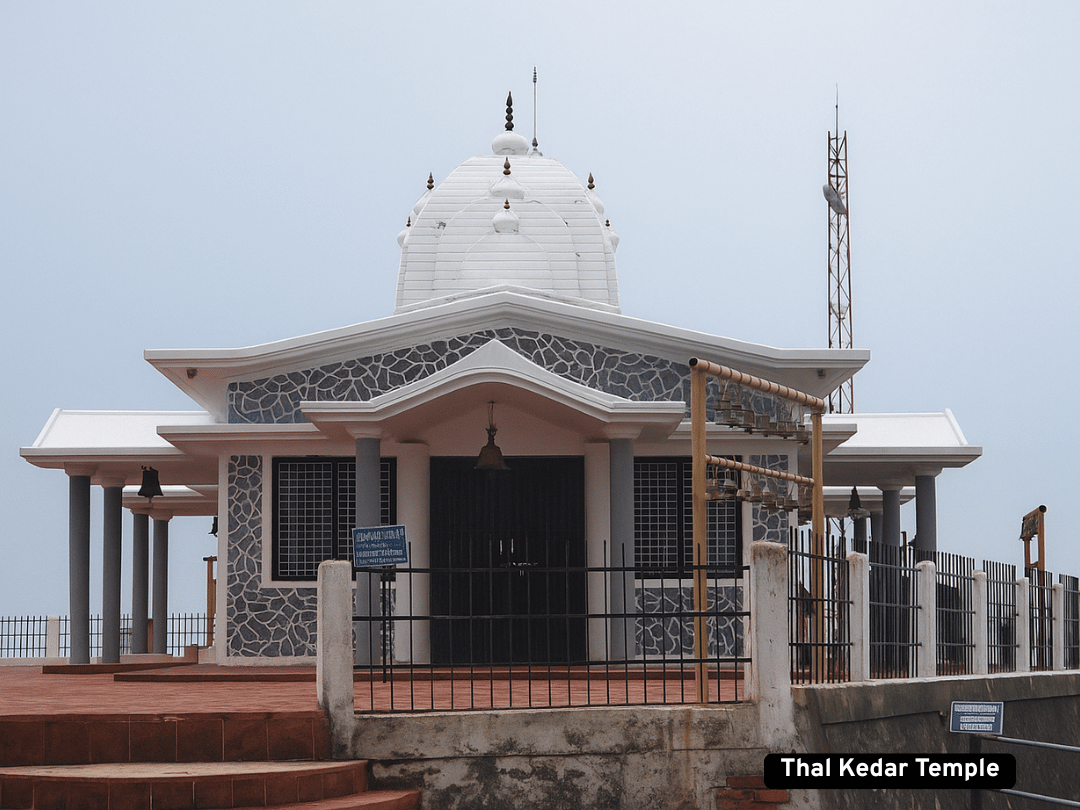
March to June and September to November are the ideal months to visit Thal Kedar Temple.
By Road: Thal Kedar Temple is accessible via road from Pithoragarh town. One must first reach the village of Thal, which is about 60 km from Pithoragarh. From Thal, a short trek of around 2.5 km through forested terrain leads to the temple. By Train: The nearest major railway station is Tanakpur, approximately 170 km away. From there, one can take a bus or taxi to Pithoragarh and then proceed to Thal. By Air: The nearest airport is Naini Saini Airport in Pithoragarh, about 60 km from Thal. Limited flights operate from Dehradun. The more accessible option is Pantnagar Airport (around 230 km), with better connectivity.
{}
2,200 meters
Thal Kedar Temple is an ancient and sacred shrine dedicated to Lord Shiva, nestled amidst the serene hills near Pithoragarh in Uttarakhand. A lesser-known spiritual gem, it offers panoramic Himalayan views and a peaceful trekking route, making it ideal for pilgrims and nature lovers alike.
Thal Kedar Temple is a revered pilgrimage site located near Thal in the Pithoragarh district of Uttarakhand. Dedicated to Lord Shiva, this ancient temple holds significant spiritual and cultural value for the local Kumaoni population. Perched at an altitude of approximately 2,200 meters, the temple is surrounded by dense pine forests and offers mesmerizing views of the Himalayan ranges.
The temple is believed to date back to the mythological era and is often associated with various legends of the Mahabharata. Devotees believe that visiting this shrine and offering prayers brings blessings and spiritual peace. The site remains relatively untouched by mainstream tourism, preserving its serene and sacred ambiance.
Reaching the temple requires a short trek from the village of Thal, which adds a sense of adventure and devotion to the pilgrimage.
Thal Kedar Temple is one of the most sacred and lesser-known Shaivite temples in the Pithoragarh region of Uttarakhand. It is believed to be ancient, with roots tracing back to the times of the Mahabharata. Local legends suggest that the Pandavas visited this site during their exile and worshipped Lord Shiva here. The temple architecture, though simple, reflects traditional Himalayan temple styles with stone walls and a peaceful natural setting that reinforces its spiritual aura. Over centuries, the temple has been a site of local devotion rather than large-scale pilgrimage, which has helped preserve its original charm and serenity. Oral traditions and folklore have kept the history of the temple alive in the hearts of the local Kumaoni people.