
Treks by
March to June and September to November are ideal months to visit Sultanpur Palace. These months offer pleasant weather and clear skies, perfect for sightseeing and photography.
By Road: Kullu is well-connected via NH3. Regular buses and taxis are available from Manali (40 km), Mandi (70 km), and Shimla (210 km). By Air: The nearest airport is Kullu–Manali Airport (Bhuntar), about 11 km from Sultanpur Palace. Taxis and local buses are easily available. By Train: The nearest major railway station is Joginder Nagar (120 km), though Chandigarh Railway Station (270 km) is more connected. From either point, road transport is necessary.
{}
1,220 meters
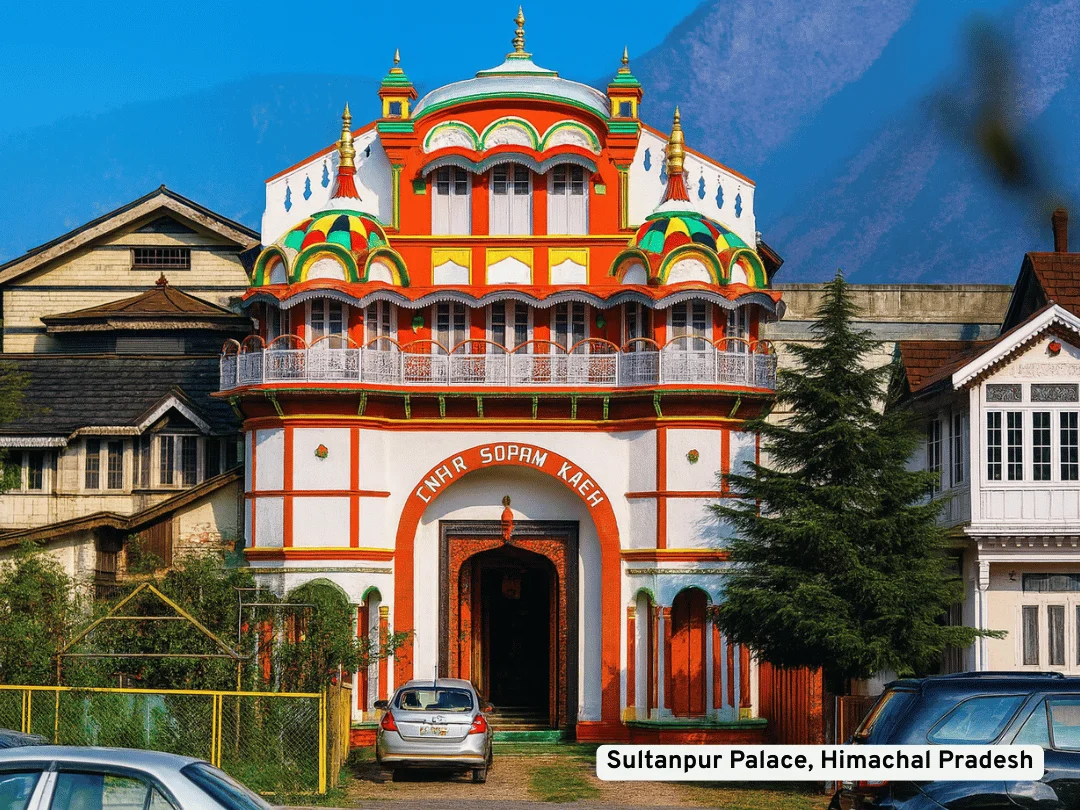
Sultanpur Palace, nestled in the heart of Kullu town, is a historical landmark that once served as the royal residence of the rulers of Kullu. Rebuilt after a major earthquake in the early 20th century, the palace combines traditional Himachali wooden architecture with colonial-era influences. While much of it remains closed to the public, its artistic wooden doors, vibrant wall paintings, and peaceful surroundings offer a quiet reminder of the region’s regal past.
Sultanpur Palace, located in the heart of Kullu town in Himachal Pradesh, is a significant historical monument that reflects the regal legacy of the Kullu kingdom. Once the official residence of the Kullu kings, the palace is known for its graceful wooden architecture, blending traditional Himachali design with a subtle touch of colonial influence.
The palace stands as a symbol of the region’s royal past, showcasing intricately carved wooden doors, courtyards, and remnants of miniature wall paintings that speak volumes about the artistic culture of the valley. Originally known as Rupi Palace, it was rebuilt in the early 1900s after a devastating earthquake. While not all areas are open to visitors, the structure’s facade and limited accessible parts offer a glimpse into the architectural brilliance and lifestyle of the former rulers.
Surrounded by the lush landscape of the Kullu Valley, Sultanpur Palace is not just a historical site but also a peaceful escape from the bustling markets nearby. Visitors can admire its design, enjoy the serene gardens, and imagine the stories that once unfolded within its wooden walls.
Whether you're a history enthusiast, an architecture lover, or a traveler exploring Kullu’s cultural depth, Sultanpur Palace adds a meaningful chapter to the experience.
Sultanpur Palace, originally called Rupi Palace, was established by Raja Jagat Singh, one of the most revered kings of Kullu, in the mid-17th century. The original structure was destroyed in the devastating Kangra earthquake of 1905 and later rebuilt using traditional Himachali architecture with wood and stone. The palace has remained a significant part of Kullu’s royal heritage and still belongs to the descendants of the erstwhile royal family. Though not fully accessible to the public, it serves as a living symbol of the region’s monarchical past.