
Treks by
The ideal time to visit is between March to June and September to November, when the weather is cool and pleasant, and the forested surroundings are lush and accessible. Sawan (July–August) is spiritually significant for devotees of Lord Shiva.
By Road: The temple is located a short distance from Chail town and can be accessed by taxi or on foot through narrow trails. Chail is well connected by road from Shimla (45 km), Kalka (86 km), and Chandigarh (105 km). By Rail: The nearest major railway station is Kalka, followed by a road journey to Chail via Kandaghat. By Air: The closest airport is Shimla Airport (Jubarhatti), about 63 km from Chail.
{}
2,270 meters
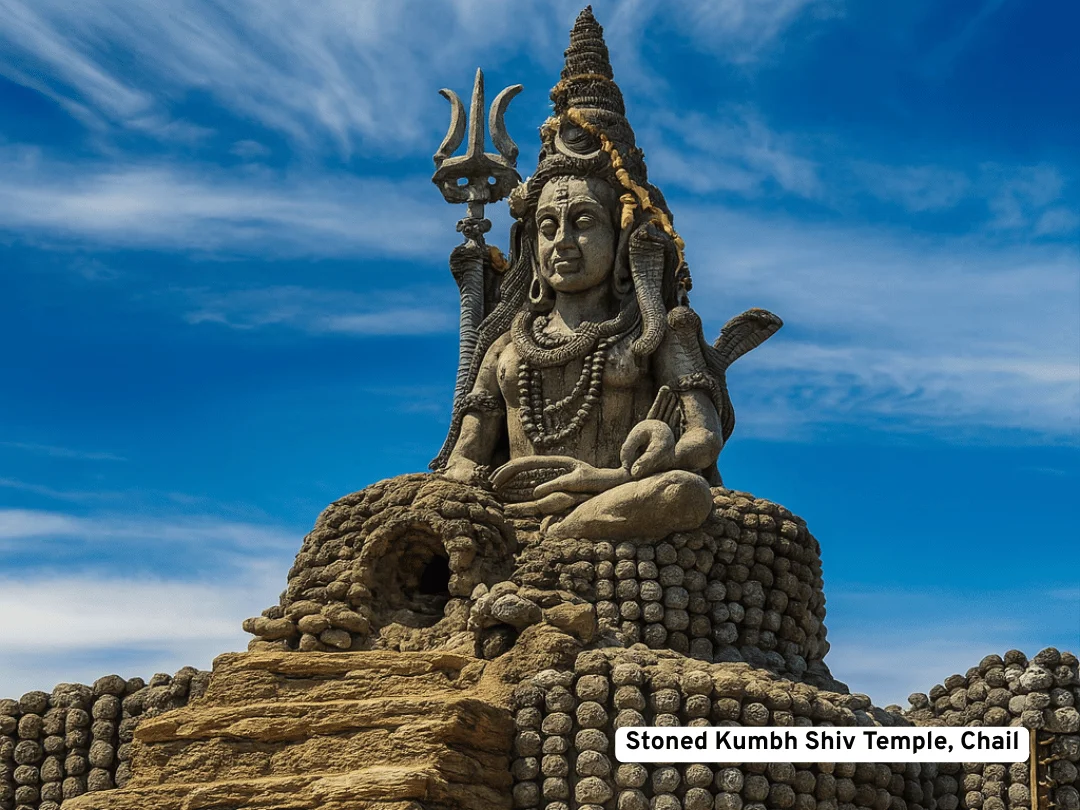
The Stoned Kumbh Shiv Temple in Chail is a unique and serene shrine dedicated to Lord Shiva, known for its peaceful atmosphere and rustic charm. Constructed entirely from stone, the temple blends naturally into the forested surroundings, giving it an ancient and spiritual aura—even though it’s relatively lesser-known and not heavily commercialized. Set on a quiet hillside, this temple attracts both devotees and nature lovers who seek spiritual solitude. Local belief holds that the temple has healing vibrations and that prayers offered here are especially powerful during Shivratri and the monsoon season. It’s a peaceful stop for anyone exploring Chail’s offbeat spiritual spots, combining natural beauty with divine presence.
The Stoned Kumbh Shiv Temple, located in the quiet hills of Chail, Himachal Pradesh, is a spiritually significant yet lesser-known temple dedicated to Lord Shiva. What sets this temple apart is its entirely stone-based construction, which gives it a raw, timeless, and sacred appearance amidst the forested landscape.
Surrounded by tall pine trees and natural silence, the temple stands as a symbol of endurance and devotion, attracting both spiritual seekers and curious travelers who are drawn to its rustic charm and peaceful energy.
Though not widely documented in official records, the temple is believed to be an ancient Shiva site, restored and maintained by local villagers and devotees. The term “Kumbh” is often associated with sacred pots or energy centers in Hindu mythology, hinting at a place of spiritual resonance.
Locals say that the temple has long been a place for quiet meditation and ritual worship, especially during Mahashivratri and other auspicious days dedicated to Lord Shiva. Unlike ornate temples with grand gopurams or domes, this temple’s simplicity and stony form is what makes it truly divine.
Devotees believe that the temple radiates a calming energy, ideal for:
Meditation and introspection
Offering prayers for healing, blessings, or peace of mind
Connecting with nature and divine presence without distraction
The Shivling housed in the temple is often adorned with flowers, water, and offerings by locals, especially on Mondays and during Sawan (monsoon month).
Located slightly off the main tourist trails, the Stoned Kumbh Shiv Temple is surrounded by untouched Himalayan flora. The temple itself is made of hand-stacked stones, giving it an organic, almost cave-like appearance. There are no loud chants or busy crowds—only the rustling of leaves, birdsong, and the soft sound of flowing air, making it a perfect escape for those seeking peace.
Travelers often combine a visit to this temple with nature walks, photography, or short hikes around Chail.
The Stoned Kumbh Shiv Temple in Chail is a humble but spiritually significant shrine dedicated to Lord Shiva. While the exact origin date is unclear, locals believe the temple has been standing for generations and was likely built by early settlers or sages drawn to the area's peaceful and natural setting. Constructed entirely out of stone, the temple’s rugged appearance blends seamlessly with its forested surroundings, giving it an ancient and sacred feel. The word “Kumbh” in its name hints at traditional symbolism in Hinduism, often representing sacred pots or spiritual energy centers. This adds a mystical dimension to the temple, associating it with purity, transformation, and devotion.