
Treks by
March to June and September to November are the best months to visit, offering pleasant weather, clear views, and ease of access.
By Road: Siddh Baba Temple is located around 2 km from Chail town and is easily reachable by car, taxi, or a short forest walk. Chail itself is well connected via road from Shimla (45 km), Chandigarh (105 km), and Kalka (86 km). By Rail: The nearest railway station is Kalka, connected by the scenic Kalka–Shimla toy train. Taxis are available from Kalka to Chail. By Air: The closest airport is Shimla Airport (Jubarhatti), located around 63 km from Chail.
{}
2,250 meters
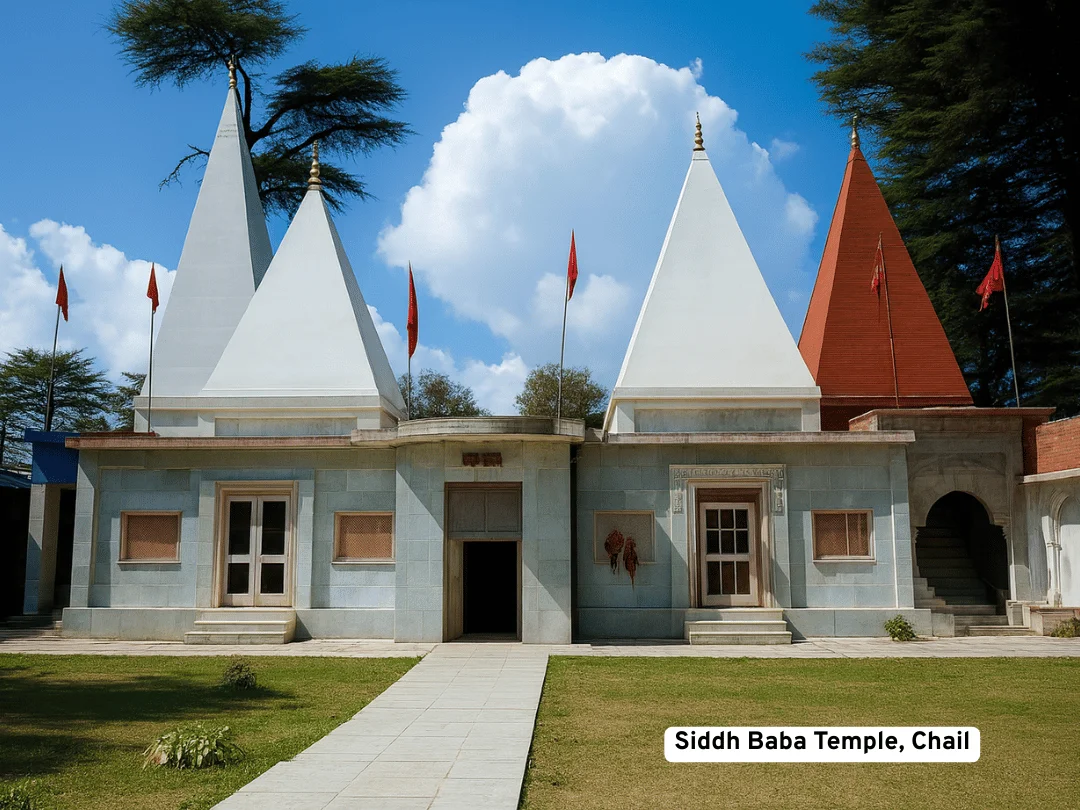
Siddh Baba Temple, also known as Sidh Baba Ka Mandir, is a peaceful spiritual site located just 2 kilometers from Chail in Himachal Pradesh. Nestled amidst dense deodar forests and overlooking scenic mountain views, the temple offers a serene escape for devotees and travelers alike. The temple is dedicated to Siddh Baba, a revered local saint. According to local legend, the site was originally chosen by the Maharaja of Patiala to build a palace, but he had a divine vision where Siddh Baba appeared in a dream and expressed that the land was sacred. Respecting the vision, the Maharaja abandoned the palace plan and built the temple instead to honor the saint’s spiritual presence. Today, Siddh Baba Temple is visited by both locals and tourists seeking blessings, peace, and a moment of quiet reflection. Its peaceful environment and panoramic views of the valley make it a perfect blend of spirituality and natural beauty.
Siddh Baba Temple, locally known as Sidh Baba Ka Mandir, is one of the most spiritually significant landmarks in the quaint hill station of Chail, Himachal Pradesh. Situated amidst thick pine and deodar forests, just about 2 km from Chail town, the temple not only draws devotees but also offers breathtaking views of the surrounding mountains and valleys.
The temple has an interesting origin linked to the royal family of Patiala. In the late 19th century, Maharaja Bhupinder Singh of Patiala selected the current location of the temple to build his summer palace. However, legend says that the Maharaja began having recurring dreams of a saint, Siddh Baba, who claimed that he had meditated at this very spot and that the land was sacred.
Taking the dream as a divine message, the Maharaja halted the construction of the palace and instead ordered a temple to be built at the site to honor the saint. This story adds a mystical and revered charm to the temple, making it an important place of faith and devotion.
Siddh Baba is believed to be a guardian spirit who watches over Chail and its people. Visitors come here to:
Offer prayers for well-being and protection
Meditate in a peaceful environment
Absorb the spiritual energy of the temple and its surroundings
The temple is simple in design yet powerful in its spiritual ambiance. It remains quiet most of the day, making it ideal for introspection, yoga, or simply unwinding from the chaos of daily life.
Set against the backdrop of rolling hills and surrounded by dense forest, the temple offers panoramic views of the Shivalik range. The walk or drive up to the temple is equally delightful, with winding paths, cool mountain air, and a serene landscape all around.
The temple sees a rise in footfall during local Hindu festivals such as:
Navratri
Mahashivratri
Diwali
On such occasions, the temple is decorated with lights and flowers, and locals gather for special rituals and bhajans (devotional songs). It is believed that wishes made here with a pure heart are fulfilled.
Siddh Baba Temple, also known as Sidh Baba Ka Mandir, holds a unique place in the spiritual and royal history of Chail. In the late 19th century, Maharaja Bhupinder Singh of Patiala planned to build a summer palace on the site. However, after reportedly receiving visions of Siddh Baba, a revered local saint, the Maharaja was guided to believe the land was sacred and had been used for meditation and spiritual attainment. Respecting this divine vision, the Maharaja abandoned his palace plans and instead commissioned the temple’s construction. Since then, the temple has stood as a symbol of devotion and spiritual reverence in the region.