
Treks by
March to June: Ideal for pleasant weather, greenery, and hiking. The valley is peaceful and the trails are open. October to December: Perfect for those who want to experience early snowfall and chilly evenings. January to February: Great for snow lovers, but access may be difficult due to heavy snowfall.
By Road: Sethan is around 12 km from Manali. You can hire a local taxi or a 4x4 vehicle from Manali, especially in winter. The road is steep and narrow, so experienced drivers are recommended. By Air: The nearest airport is Kullu–Manali Airport (Bhuntar), approximately 55 km away. From there, travel by taxi or bus to Manali and continue onward to Sethan. By Rail: The nearest railway stations are in Chandigarh and Ambala. From there, take a bus or taxi to Manali and then proceed to Sethan by road.
{}
2,700 meters
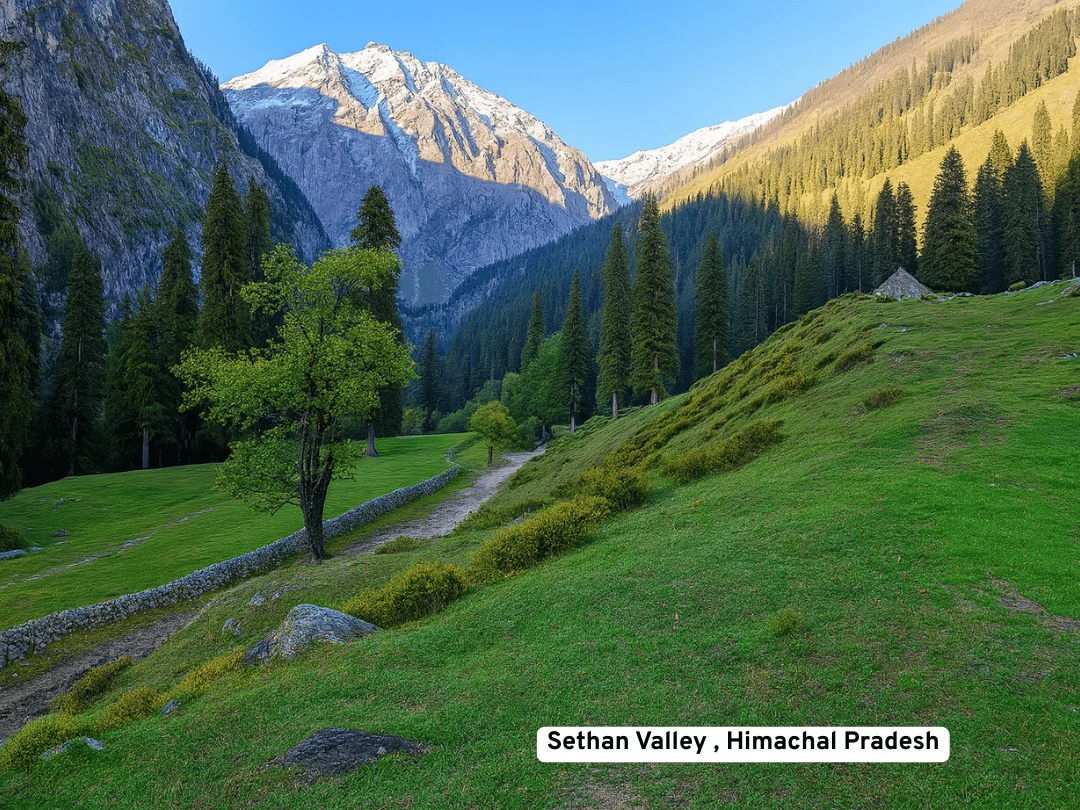
Sethan Valley is a serene Himalayan hamlet located about 12 km from Manali in Himachal Pradesh. Tucked away in the Dhauladhar range, this quiet village offers panoramic views of snow-covered peaks and untouched natural beauty. Known for its peaceful atmosphere and minimal crowd, Sethan is perfect for travelers seeking solitude, winter snowfall, and outdoor activities like snow trekking and bouldering. The valley is inhabited by a small Buddhist community and remains mostly covered in snow during winters, giving it a magical, white-washed charm.
Sethan Valley is a hidden gem nestled in the lofty Dhauladhar range of Himachal Pradesh, about 12 kilometers from the bustling town of Manali. Perched at an altitude of approximately 2,700 meters, this peaceful village is a haven for travelers seeking offbeat, crowd-free Himalayan experiences.
The valley remains relatively untouched by mainstream tourism and is home to a small community of Buddhist settlers, originally from the Spiti Valley. Their way of life is simple, rooted in harmony with nature, and the village retains a calm, rustic charm that offers a refreshing contrast to the tourist-heavy scenes of nearby Manali.
Sethan is surrounded by snow-capped mountains, dense alpine forests, and vast open landscapes that change dramatically with the seasons. In winter, the valley transforms into a white wonderland, making it an ideal location for snow activities like skiing, snowboarding, and snow trekking. In warmer months, it becomes a tranquil base for hiking, camping, and bouldering.
The Hampta Pass trek, one of the most popular crossover treks from Kullu to Lahaul, starts near this region, adding to the valley’s appeal for trekkers and adventurers.
What truly sets Sethan apart is its sense of seclusion and silence. Without commercial hotels, the village offers limited but cozy homestays and campsites where you can wake up to stunning views of the Himalayas and enjoy a starry night sky free from light pollution.
Mobile networks are weak or non-existent here, making it the perfect retreat for digital detox and introspection. Whether you’re meditating, reading a book, or simply watching snowfall, the experience is calming and grounding.
The residents of Sethan follow Buddhist customs and live in close connection with nature. Their hospitality is warm, and their lifestyle offers insight into sustainable mountain living. Visitors often find joy in simple things—locally cooked meals, conversations around a fireplace, and the peaceful rhythm of village life.
Sethan Valley is not for those looking for luxury or nightlife—it’s for travelers who value stillness, snow, and soul-soothing beauty. Whether you're a solo traveler, a nature photographer, or a couple seeking quiet time, Sethan offers an unforgettable escape into the heart of the Himalayas.
Sethan Valley has a modest but culturally rich past. Historically, the area served as a seasonal settlement for shepherds and traders traveling between Kullu and Lahaul-Spiti. Over time, a small group of Buddhist families from Spiti and nearby high-altitude regions settled here, turning the valley into a peaceful village focused on simplicity and spiritual living. Though it doesn't have ancient temples or written historical records, Sethan's importance lies in its deep-rooted connection to Himalayan traditions and trans-Himalayan migration routes.