
Treks by
Optimal Months: Mid-May to June and September to October Avoid: Monsoon season (July to August) due to heavy rainfall and potential landslides
By Air: Nearest Airport: Jolly Grant Airport, Dehradun (approximately 314 km from Badrinath) By Rail: Nearest Railway Station: Rishikesh (approximately 301 km from Badrinath) By Road: From Rishikesh/Haridwar, take a bus or taxi to Badrinath via Joshimath. From Badrinath, proceed to Mana Village (3 km), the starting point of the trek. Trekking Route: The trek from Mana Village to Satopanth Lake covers approximately 22 km one way, passing through notable landmarks like Vasudhara Falls, Laxmi Van, and Chakrateerth.
{}
4,600 meters
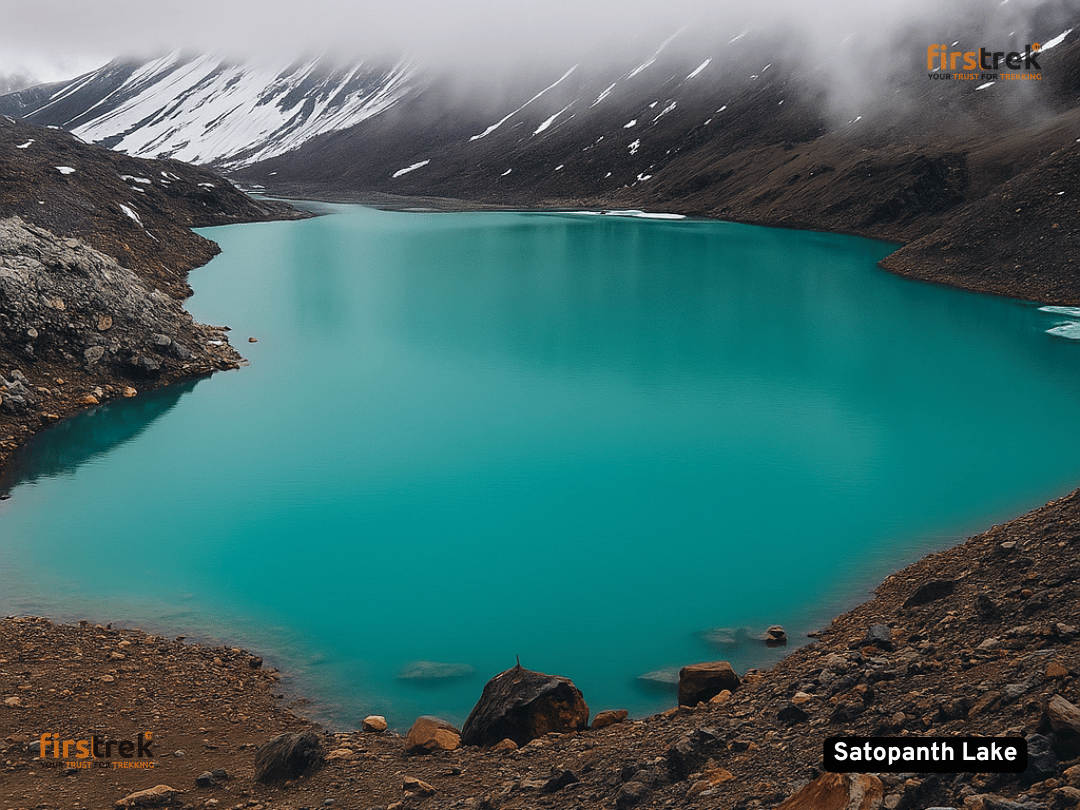
Satopanth Lake, also known as Satopanth Tal, is a high-altitude glacial lake nestled in the Chamoli district of Uttarakhand, India. Situated at an elevation of approximately 4,600 meters (15,092 feet) above sea level, the lake is renowned for its pristine emerald-green waters and its triangular shape, which holds significant religious and mythological importance in Hinduism .
According to legend, the Trimurtis—Brahma, Vishnu, and Shiva—meditated on the three corners of this lake. The name Satopanth comes from Sanskrit words 'Sato' (truth) and 'Panth' (path), meaning "Path of Truth." It is also believed to be part of the Pandavas’ final journey to heaven (Swargarohan path), where only Yudhishthira made it to the end.
The trail to Satopanth begins from Mana Village and spans approximately 22 km, making it a moderately difficult trek. Trekkers pass Vasudhara Falls, rocky moraines, alpine meadows, and glacier fields. The lake’s stunning emerald green waters reflect the Himalayas, making it both a spiritual and visual haven.
Satopanth Lake has a deep-rooted connection with Hindu mythology and the Mahabharata. It is believed to be the sacred path (Satopanth = Path of Truth) taken by the Pandavas on their final journey to Swarga (Heaven). Legend holds that only Yudhishthira, the eldest Pandava, reached heaven with his loyal dog. The lake is said to be the meditative site of the Trimurtis—Brahma, Vishnu, and Mahesh (Shiva)—each seated at one of the three corners of the lake. This spiritual belief adds to the lake’s triangular shape being revered as divine. Ancient sages and ascetics also meditated in the region, making the area spiritually significant for tapasya (austerity practices). Locals have passed down oral traditions and stories related to the divine origin of the lake.