
Treks by
March to June: Best for trekking, camping, and apple blossom season September to November: Pleasant weather, clear skies, and beautiful autumn colors December to February: Snow-covered landscapes; good for snow lovers but road access may be limited Avoid July–August: Due to monsoon rains and the risk of landslides
By Air: Nearest Airport: Shimla Airport (~230 km) or Bhuntar (Kullu) Airport (~250 km) From either airport, you can hire a taxi or take a bus toward Sangla via Rampur and Karcham By Train: Nearest Major Railhead: Kalka Railway Station (~270 km) Continue by road through Shimla and Rampur to reach Sangla By Road: Well connected by road from Shimla, Rampur, and Reckong Peo Drive or take HRTC buses till Karcham, from where a 17 km uphill drive leads to Sangla town The route is scenic but narrow—drive cautiously
{}
2,700 meters
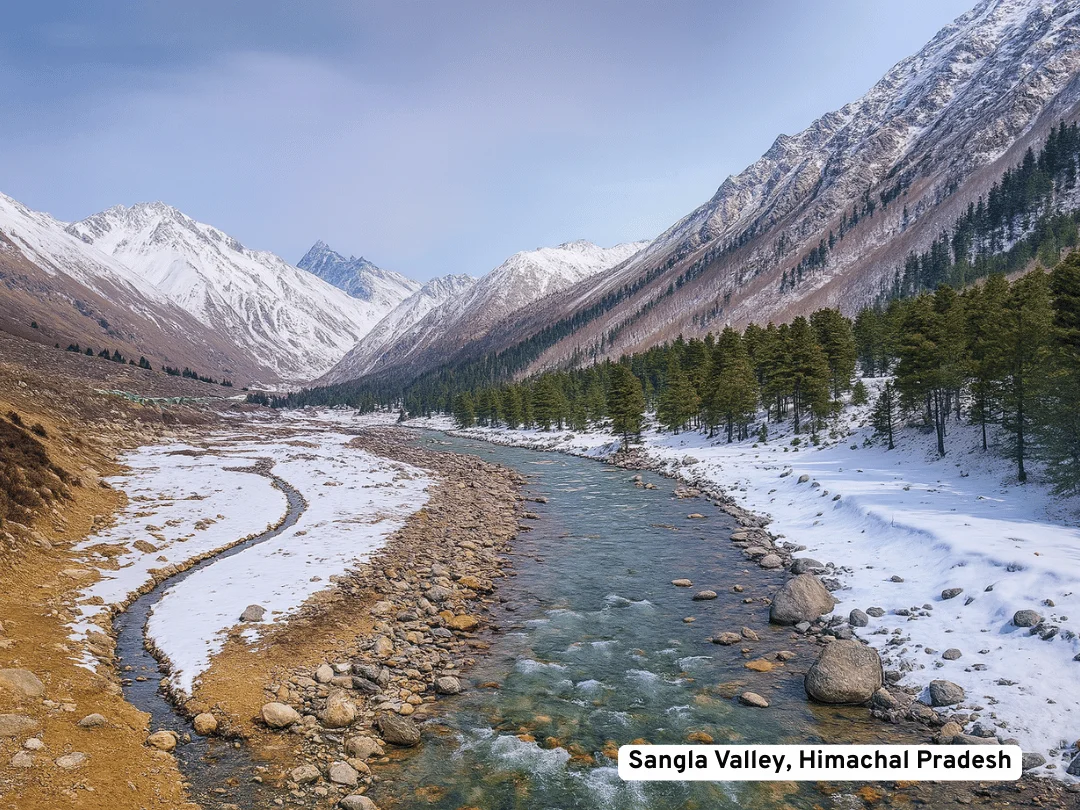
Sangla Valley, nestled in the Kinnaur district of Himachal Pradesh, is one of the most scenic and less-crowded valleys in the Himalayas. Surrounded by snow-capped peaks and thick pine forests, the valley lies along the banks of the Baspa River. Known for its apple orchards, wooden architecture, and peaceful vibe, Sangla is perfect for nature lovers, trekkers, and those seeking a serene mountain escape. The valley is home to quaint villages like Rakchham and Chitkul, offering stunning landscapes and a deep connection to local culture.
Sangla Valley, located in the Kinnaur district of Himachal Pradesh, is one of the most enchanting and lesser-explored destinations in the Indian Himalayas. Cradled by towering snow-covered peaks, alpine forests, and the glacial waters of the Baspa River, the valley offers a perfect blend of natural beauty, traditional Himalayan culture, and adventure.
Sangla Valley lies between Karcham and Chitkul, stretching roughly 40 km along the Baspa River. The valley is characterized by lush pine forests, rolling meadows, vibrant apple orchards, and sharp mountain ridges. Its untouched charm and peaceful setting make it a great alternative to the more commercialized tourist spots of Himachal.
During spring and summer, the valley is covered in wildflowers and greenery, while autumn paints the trees in warm hues. In winter, snow blankets the villages, turning Sangla into a white wonderland.
The valley is home to quaint villages like:
Sangla: The main town with wooden temples, traditional homes, and basic accommodations
Rakchham: A small hamlet surrounded by mountains and grazing lands
Chitkul: The last inhabited village near the Indo-Tibetan border, famous for its serene beauty and simplicity
The local people follow a mix of Hindu and Buddhist traditions, evident in their temples, festivals, and daily rituals. Life in Sangla Valley is slow-paced, community-oriented, and closely tied to nature.
Trekking: Enjoy popular trails like Rakchham to Chitkul, Borasu Pass, and Batseri Village Walks
Camping & Nature Stays: Stay by the river, under starry skies, with bonfires and local meals
Photography & Bird Watching: Ideal for landscape photographers and wildlife enthusiasts
Visit Kamru Fort: An ancient wooden fort near Sangla, housing deities and offering stunning views
Explore Chitkul: Known as the last village on the Indo-Tibetan trade route, famous for its peaceful vibe and pristine landscape
April to June: Ideal for pleasant weather, greenery, and outdoor activities
September to November: Clear skies, golden landscapes, and fewer tourists
December to February: Snowfall covers the valley; access may be limited but visually stunning
Avoid July–August: Due to monsoon-related landslides and risky road conditions
By Road: Accessible from Shimla via Rampur and Karcham (approx. 225 km). The last stretch is a narrow, winding mountain road but very scenic.
By Train: Nearest railway station is Kalka (~270 km); continue via taxi or bus.
By Air: Nearest airport is Shimla or Bhuntar. Road transport needed to reach Sangla from either.
Sangla Valley has a rich historical background deeply rooted in the heritage of the Kinnaur region. Historically part of the ancient Kinnaur kingdom, this valley was culturally influenced by both Hinduism and Tibetan Buddhism. Its strategic location along the old Indo-Tibetan trade route made it a key point of contact for merchants, monks, and pilgrims traveling between India and Tibet. The architecture of the region—especially Kamru Fort, located just above Sangla town—reflects this cultural blend with traditional wooden construction and intricate carvings.