
Treks by
March to June: Clear weather, ideal for sightseeing and mountain views September to November: Post-monsoon freshness and beautiful autumn light December to February: Cold with occasional snow—picturesque but can be challenging Avoid July–August: Due to monsoon rains and possible landslides
By Air: Nearest Airport: Shimla Airport (~240 km) From Shimla, continue by road via NH-5 through Rampur and Karcham By Train: Nearest Railhead: Kalka (~280 km) Travel onward by road via Shimla – Reckong Peo By Road: Well connected by Himachal Roadways and private buses from Shimla, Rampur, and Rampur Bushahr Reckong Peo lies along the Hindustan–Tibet Road (NH-5) Taxis and shared cabs also operate from Rampur and Sangla
{}
2,290 meters
Reckong Peo is the administrative and cultural heart of Kinnaur district in Himachal Pradesh, perched at an elevation of around 2,290 meters. Serving as a bustling market town, it connects travelers to scenic villages like Kalpa, Sangla, and Chitkul, while offering essential amenities, local handicrafts, and panoramic views of the Kinnaur Kailash range. With its charming temples, apple orchards, and mild Himalayan climate, Reckong Peo is an ideal rest stop before venturing into the higher, more remote parts of Kinnaur Valley.
Reckong Peo is the district headquarters of Kinnaur, one of the most culturally rich and scenic regions of Himachal Pradesh. Nestled at an altitude of around 2,290 meters (7,513 feet), Reckong Peo—often simply called "Peo"—serves as a central hub for travelers heading toward popular destinations like Kalpa, Sangla, and Chitkul. It offers the perfect balance of local charm, administrative convenience, and access to some of the most breathtaking Himalayan landscapes.
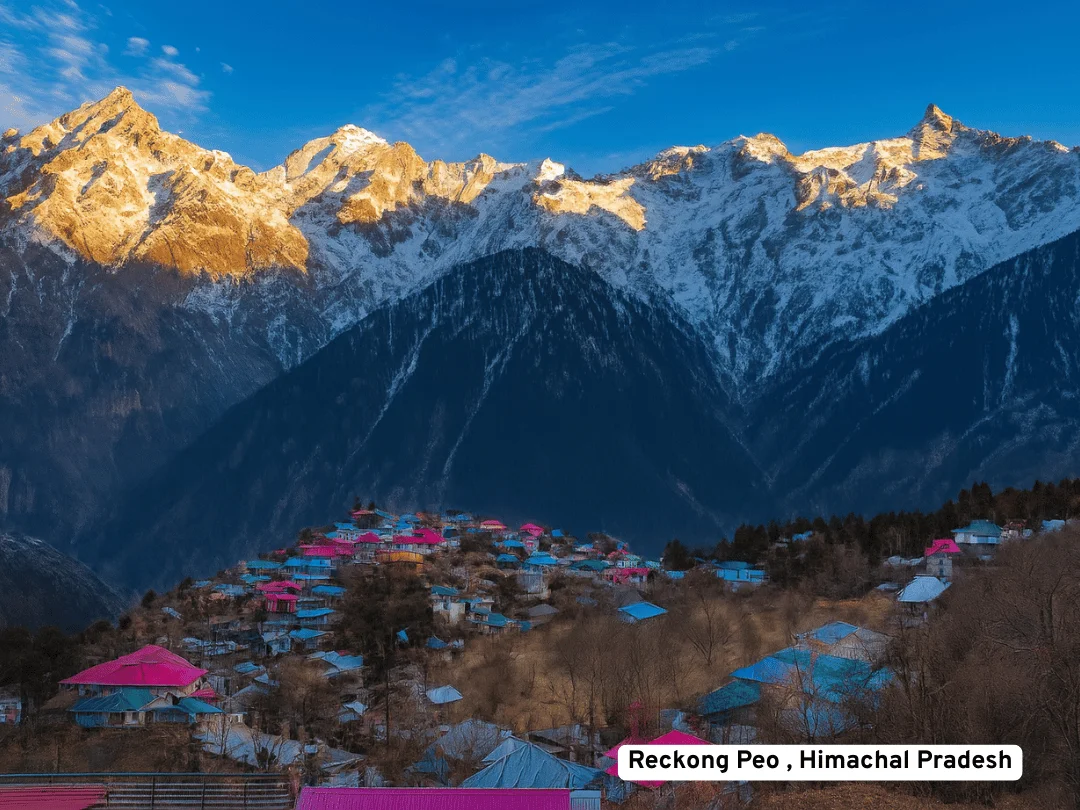
Reckong Peo is perched on a hillside with a commanding view of the Kinnaur Kailash range, including the sacred Kinnaur Kailash peak and the Shivling rock formation, which is of great religious significance. The town is surrounded by dense pine forests, apple orchards, and terraced fields, giving it a fresh and green vibe throughout most of the year.
The crisp mountain air, moderate climate, and stunning views make Peo a refreshing stop before heading deeper into the valleys of Kinnaur.
As the main administrative center of the district, Reckong Peo combines traditional Kinnauri culture with modern infrastructure. The people here are mostly from the Kinnauri community and follow a mix of Hindu and Tibetan Buddhist traditions. The local market reflects this cultural diversity, offering everything from woolen clothing and handicrafts to Tibetan prayer flags and local dried fruits.
The town also hosts various government offices, banks, medical facilities, and guesthouses, making it the go-to stop for logistics, permits, and supplies.
Kinnaur Kailash Viewpoint: Best sunrise/sunset views of the sacred peak
Chandika Devi Temple: A temple dedicated to the fierce local goddess
Kalpa (7 km): A scenic village with traditional wooden houses and apple orchards
Suicide Point: A cliffside viewpoint known for its dramatic drop and stunning visuals
Local Monasteries: Small but spiritually significant, reflecting Tibetan Buddhist influence
Explore Local Markets: Buy handwoven woolens, dry fruits, and Kinnauri caps
Cultural Walks: Interact with locals, observe temple rituals, or visit community centers
Photography: Capture panoramic views of the Kinnaur Himalayas
Trekking: Use Reckong Peo as a base for high-altitude treks like Kinnaur Kailash Parikrama
March to June: Pleasant weather, blooming flowers, and great visibility
September to November: Clear skies, post-monsoon freshness, and fewer crowds
Winter (Dec–Feb): Cold and occasionally snowy, but less ideal for travel
Avoid July–August: Due to monsoon rains and potential landslides
Reckong Peo, now the administrative headquarters of Kinnaur district, has historically been a central settlement in the region due to its location along the ancient Hindustan–Tibet trade route. While nearby villages like Kalpa and Kamru held religious and political significance under the Bushahr dynasty, Reckong Peo grew into a key hub with the arrival of modern governance and infrastructure. Over time, it evolved into a gateway town connecting the lower Sutlej Valley with the culturally rich, high-altitude villages of upper Kinnaur.