
Treks by
March to June (pleasant summer weather) and September to November (clear skies, post-monsoon greenery). Winter (December to February) is also ideal for those who enjoy cold weather and occasional snowfall.
By Air: The nearest airport is Pantnagar Airport, about 76 km from Ramgarh. Taxis are available from the airport to reach Ramgarh via Haldwani or Nainital. By Rail: Kathgodam Railway Station is the closest major railhead (around 45 km away). Regular taxis and shared cabs run from Kathgodam to Ramgarh. By Road: Ramgarh is well-connected via road from Nainital (26 km), Mukteshwar (25 km), and Haldwani. Buses, cabs, and private vehicles can easily access the route, which passes through scenic forested hills and fruit orchards.
{}
1,518 meters
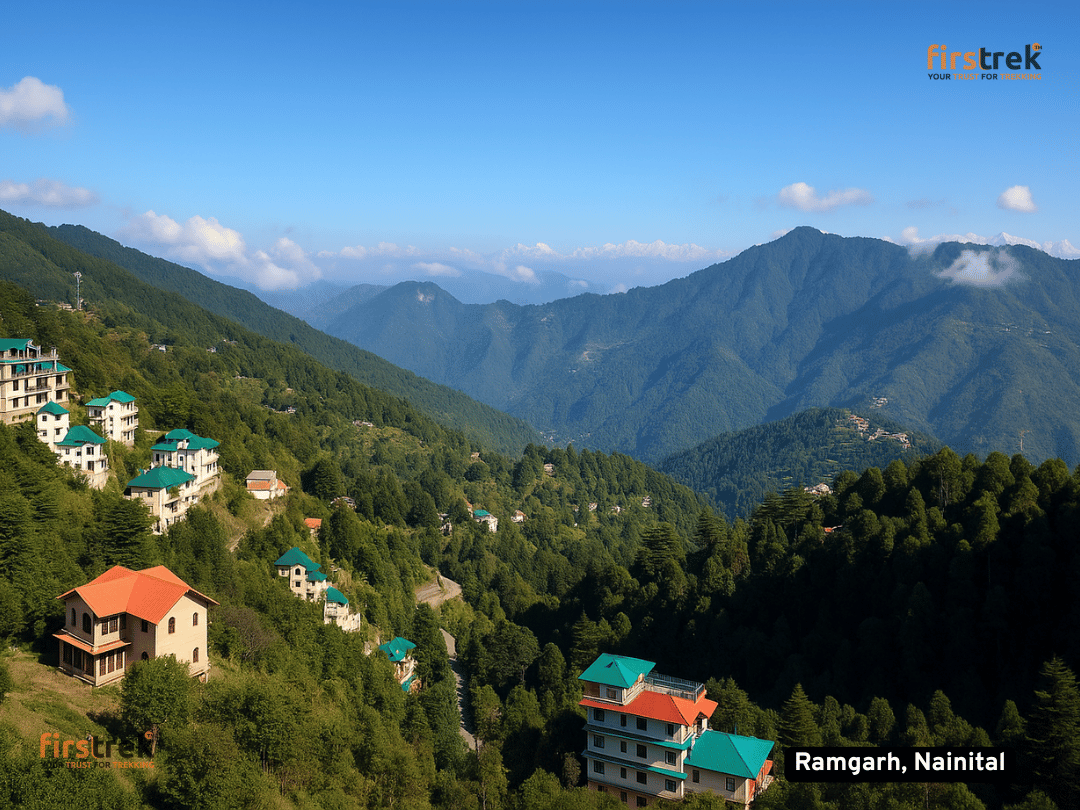
Ramgarh is a serene hill station nestled in the Nainital district of Uttarakhand, India. Perched at an elevation of approximately 1,518 meters (4,980 feet), this tranquil destination is renowned for its lush orchards, colonial heritage, and panoramic views of the snow-capped Himalayas.
Ramgarh is a peaceful hill station located in the Nainital district of Uttarakhand, perched at an altitude of approximately 1,518 meters above sea level. Surrounded by dense oak and pine forests, this charming town is widely known as the "Fruit Bowl of Kumaon" due to its lush orchards of apples, apricots, peaches, and plums.
Once a British cantonment area, Ramgarh still retains its colonial-era charm, with old bungalows and scenic landscapes that inspired literary legends like Rabindranath Tagore and Mahadevi Verma. Tagore is even believed to have started writing Gitanjali while staying here.
Ramgarh’s roots trace back to the British colonial era, when it was developed as a peaceful cantonment and summer retreat. The serene climate and breathtaking Himalayan views made it an ideal escape for European officers and Indian scholars alike. It is notably linked to Rabindranath Tagore, who is believed to have written part of Gitanjali while staying here. Poetess Mahadevi Verma also spent significant time in Ramgarh, and her home has been converted into a memorial and museum that attracts literary enthusiasts. These connections have earned Ramgarh a reputation as a cultural and intellectual haven.