
Treks by
March to June: Pleasant weather, great for sightseeing and temple visits September to November: Perfect for witnessing Kullu Dussehra and post-monsoon greenery Avoid: July–August due to monsoon rains and potential landslides Winter (Dec–Feb): Cold but scenic, less crowded
By Air: Nearest Airport: Bhuntar Airport (Kullu-Manali Airport), ~10 km from the temple From Bhuntar, taxis and local buses are available to reach the temple in Kullu town By Train: Nearest Railway Station: Joginder Nagar (125 km) From there, travel by road to Kullu via Mandi By Road: Kullu is well-connected via NH3 (Delhi–Manali Highway) Direct buses and taxis are available from Delhi, Chandigarh, Manali, and Shimla The temple is located in Sultanpur, the old capital of Kullu, and can be reached by walking a short distance from the main town center
{}
1,220 meters
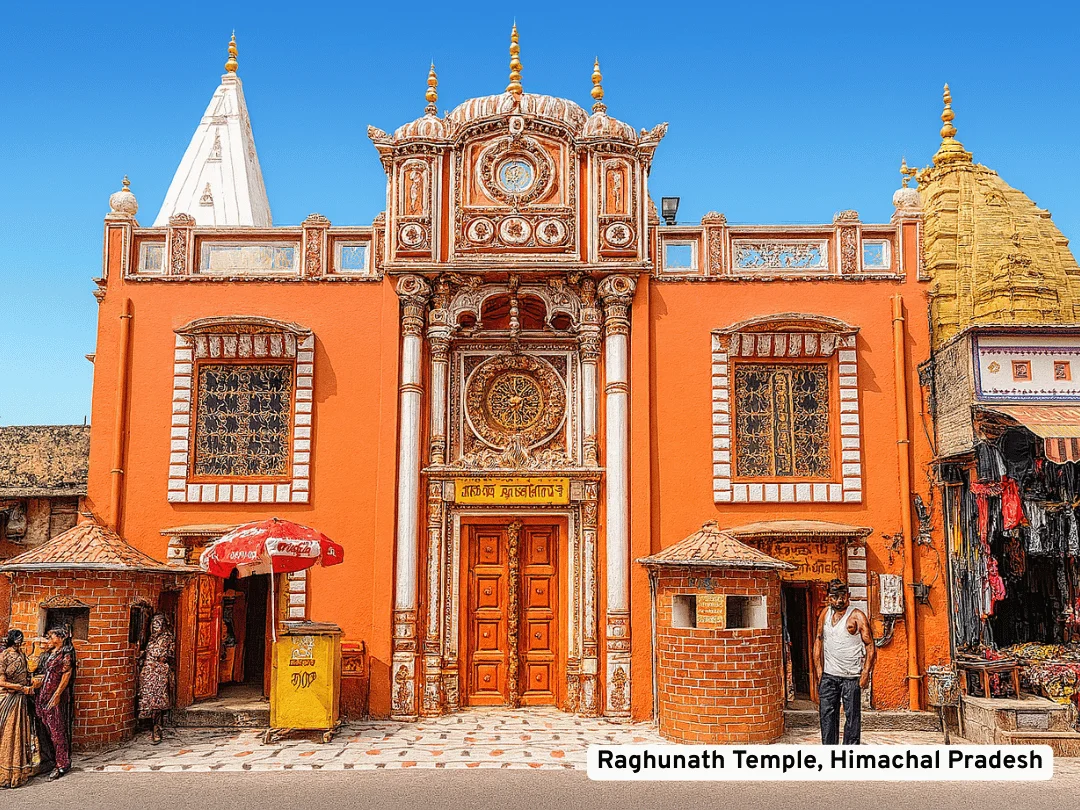
Nestled in the heart of Kullu town, the Raghunath Temple is a revered 17th-century Hindu shrine dedicated to Lord Rama (also known as Raghunath). Built by the kings of the Kullu princely state, this temple stands as a fine example of Himachali wooden architecture, featuring intricate carvings and traditional craftsmanship. Surrounded by a serene courtyard and shaded by old deodar and pine trees, the temple is a tranquil haven for devotees and visitors alike. Each year during Navratri and Ram Navami, Raghunath Temple hosts special prayers and cultural programs, drawing pilgrims and tourists from across the region. Its peaceful ambiance and spiritual energy make it a must-visit spot for those exploring Kullu’s heritage beyond its natural beauty.
Raghunath Temple is one of the most historically and spiritually significant temples in Kullu Valley, dedicated to Lord Rama, the seventh incarnation of Lord Vishnu. Located in Kullu town, this temple is not only a sacred pilgrimage site but also a symbol of the region’s ancient royal heritage and devotion to Ram Bhakti.
Built in 1651 AD by Raja Jagat Singh, the ruler of the Kullu kingdom, the temple has a unique origin. According to legend, the king was plagued by guilt over a grave mistake and sought spiritual redemption. A saint advised him to install an idol of Lord Rama from Ayodhya in Kullu. The king brought the idol and established the temple, thus beginning the legacy of Raghunath Ji as the presiding deity of Kullu.
Since then, Raghunath Ji has been regarded as the ruling deity of the valley, and the temple holds immense reverence among the locals.
The temple is built in the traditional pahadi style, blending Himachali wooden architecture with stone craftsmanship. It features a tiered, pyramid-shaped roof, finely carved wooden panels, and a serene courtyard with views of the surrounding valley. The idol of Lord Rama enshrined inside the sanctum is believed to be the same one brought from Ayodhya.
Its location in the center of Kullu town makes it easily accessible, and its peaceful surroundings attract both spiritual seekers and history enthusiasts.
Raghunath Temple plays a central role in Kullu Dussehra, one of Himachal Pradesh’s grandest festivals. Unlike Dussehra in other parts of India, where Ravana’s effigies are burnt, the Kullu version honors Lord Rama’s victory and celebrates the reunion of local deities (devtas) who visit Lord Raghunath in large processions. The temple becomes the focal point of these celebrations, which last for a week and attract thousands of devotees and tourists.
Beyond its historical and architectural value, Raghunath Temple is a peaceful spiritual site. The chanting of mantras, ringing of bells, and scent of incense create a calming ambiance. Many visitors come here to offer prayers, meditate, or simply sit in the tranquil environment to soak in the divine energy.
The Raghunath Temple was constructed in 1651 AD by Raja Jagat Singh, the king of Kullu. Legend says the king was burdened by guilt after wronging a Brahmin family and, on a saint’s advice, brought an idol of Lord Rama from Ayodhya to seek redemption. He installed it in this temple, establishing Lord Raghunath as the principal deity of Kullu. Since then, the deity has symbolized not just spiritual faith but also royal authority, as the kings of Kullu considered themselves direct servants of Lord Rama. The temple has stood for centuries, witnessing both the spiritual and cultural evolution of the valley.