
Treks by
March to June and September to November are the ideal months to visit Patal Bhuvaneshwar.
By Road: Patal Bhuvaneshwar is well-connected by motorable roads. It is about 14 km from Gangolihat, 90 km from Pithoragarh, and 170 km from Almora. Taxis and buses are available from major towns in Kumaon. By Train: The nearest railway station is Kathgodam (around 200 km away). From there, you can hire a taxi or take a bus. By Air: The nearest airport is Pantnagar Airport, approximately 230 km from Patal Bhuvaneshwar.
{}
1,350 meters
A mystical underground cave temple dedicated to Lord Shiva, Patal Bhuvaneshwar in Uttarakhand is a spiritual marvel filled with natural limestone formations that resemble gods, sages, and mythical creatures. Hidden deep within the Kumaon hills, it is said to be connected with many legends from the Puranas and Mahabharata.
Nestled deep in the Kumaon hills of Uttarakhand, Patal Bhuvaneshwar is a sacred limestone cave temple dedicated to Lord Shiva and is one of the most spiritually significant yet lesser-known pilgrimage sites in India. Located near the small village of Bhuvaneshwar in Pithoragarh district, this mystical cave lies at an altitude of around 1,350 meters above sea level and is believed to be as old as time itself.
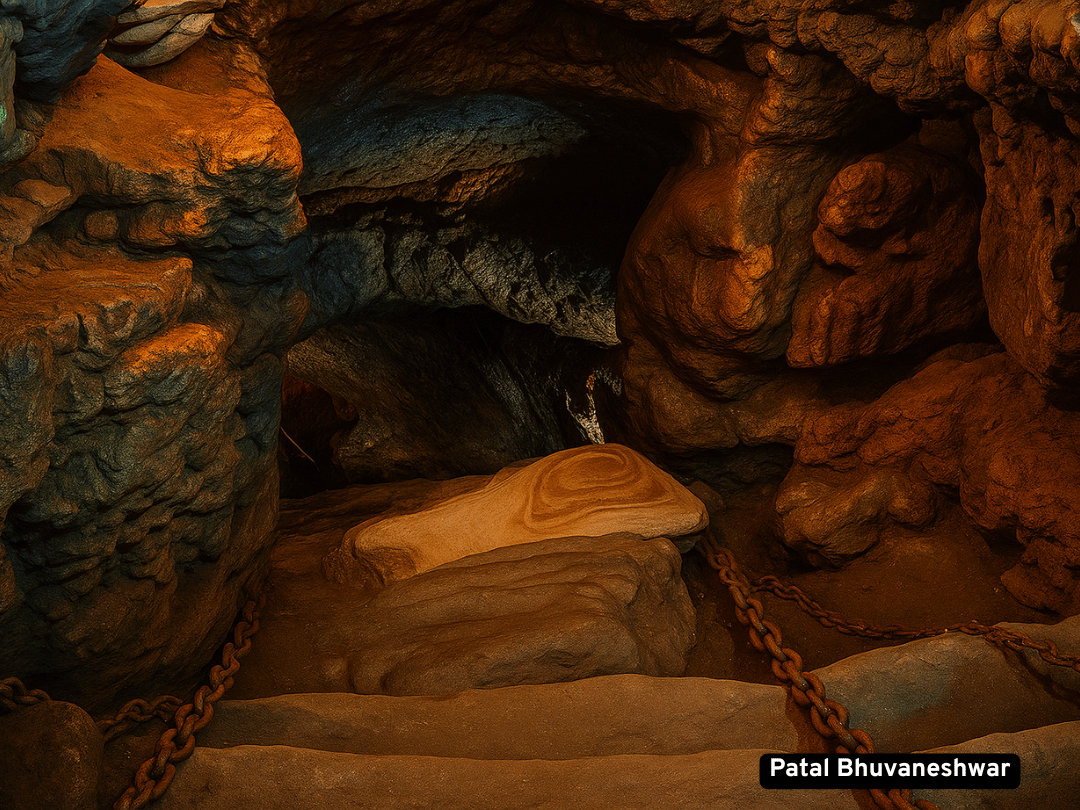
The entrance to the cave is narrow and steep, leading to a surreal world beneath the earth, filled with natural rock formations and stalactites that resemble deities, mythological beings, and symbolic elements mentioned in Hindu scriptures. Inside, the cave is said to house forms of Lord Ganesha’s head, Sheshnag, Kal Bhairav, and Amarnath-like ice Lingams, along with countless other divine impressions naturally carved by dripping limestone over centuries.
Patal Bhuvaneshwar holds a sacred position in Hindu mythology and is believed to have been discovered by Adi Shankaracharya in the 8th century AD. The cave is mentioned in the Skanda Purana, which describes it as the abode of 33 crore Hindu gods. It is said that the Pandavas visited the cave during their final pilgrimage to the Himalayas, and legends also connect it to the mythical path to Kailash. The natural rock formations inside the cave are believed to represent Sheshnag (the cosmic serpent), Kal Bhairav, Airavat (Indra’s elephant), and even the tongue of Kali, among many others. Over time, the cave became a pilgrimage site for sages and devotees seeking divine energy and enlightenment. Despite its mysticism, it remained largely hidden from the mainstream until the last few centuries.