
Treks by
Spring to Early Summer (March to June): Pleasant weather and clear skies make it ideal for treks and riverside stays. Autumn (September to November): Post-monsoon clarity and fewer crowds make it perfect for peaceful visits.
By Air: The nearest airport is Bhuntar Airport (approx. 31 km from Kasol). Taxis are available from the airport. By Train: The nearest major railway station is Joginder Nagar, about 145 km away. By Road: From Delhi: Kasol is around 520 km. Buses run till Bhuntar or Manikaran; taxis or local buses connect to Kasol. From Manali: About 75 km via Kullu and Bhuntar.
{}
1,580 meters
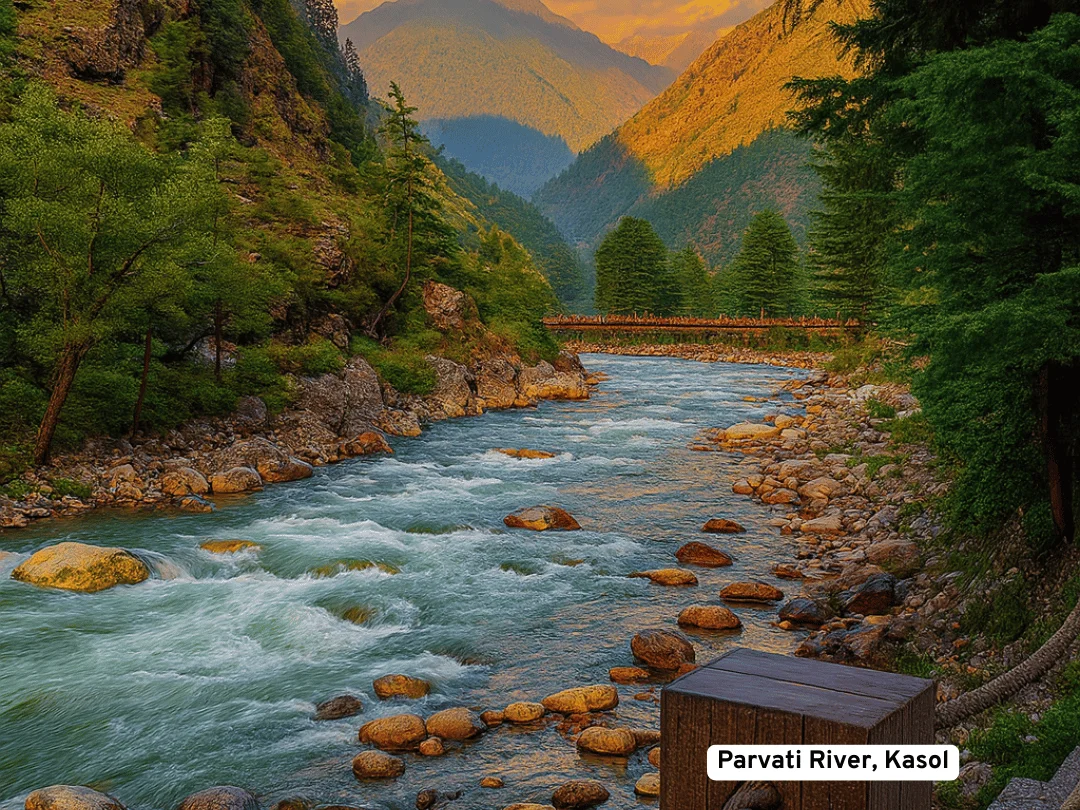
Flowing gracefully alongside the village of Kasol, the Parvati River adds a serene charm to this popular backpacker destination in Himachal Pradesh. With its crystal-clear waters and soothing sound, the river creates a peaceful ambiance perfect for riverside cafes, yoga, and nature walks. It’s a central part of Kasol’s landscape, offering scenic views, chilly breezes, and a refreshing escape for travelers exploring the Parvati Valley.
The Parvati River is a stunning natural feature that flows through the heart of Kasol, a small Himalayan village nestled in Himachal Pradesh’s Parvati Valley. Originating from the Man Talai Glacier near the Pin Parvati Pass, this glacial-fed river winds its way down steep alpine terrains before merging with the Beas River near Bhuntar.
In Kasol, the Parvati River becomes more than just a flowing water body—it is the lifeline and soul of the valley. Its crystal-clear waters, cascading over smooth stones and framed by deodar and pine trees, offer a calming atmosphere for all who visit. The sound of rushing water echoes through the valley, creating a tranquil background for cafés, homestays, and riverside treks.
The river is not used for boating or swimming due to its strong and often unpredictable currents. However, it is the perfect setting for peaceful walks, riverside meditation, photography, and simply soaking in nature’s beauty. Along the banks, you’ll find wooden bridges and quiet spots where travelers and locals alike sit in silence, read, or enjoy the cool breeze.
As it flows past Kasol and other quaint villages like Chalal and Tosh, the Parvati River plays a vital role in sustaining local flora, fauna, and agriculture. It’s also deeply connected to spiritual life in the valley, especially near Manikaran Sahib, where its waters are believed to hold healing powers.
Whether you’re watching the sunrise reflect off the flowing water or enjoying a cup of tea in a riverside café, the Parvati River offers a serene and unforgettable experience in Kasol.
The Parvati River flows through the sacred Parvati Valley, which holds spiritual significance in Hindu mythology. The river is believed to be named after Goddess Parvati, the consort of Lord Shiva, who is said to have meditated in the valley. Over the years, the river has become central not only to mythological tales but also to the daily life and tourism that thrives in Kasol and nearby villages like Manikaran and Tosh.