
Treks by
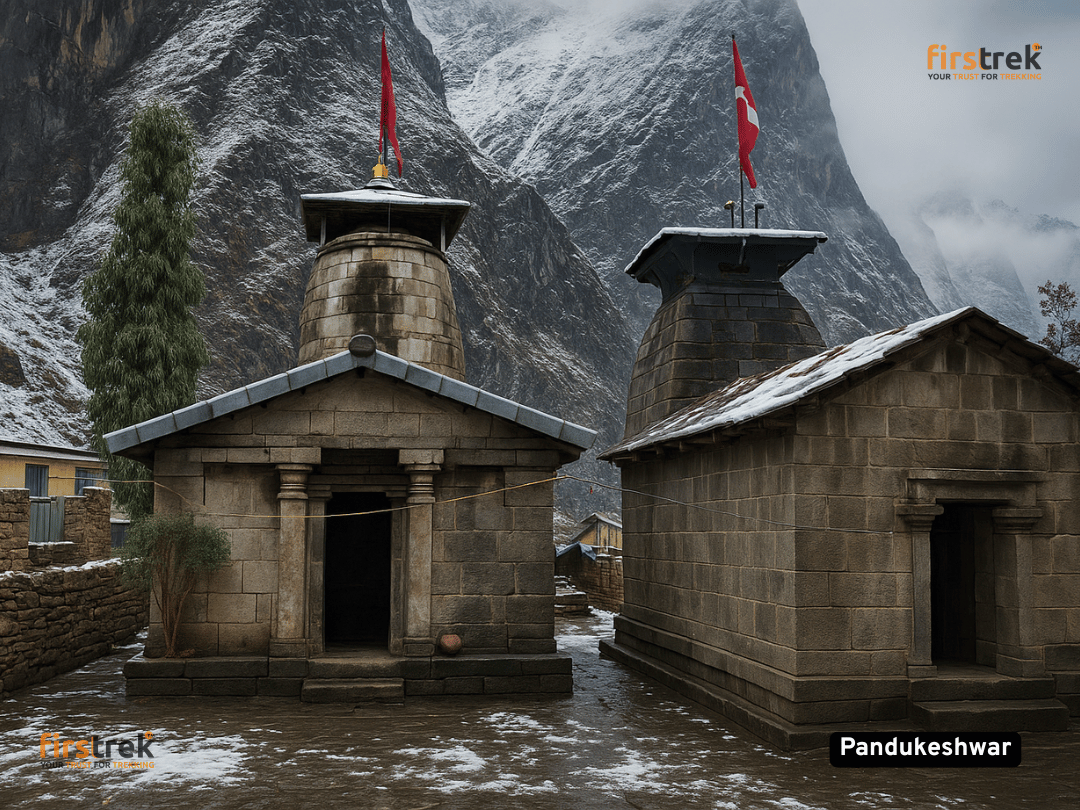
April to June and September to November are ideal months. Summer offers pleasant weather for temple visits and onward journeys to Badrinath.
By Road: Located on NH-58, 18 km from Joshimath, and 7 km before Govindghat. Regular shared jeeps and buses operate from Joshimath and Badrinath. By Train: The nearest railway station is Rishikesh (approx. 270 km), connected to major cities in North India. By Air: Nearest airport is Jolly Grant Airport, Dehradun (approx. 290 km). From there, taxis or buses are available to reach Joshimath and then Pandukeshwar.
{}
1,829 meters
Pandukeshwar is a revered Hindu pilgrimage site nestled at an altitude of 1,829 meters in the Chamoli district of Uttarakhand, located between Joshimath and Badrinath Dham on the banks of the sacred Alaknanda River. Rich in mythological significance and spiritual calm, it is believed to be the place where King Pandu, father of the Pandavas from the Mahabharata, performed penance to atone for his sins.
Pandukeshwar is a spiritually significant village nestled between Joshimath and Badrinath, located at an altitude of 1,829 meters in Chamoli district, Uttarakhand. This sacred site is believed to be the meditation and penance ground of King Pandu, the father of the Pandavas. It is one of the most important stops along the Char Dham Yatra route.
The village is home to the revered Yogadhyan Badri Temple, one of the Sapta Badri (Seven Badri Temples), and the Vasudeva Temple, dedicated to Lord Vishnu. According to legend, King Pandu meditated here to absolve his sins, and the place was later sanctified by Adi Shankaracharya.
Pandukeshwar is steeped in Hindu mythology and is believed to have been established by King Pandu, father of the Pandavas from the Mahabharata. As per legends, King Pandu renounced his throne and came here to perform penance for killing two sages while hunting. It is said that Lord Indra blessed him here, and his sons—the Pandavas—were born in this region. The ancient Yogadhyan Badri Temple, believed to have been installed by Adi Shankaracharya, stands testimony to the village's spiritual and historical relevance. It is one of the Sapta Badri shrines and remains an important winter worship site when the main Badrinath Temple closes during snowfall.