
Treks by
March to June: Clear skies, blooming gardens, and pleasant weather make this the best time to explore the institute. September to November: Post-monsoon months offer crisp air, lush greenery, and fewer tourists. Avoid July–August: These months bring frequent rain which may limit outdoor exploration. December to February: Winters are calm and chilly, with fewer crowds—perfect for quiet reflection.
By Air: The nearest airport is Gaggal (Kangra) Airport, around 20 km from the institute. Taxis are easily available at the airport. By Train: Pathankot Railway Station is the closest major railhead, about 90 km away. From there, you can reach Dharamshala by taxi or bus. By Road: Norbulingka is about 6 km from Dharamshala town and 10 km from McLeod Ganj. You can take a taxi, auto-rickshaw, or even a local bus to the Sidhpur area where the institute is located.
{}
1,500 meters
Norbulingka Institute is a serene Tibetan cultural center located near Dharamshala, dedicated to preserving traditional Tibetan art, literature, and heritage. Founded in 1995, the institute is a living example of Tibetan architecture and craftsmanship, with peaceful gardens, artisan workshops, and a beautiful temple. Visitors can explore vibrant thangka painting studios, woodcarving sections, and doll-making units, all run by skilled Tibetan artisans. More than just a tourist spot, Norbulingka offers an immersive cultural experience, promoting the spirit and identity of Tibet in exile.
Tucked away in the lush green foothills of Dharamshala, Norbulingka Institute stands as a peaceful sanctuary dedicated to the preservation of Tibetan art and culture. Founded in 1995 by the 14th Dalai Lama and named after the traditional summer palace of the Dalai Lamas in Lhasa, the institute serves as both a cultural hub and a working artisan center for Tibetans living in exile.
Norbulingka is not just a museum—it’s a vibrant, working space where you can witness ancient Tibetan crafts being practiced with meticulous care. From thangka painting and wood carving to metalwork and textile weaving, each craft is taught and passed down to younger generations through in-house training programs.
The institute also produces exquisite handcrafted items sold in its on-site shop, providing employment and a livelihood to Tibetan refugees while keeping their cultural identity alive.
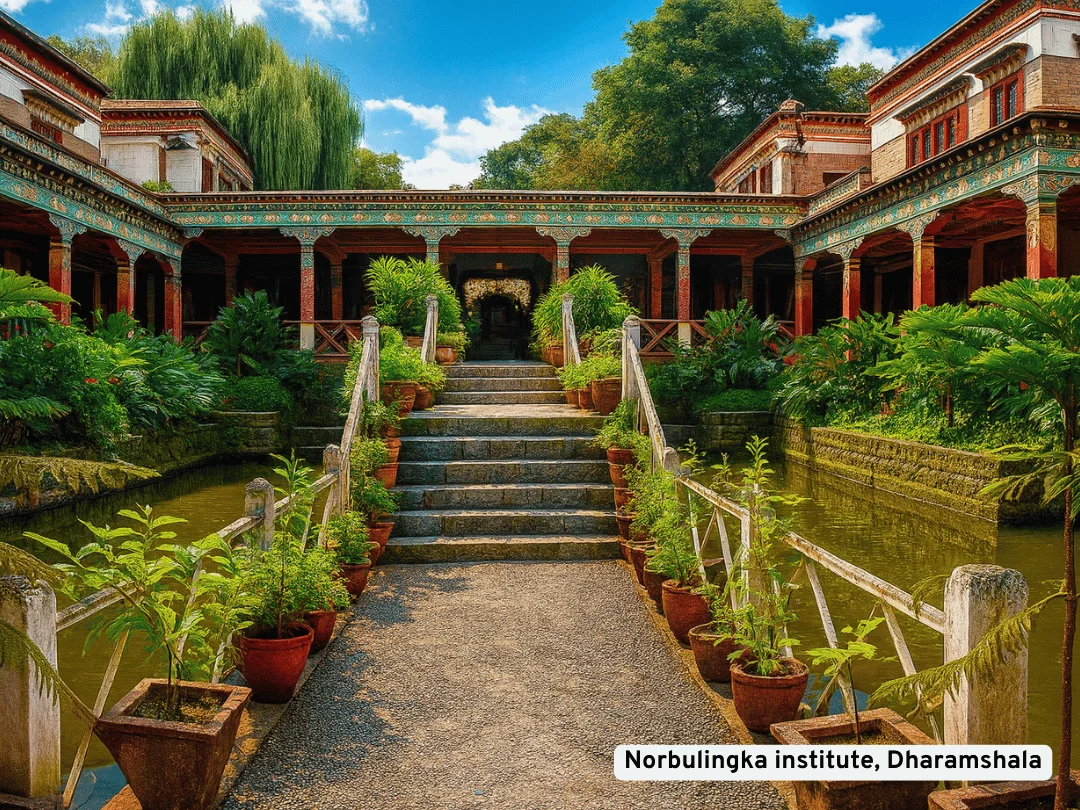
The entire complex is designed in traditional Tibetan style, featuring intricate wooden architecture, water-fed gardens, lotus ponds, and prayer wheels. At the heart of Norbulingka lies the Deden Tsuglakhang temple, adorned with stunning murals and a majestic 14-foot Buddha Shakyamuni statue, hand-cast by local artisans.
Observe live demonstrations of Tibetan crafts by skilled artisans
Visit a museum dedicated to Tibetan dolls and folklore
Enjoy serene gardens and peaceful spiritual ambiance
Support a cause that sustains Tibetan identity and livelihood
Attend workshops, art residencies, or cultural events
Established in 1995 by the 14th Dalai Lama and officially run by the Norbulingka Trust, the institute was created to safeguard the rich cultural heritage of Tibet, which faced threats of extinction after the Chinese occupation of Tibet. Named after the traditional summer palace of the Dalai Lamas in Lhasa, this center was built to mirror Tibetan architecture and values, making it both a cultural and spiritual landmark in exile.