
Treks by
May to October (The valley remains closed from November to April due to heavy snowfall.)
By Road: Reach Joshimath (from Rishikesh, Dehradun, or Haridwar via NH-7). From Joshimath, drive ~88 km through Tapovan – Lata – Malari – Gamshali to reach Niti Village. The road condition can vary and may require a 4x4 vehicle. Travel beyond Bampa may involve trekking if the road is blocked. By Rail: Nearest railway stations: Rishikesh (346 km) Dehradun (380 km) By Air: Nearest airport: Jolly Grant Airport, Dehradun (approx. 362 km from Niti via Joshimath) Permit Required: Since Niti Valley lies close to the Indo-Tibet border, a permit from the SDM office in Joshimath is mandatory for Indian citizens. Foreign tourists are not allowed beyond Malari.
{}
3,600 meters
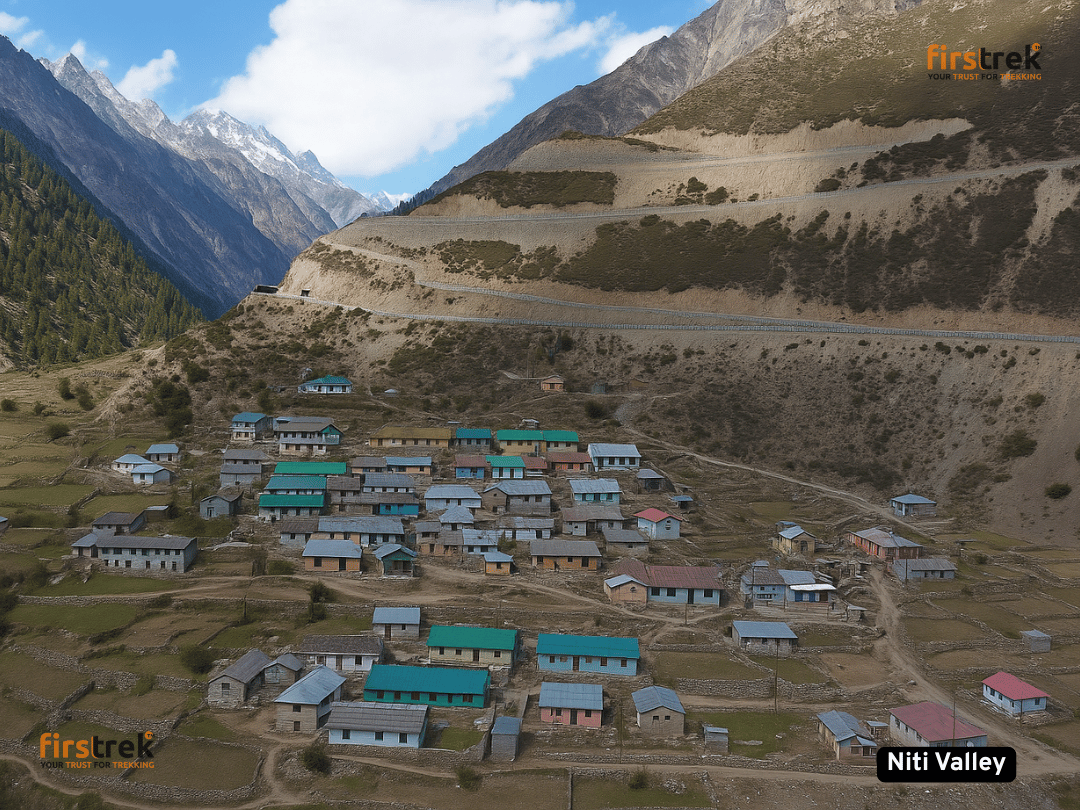
Niti Valley is a remote and breathtaking Himalayan valley located in the Chamoli district of Uttarakhand, India. Situated at an altitude of approximately 3,600 meters, it lies near the Indo-Tibetan border and is part of the Nanda Devi Biosphere Reserve. The valley is named after Niti Village, the last inhabited settlement before the Niti Pass, which historically served as a trade route between India and Tibet.
Niti Valley is one of the last inhabited regions on the Indo-Tibetan border, tucked away in the upper reaches of Chamoli district, Uttarakhand. Located at an altitude of approximately 3,600 meters, this secluded valley lies beyond Joshimath, offering a raw, untouched Himalayan experience.
The valley derives its name from Niti Village, the final civilian settlement before the Niti Pass, which was once an ancient trade route to Tibet. Now closed to regular trade, the route remains a place of deep cultural and historical value. Niti Valley also forms a critical part of the Nanda Devi Biosphere Reserve, and is home to rare Himalayan flora and fauna, including the elusive snow leopard, Himalayan blue sheep, and medicinal herbs.
Niti Valley once served as a crucial Indo-Tibetan trade route through the Niti Pass, facilitating the exchange of salt, wool, grains, and herbs between India and Tibet. This route was actively used until the 1962 Indo-China War, after which the valley was declared a restricted border zone. The region is also linked to Hindu mythology, particularly the Dronagiri Parvat, believed to be the mountain from which Lord Hanuman fetched the Sanjeevani herb in the Ramayana.