
Treks by
November to February (Winter Abode of Badrinath) April to June (Pleasant weather for sightseeing and trekking)
By Road: Joshimath is well-connected by NH-7 (formerly NH-58) from Haridwar and Rishikesh. Regular buses and shared taxis are available from Rishikesh (256 km) and Dehradun (294 km). By Rail: Nearest railway station is Rishikesh (approx. 256 km). From there, taxis and buses are available to Joshimath. By Air: Nearest airport is Jolly Grant Airport, Dehradun (approx. 272 km). Taxis and buses are easily available from the airport. The temple is just 500 meters from Joshimath Bus Stand, walkable or via auto-rickshaw.
{}
1,890 meters
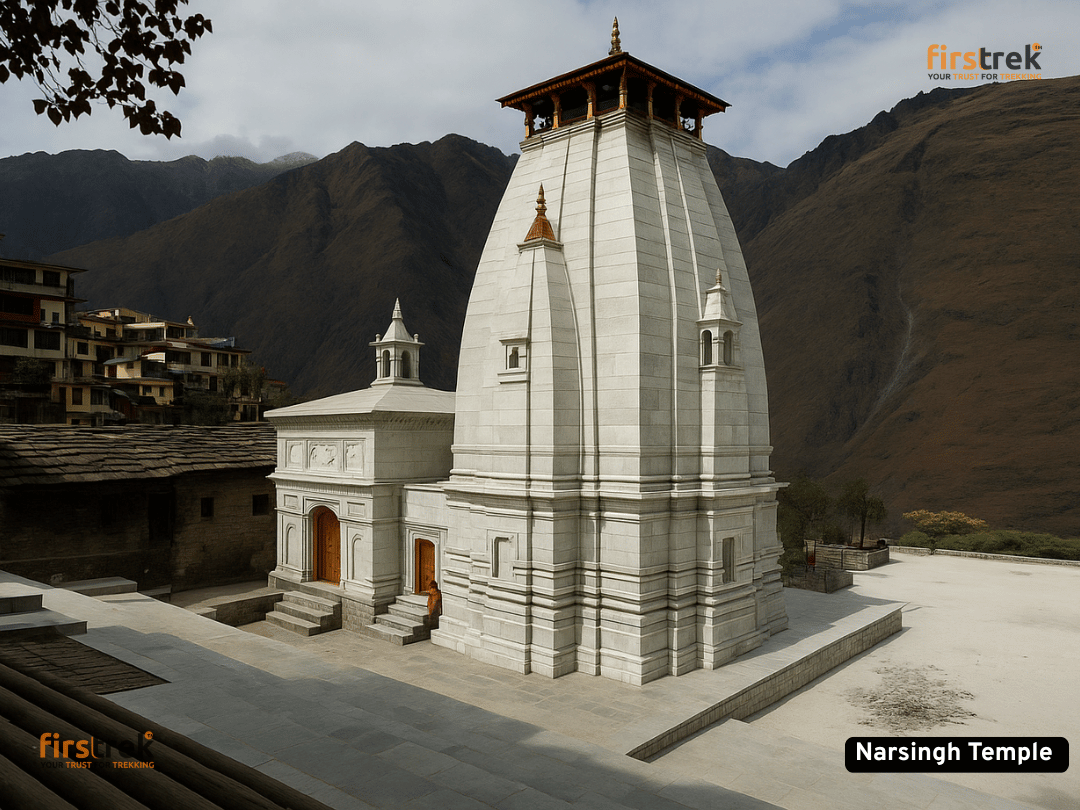
Narsingh Temple, also known as Narasimha Badri, is a revered Hindu shrine located in the lower bazaar area of Joshimath, Chamoli district, Uttarakhand. Dedicated to Lord Narasimha, the fourth avatar of Lord Vishnu, the temple holds significant religious and historical importance.
A Winter Seat of Lord Badrinath and a Site of Sacred Prophecy Visit Narsingh Temple not just for darshan, but to witness a living prophecy and experience the divine calm of Joshimath.
Narsingh Temple (नरसिंह मंदिर) in Joshimath is believed to have been established in the 8th century by Adi Shankaracharya. It enshrines a Shaligram idol of Lord Narasimha, the fourth avatar of Vishnu who appeared as half-lion, half-man to protect his devotee Prahlad. The temple is one of the Sapta Badri (7 sacred Vishnu shrines in the Garhwal Himalayas) and is especially significant because it serves as the winter seat of Lord Badrinath. A unique prophecy surrounds the temple: the left arm of the idol is said to be thinning, and when it eventually falls off, it is believed that the route to Badrinath will be blocked, and Lord Badrinath’s worship will shift to Bhavishya Badri.