
Treks by
May to October (ideal months: mid-June to mid-September)
By Air: The nearest airport is Jolly Grant Airport, Dehradun (approx. 280 km from Joshimath). By Rail: The nearest railway station is Rishikesh (approx. 250 km), followed by road travel. By Road: Joshimath is well connected by road to Rishikesh, Haridwar, and Dehradun. From Joshimath, Lata village (23 km) serves as the entry point for the trek to the park. Entry is regulated and requires a permit from the forest department or GMVN.
{}
2,100 meters
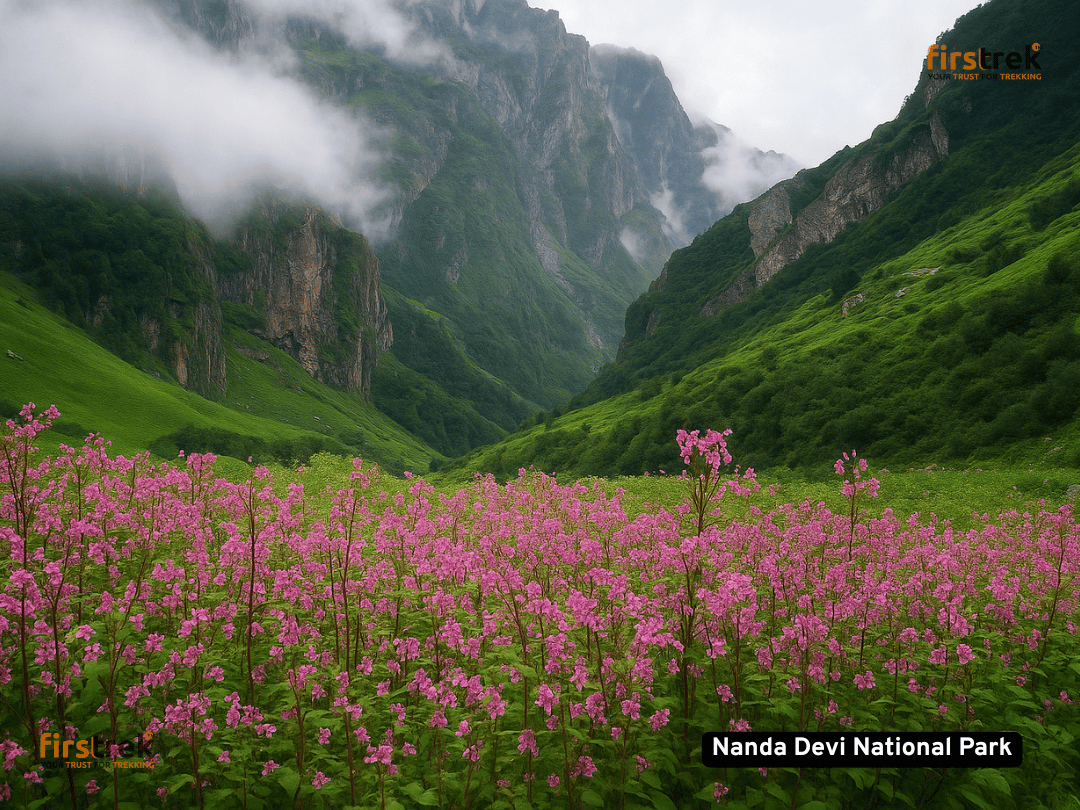
Nanda Devi National Park is a high-altitude wildlife sanctuary and UNESCO World Heritage Site located near Joshimath in the Chamoli district of Uttarakhand. Surrounded by snow-clad Himalayan peaks and deep gorges, the park is known for its exceptional natural beauty and ecological significance. It houses the sacred Nanda Devi peak and lies within the larger Nanda Devi Biosphere Reserve. The park is accessible from Lata village and is ideal for restricted ecotourism and high-altitude trekking.
Nanda Devi National Park is nestled in the Chamoli district of Uttarakhand, near the town of Joshimath. The park is centered around the majestic Nanda Devi peak (7,816 meters), the second-highest mountain in India. Its remote and rugged terrain includes alpine meadows, deep gorges, glaciers, and lush forests, creating a naturally enclosed sanctuary that has remained ecologically intact for centuries.
Nanda Devi National Park was established in 1982 and became part of the UNESCO World Heritage Site list in 1988, later expanded as part of the Nanda Devi and Valley of Flowers National Parks. However, its significance goes far beyond modern conservation efforts. The Nanda Devi peak, standing at 7,816 meters, has been worshipped for centuries by the people of Uttarakhand, especially in the Garhwal and Kumaon regions. The park area was historically inaccessible, and its inaccessibility helped preserve its pristine ecosystem. The first successful entry into the inner sanctuary was by Eric Shipton and H. W. Tilman in 1934. It was later closed to trekkers in 1983 to protect its delicate environment, though limited access was restored in the 2000s under strict regulations.