
Treks by
Ideal Seasons: – March to June: Mild, clear weather—best for sightseeing – September to November: Bright post-monsoon skies—also festival time en.wikipedia.org Peak Festivals: – Chaitra & Ashwin Navratri, Shravan Mela, and especially Nanda Ashtami (Aug–Sep fair)
By Road (Recommended) Temple is ~2–3 km north of the Nainital Bus Stand/Mall Road; easily reached on foot or via local auto-rickshaw From Delhi: ~350 km, ~8–10 hrs drive or bus From Chandigarh: ~130 km via taxi or bus By Rail Nearest broad-gauge station: Kathgodam, ~35 km away From Kathgodam, take a taxi or bus to Nainital and then proceed to the temple. By Air Pantnagar Airport (PGH): ~55 km from Nainital Regular flights connect Pantnagar with Delhi, Dehradun, and other nearby cities. Within Nainital Located atop a hillock near Mall Road and Naini Lake—accessible on foot via Mall Road or Naini Lake boat ride
{}
2,084 meters
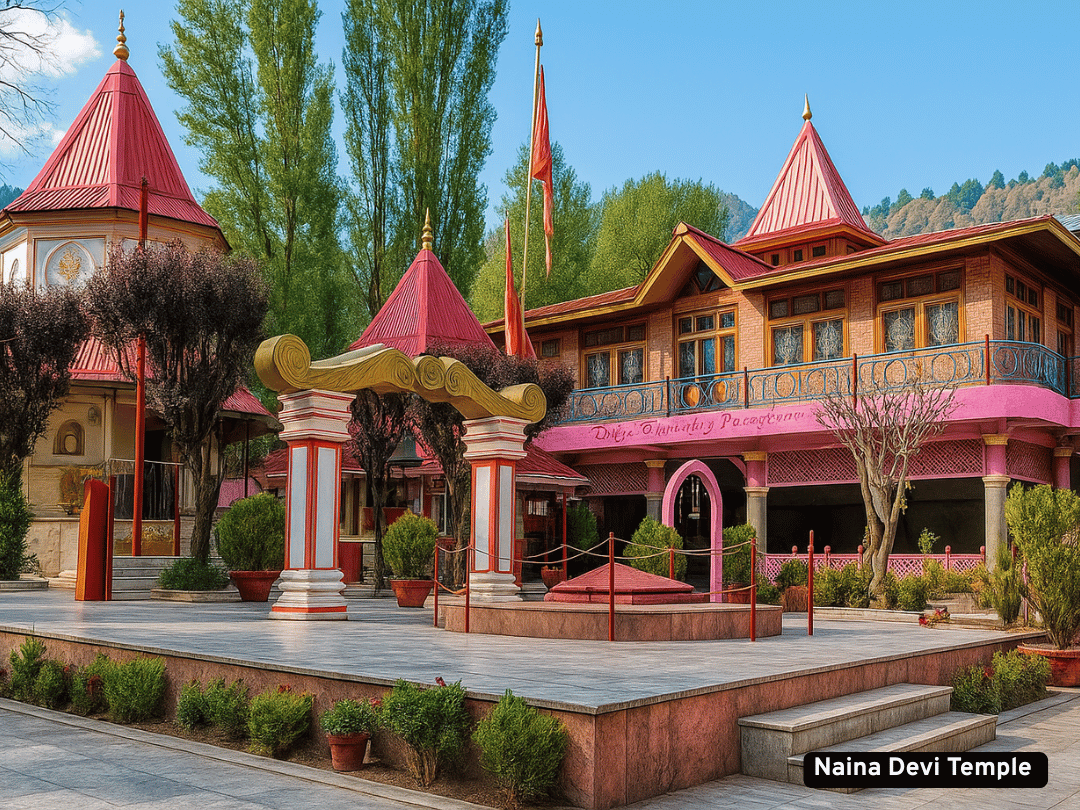
Naina Devi Temple is a revered Hindu shrine located on the northern shore of Naini Lake in Nainital, Uttarakhand. Dedicated to Goddess Naina Devi, an embodiment of Shakti, the temple holds immense spiritual significance as one of the 51 Shakti Peethas—believed to be the spot where the eyes (naina) of Goddess Sati fell.
The temple showcases traditional North Indian temple architecture and houses three deities: Goddess Naina Devi (center), Mata Kali (left), and Lord Ganesha (right). Outside the sanctum, idols of Hanuman and a Peepal tree stand as symbols of protection and spiritual energy.
The temple attracts thousands of devotees and tourists every year, especially during Nanda Ashtami and Navratri, when the shrine is adorned with flowers and lights. Pilgrims seek blessings for prosperity, health, and inner peace. The calm environment, chanting of mantras, and scenic views of the lake and mountains make it a peaceful spiritual retreat.
Naina Devi Temple has deep mythological roots and is considered one of the 51 sacred Shakti Peethas. According to legend, this is the spot where the eyes (naina) of Goddess Sati fell when Lord Shiva wandered the world with her charred body. The temple was initially built in the 15th century and later reconstructed in 1883 after being destroyed by a massive landslide in 1880. The present structure was built by locals, led by Moti Ram Shah, and continues to be a significant pilgrimage center in the Kumaon region.