
Treks by
March to June: Pleasant weather, blooming apple orchards, clear skies September to November: Crisp air, post-monsoon greenery, and great views Avoid: July–August (monsoon season; slippery roads) Winter (Dec–Feb): Cold, occasional snow, scenic but less accessible
By Air: Nearest Airport: Bhuntar Airport (Kullu-Manali Airport) – 35 km away Taxis are available from the airport to Naggar By Train: Nearest Railhead: Joginder Nagar (145 km) or Chandigarh (300+ km) Travel onwards by road via taxi or bus By Road: Well-connected by road via NH3 (Delhi–Manali highway) From Manali (22 km) or Kullu (24 km), take local buses or taxis Castle is located within walking distance from Naggar bus stand
{}
1,800 meters
Naggar Castle, located in the quaint village of Naggar near Manali in Himachal Pradesh, is a stunning example of traditional Himachali architecture blended with medieval influences. Built in the 15th century by Raja Sidh Singh of Kullu, the castle served as the royal residence for centuries and is now a heritage hotel maintained by HPTDC. Constructed with stone and wood using earthquake-resistant Kathkuni style, it offers breathtaking views of the Beas Valley and surrounding snow-clad peaks. The castle houses an art gallery, ancient temples nearby, and is popular among history buffs and architecture lovers alike.
Naggar Castle, perched above the Beas River in the peaceful Naggar village of Kullu district, is a historic marvel that beautifully blends heritage, architecture, and scenic Himalayan charm. Built in the 15th century by Raja Sidh Singh, the then ruler of Kullu, this castle once served as the royal seat of the Kullu kings for many generations. Today, it stands as a heritage hotel managed by the Himachal Pradesh Tourism Development Corporation (HPTDC) and is open to both guests and day visitors.
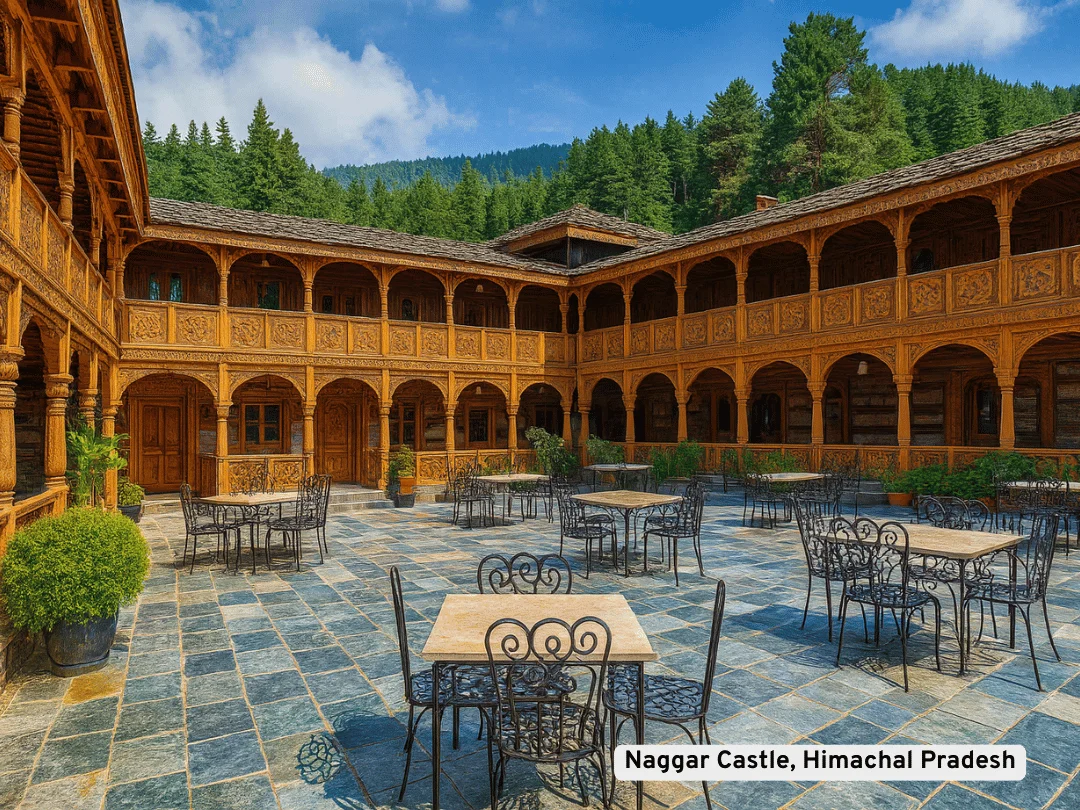
Naggar Castle is a remarkable example of Kathkuni architecture, a traditional Himachali style involving interlocked stone and wood construction that is not only aesthetically appealing but also resistant to earthquakes. The castle features intricately carved wooden balconies, slate roofing, and open courtyards that open up to panoramic views of the Kullu Valley and snow-capped Himalayan peaks.
Inside, you’ll find antique fireplaces, staircases, and woodwork that reflect the grandeur of Kullu’s royal history. One section of the castle has been transformed into a museum and art gallery, showcasing traditional Himachali artifacts and works by Russian artist Nicholas Roerich, who lived nearby.
Nestled amidst lush forests and apple orchards, the castle offers a serene atmosphere far removed from the rush of Manali town. It serves as a perfect retreat for history lovers, architecture enthusiasts, and travelers seeking cultural depth. The surrounding trails and views offer perfect spots for photography and leisure.
Roerich Art Gallery (walking distance)
Tripura Sundari Temple, a traditional wooden temple near the castle
Naggar Village for local crafts and culture
Short drives to Jana Falls and other hidden gems in the Kullu Valley
Today, Naggar Castle functions as a heritage hotel, with a portion open for tourists to explore. Visitors can dine in the castle’s restaurant, which serves a blend of local Himachali and Indian cuisines, and enjoy the royal ambience while overlooking the Beas River and surrounding mountains.
Naggar Castle was built around 1460 AD by Raja Sidh Singh, one of the rulers of the Kullu dynasty. For centuries, it served as the official residence of the Kullu kings, strategically perched to overlook the Beas River and surrounding valleys. The architecture reflects a blend of Himalayan craftsmanship and local earthquake-resistant techniques, primarily the Kathkuni style, which uses alternating layers of wood and stone without mortar. After the royal family shifted their capital, the castle’s significance shifted from political power to cultural heritage. It was eventually taken over by the Himachal Pradesh Tourism Department and converted into a heritage hotel and tourist site, preserving both its structure and its legacy.