
Treks by
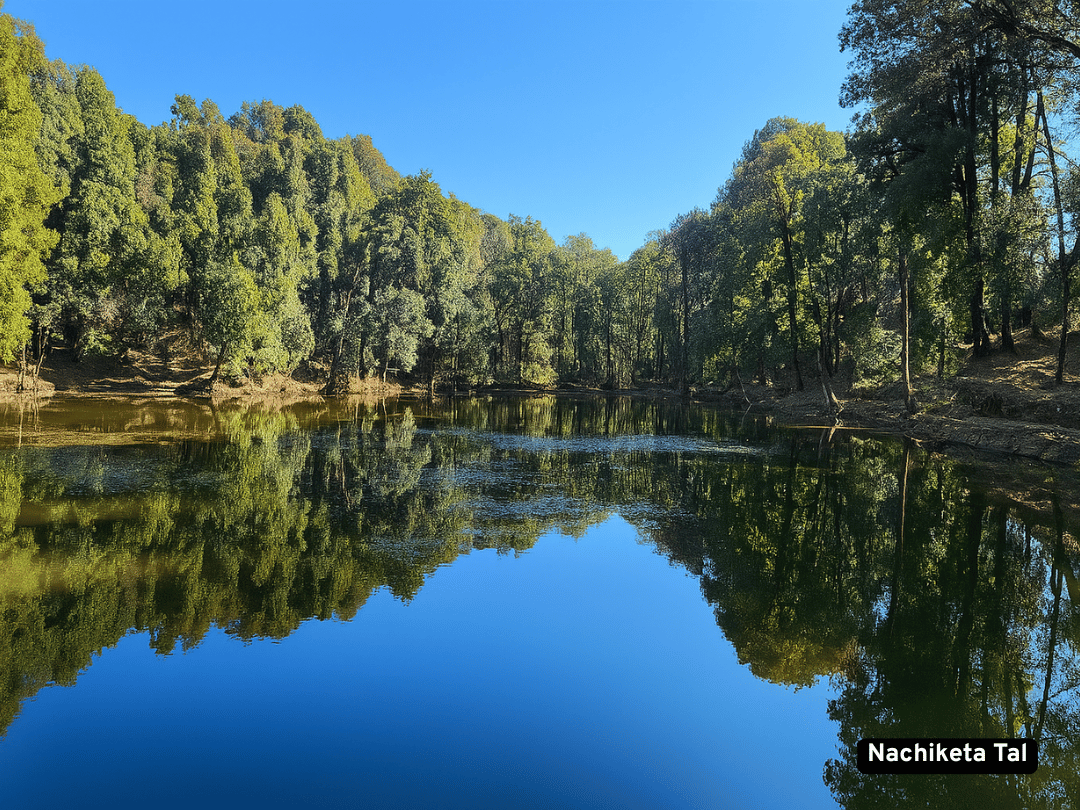
April to June and September to November are the best months to visit Nachiketa Tal.
By Road: Reach Uttarkashi via Dehradun or Rishikesh by bus or taxi. From Uttarkashi, drive ~26–30 km to Chaurangikhal, the base point for the trek. Shared jeeps or private taxis are available from Uttarkashi to Chaurangikhal. By Trek: From Chaurangikhal, a 3 km trek through dense forest leads to Nachiketa Tal. The trail is well-marked and beginner-friendly, taking around 1.5 to 2 hours each way. By Air/Rail: Nearest Airport: Jolly Grant Airport, Dehradun (about 180 km) Nearest Railway Station: Rishikesh Railway Station (about 165 km)
{}
2,450 meters
Named after the young sage Nachiketa from the Katha Upanishad, the lake holds deep spiritual significance. According to legend, it is believed that Nachiketa meditated here and sought the secrets of life and death from Lord Yama. A small Nag Devta temple beside the lake becomes a center of devotion during Nag Panchami.
The lake derives its name from the legendary boy-sage Nachiketa, who is known from the Katha Upanishad for his wisdom and spiritual dialogue with Lord Yama, the god of death. According to mythology, this lake is where Nachiketa meditated and attained spiritual knowledge. A small Nag Devta temple near the lake serves as a pilgrimage spot, especially during Nag Panchami, when locals visit to offer prayers and take ritual dips in the holy waters.
Nachiketa Tal is deeply rooted in Hindu mythology and is named after the young sage Nachiketa, a key figure from the Katha Upanishad. According to legend, Nachiketa was the son of sage Uddalak and was sent to Yama (the god of death) to learn the secrets of life, death, and the soul. It is believed that Nachiketa meditated beside this very lake to attain spiritual wisdom. The lake is thus revered as a place of introspection and enlightenment.