
Treks by
March to June – Pleasant weather, ideal for sightseeing and shopping September to November – Clear skies and fewer crowds
By Air: The nearest airport is Jolly Grant Airport (Dehradun), around 60 km away. Taxis and shared cabs are available from the airport. By Train: Dehradun Railway Station is the closest, approximately 34 km from Mussoorie. By Road: Mussoorie is well connected by road from Dehradun, Delhi, and nearby towns. Buses and private taxis are available frequently.
{}
2,005 meters
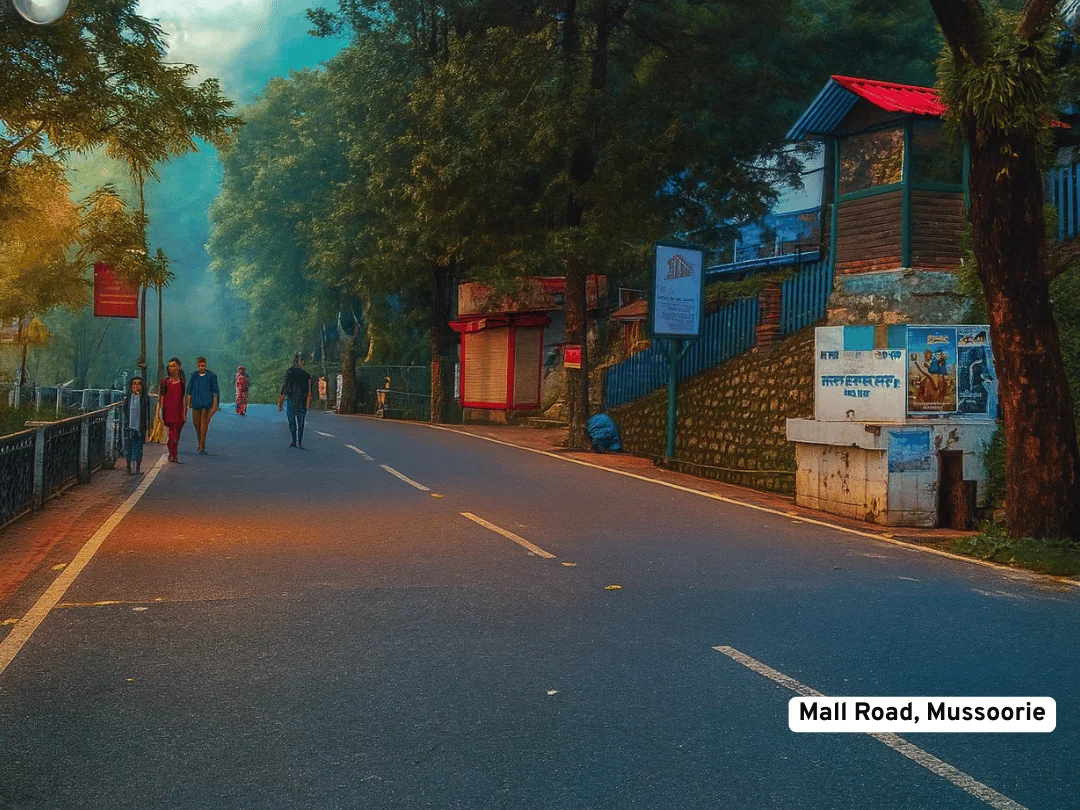
Mall Road in Mussoorie is the bustling heart of the hill station, lined with colonial-era architecture, shops, cafes, and viewpoints. Stretching between Library and Picture Palace, it offers scenic views of the Doon Valley and a lively atmosphere filled with tourists and locals. The road is ideal for evening strolls, shopping for woollens and souvenirs, or simply enjoying the charm of Mussoorie. Horse rides, street food, and nearby attractions like Gun Hill make it a must-visit spot for travelers.
Mall Road in Mussoorie is the central hub of activity and a major attraction that captures the charm and essence of this popular hill station. Located between the two famous landmarks—Library Chowk and Picture Palace—this stretch of road is a lively promenade that reflects the colonial legacy of Mussoorie while offering modern-day leisure and shopping experiences.
Lined with quaint shops, cozy cafes, and heritage-style buildings, Mall Road is a favorite among tourists for evening strolls, local street food, and people-watching. The road is vehicle-restricted during peak hours, making it ideal for walking. One can find everything from handcrafted woolens, wooden artifacts, and souvenirs to freshly baked goods and regional delicacies.
Several viewpoints along Mall Road offer breathtaking views of the Doon Valley, especially at sunset. Benches placed strategically along the road allow visitors to relax and soak in the scenic beauty. The area is also dotted with vintage lampposts and colonial-era architecture, giving the road a nostalgic feel.
Attractions such as Gun Hill (accessible via ropeway), the Mussoorie Library, and the Methodist Church are easily reachable from Mall Road. It also serves as a starting point for exploring other parts of the town. During winters, the area is sometimes lightly dusted with snow, adding to its fairytale-like appeal.
Whether you're shopping, sipping tea, capturing memories, or simply enjoying the hill station’s vibe, Mall Road is a must-visit for anyone traveling to Mussoorie.Mall Road in Mussoorie is the central hub of activity and a major attraction that captures the charm and essence of this popular hill station. Located between the two famous landmarks—Library Chowk and Picture Palace—this stretch of road is a lively promenade that reflects the colonial legacy of Mussoorie while offering modern-day leisure and shopping experiences.
Lined with quaint shops, cozy cafes, and heritage-style buildings, Mall Road is a favorite among tourists for evening strolls, local street food, and people-watching. The road is vehicle-restricted during peak hours, making it ideal for walking. One can find everything from handcrafted woolens, wooden artifacts, and souvenirs to freshly baked goods and regional delicacies.
Several viewpoints along Mall Road offer breathtaking views of the Doon Valley, especially at sunset. Benches placed strategically along the road allow visitors to relax and soak in the scenic beauty. The area is also dotted with vintage lampposts and colonial-era architecture, giving the road a nostalgic feel.
Attractions such as Gun Hill (accessible via ropeway), the Mussoorie Library, and the Methodist Church are easily reachable from Mall Road. It also serves as a starting point for exploring other parts of the town. During winters, the area is sometimes lightly dusted with snow, adding to its fairytale-like appeal.
Whether you're shopping, sipping tea, capturing memories, or simply enjoying the hill station’s vibe, Mall Road is a must-visit for anyone traveling to Mussoorie.
Mall Road, Mussoorie, dates back to the British colonial period, when it served as a central promenade for officers, families, and tourists in the 19th century. Its design reflects British town-planning styles, with stone buildings, vintage lampposts, and benches offering scenic views. Over time, it evolved into the heart of Mussoorie’s tourism and social life. Today, while modern shops and cafes have taken over, the colonial charm still lingers in the architecture and ambiance.