
Treks by
March to June and September to November offer the most favorable weather for exploring the palace grounds, walking through forested pathways, and enjoying panoramic views from its elevated setting.
By Road: The palace is located approximately 2 km from Chail town, easily reachable via local taxi, private vehicle, or a leisurely walk. Chail is well-connected by road to—Shimla (45 km), Kalka (86 km), and Chandigarh (105 km). By Rail: Kalka Railway Station is the nearest major station, with onward road connections via Kandaghat to Chail. By Air: Shimla Airport (Jubarhatti) is the closest airport, situated around 63 km away.
{}
2,250 meters
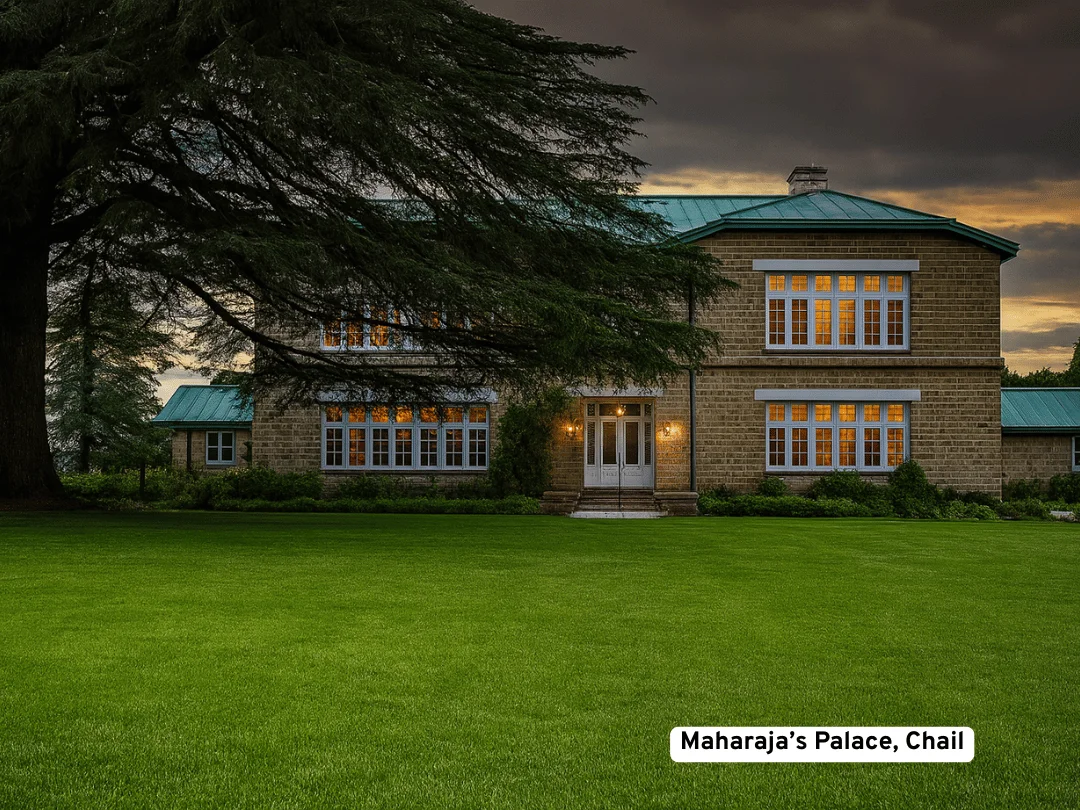
The Maharaja’s Palace in Chail, also known as the Patiala Pavilion, was built in the late 19th century by Maharaja Bhupinder Singh of Patiala after he was exiled from Shimla. Nestled amid towering pine and deodar trees, the palace showcases colonial-era architecture with sloping roofs, wide verandas, and elegant wood-and-stone detailing. Once a lavish summer retreat, the palace now stands quietly, offering visitors a glimpse into the royal past of Himachal. Though portions are well-preserved and open to the public, other sections are maintained by the army or have been converted into guest accommodation. The sprawling grounds and tranquil surroundings make it an atmospheric stop for history enthusiasts and photographers.
The Maharaja’s Palace in Chail, also known as the Chail Palace or Patiala Palace, is a magnificent heritage structure nestled amid the pine-covered hills of Chail, Himachal Pradesh. Built in 1891 by Maharaja Bhupinder Singh of Patiala, the palace is a symbol of regal defiance and royal charm, created after the British exiled the Maharaja from Shimla following a dispute.
Spanning over 75 acres, the estate features wide lawns, majestic deodar forests, and panoramic views of the surrounding hills, making it one of Chail’s most iconic landmarks.
The palace's origin is rooted in an interesting tale of exile and determination. After being banned from entering Shimla—then the British summer capital—the Maharaja decided to create his own hilltop retreat in Chail. He commissioned the construction of this grand residence as a statement of independence and luxury.
The result was a palace that combined traditional Himachali design with British colonial architecture—featuring high-pitched roofs, wooden staircases, grand halls, and intricately designed interiors. Over the decades, it served as a royal residence, a hunting lodge, and a gathering place for the Patiala royal family.
The palace is known for:
Elegant stone and wood construction
Wide verandas and arched windows
Royal suites and banquet halls
Vintage furnishings and fireplaces
Well-maintained gardens and forested walking paths
Though parts of the estate are used by the Indian Army and are restricted, several sections are accessible to tourists. A portion of the palace has been converted into a heritage hotel, allowing visitors to experience royal living amidst serene surroundings.
Guided and self-exploratory walks through the palace compound
Photography of its scenic views, vintage architecture, and antique decor
Dining and accommodation options in converted palace rooms (for hotel guests)
Peaceful strolls through its forested estate
The palace is not just about architecture—it's about stepping into history while enjoying nature’s calm.
he Maharaja’s Palace in Chail was built in 1891 by Maharaja Bhupinder Singh of Patiala after he was exiled from Shimla by the British authorities. Seeking a retreat that rivaled Shimla’s charm, he chose Chail’s forested hills to build his summer residence—a grand statement of autonomy and royal vision. The palace reflects a mix of British colonial and traditional Himachali architecture, featuring wooden interiors, elegant verandas, arched windows, and sprawling lawns. Over the years, it served as a hunting lodge and royal guesthouse. Today, while part of it is managed by the Indian Army, another section has been converted into a heritage hotel, allowing guests to experience royal luxury in the lap of nature.