
Treks by
March–June and September–November
By Road: Devidhura is accessible by road, about 45 km from Lohaghat, on the Lohaghat–Haldwani highway Buses and taxis operate from Haldwani, Nainital, Almora & Champawat By Air: Nearest airport: Pantnagar Airport, ~140–150 km → then taxi or bus to Lohaghat, and onward to Devidhura . By Rail: Nearest railhead: Tanakpur Railway Station, ~70–75 km away → road connectivity onward. Local Trek/Path: The road brings you close to Devidhura; from there, it’s a short walk through forested terrain to the temple site
{}
2,044 meters
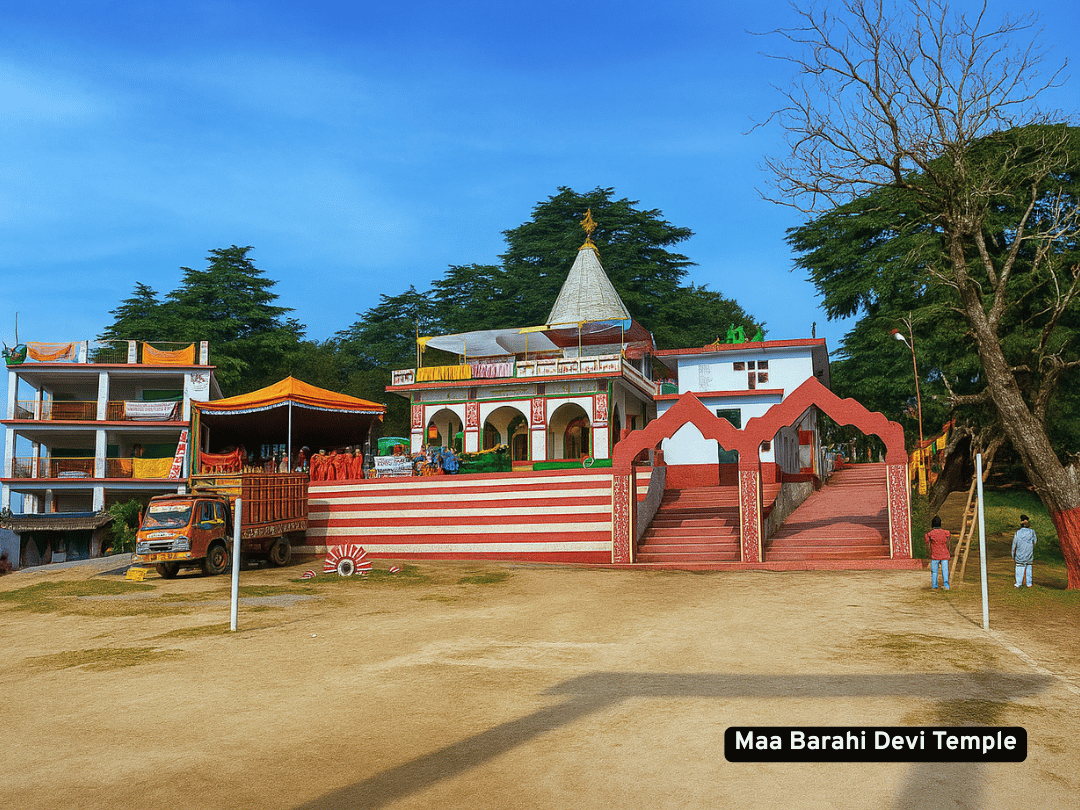
Maa Barahi Devi Temple, nestled in the heart of Devidhura in Uttarakhand's Champawat district, is renowned for its spiritual aura and the unique Bagwal festival — where devotees traditionally engage in a ritualistic stone-pelting ceremony. Surrounded by dense deodar forests and scenic hills, the temple is a sacred Shakti Peeth and attracts devotees and cultural enthusiasts throughout the year.
Maa Barahi Devi Temple is a revered shrine situated in Devidhura, a quaint town in the Champawat district of Uttarakhand. Perched amidst the dense oak and deodar forests of the Kumaon region, this temple holds immense religious and cultural importance for the local people and pilgrims from across northern India.
Dedicated to Goddess Barahi, an incarnation of the fierce Mother Goddess (Shakti), the temple is one of the few places where centuries-old rituals are still practiced in their original form. It is most famously known for hosting the Bagwal festival, a unique ritual of stone-pelting held during Raksha Bandhan, where devotees symbolically reenact a battle in front of the deity to fulfill traditional vows.
Ancient Origins: Established by the Katyuri dynasty around the 7th–11th century CE, the temple is dedicated to Maa Barahi (Varahi), a fierce Matrika of the mother-goddess tradition Mythological Roots: Local lore links the site to the era of the Pandavas, with stories about them playing with giant stones scattered around the temple grounds From Human Sacrifice to Ritual Combat: Initially, people from four warrior clans (Kham: Garhwal, Chamyal, Lamgaria, Balig) offered human sacrifices to appease the goddess. A widow’s plea led to replacing this with the Bagwal stone-pelting ritual as a symbolic ‘blood-offering’