
Treks by
March to June – Ideal for pleasant weather, nature walks, and sightseeing September to November – Post-monsoon freshness and clear mountain views Winter (December to February) – Cold and crisp with occasional snowfall
By Road: Lansdowne is well-connected by road to major cities like Delhi (approx. 250 km), Kotdwar (40 km), and Dehradun. Regular buses and taxis are available from Kotdwar and Haridwar. By Train: The nearest railway station is Kotdwar, located about 40 km from Lansdowne. From Kotdwar, taxis and local buses are easily available. By Air: The nearest airport is Jolly Grant Airport, Dehradun (approx. 145 km away). Taxis or buses can be taken from the airport to Lansdowne.
{}
1,780 meters
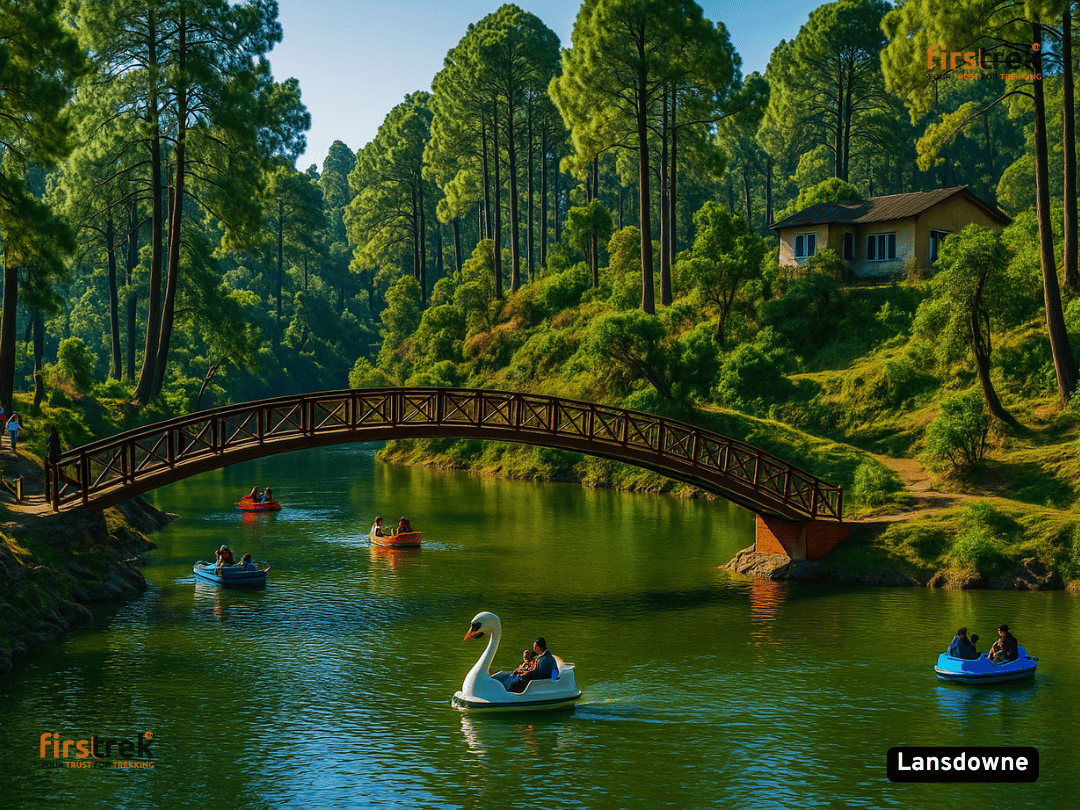
Lansdowne is a serene hill station nestled in the Pauri Garhwal district of Uttarakhand, India. Established in 1887 by the British and named after Lord Lansdowne, the then Viceroy of India , this quaint town sits at an elevation of approximately 1,780 meters (5,840 feet) above sea level . Unlike many bustling hill stations, Lansdowne offers a tranquil retreat amidst dense oak and blue pine forests, making it an ideal destination for nature lovers and peace seekers.
Lansdowne is a tranquil hill station located in the Pauri Garhwal district of Uttarakhand, perched at an altitude of approximately 1,780 meters above sea level. Surrounded by dense oak, pine, and rhododendron forests, this scenic town offers a peaceful escape from the chaos of city life. Developed during the British Raj and named after Lord Lansdowne (Viceroy of India, 1888–1894), it still reflects colonial charm in its architecture and layout.
Lansdowne, originally known as Kaludanda (meaning "Black Hill" in Garhwali), was renamed after Lord Lansdowne, the Viceroy of India during British rule. Established in 1887 as a cantonment, it became a prominent center for the recruitment and training of the Garhwal Rifles regiment. The town was carefully developed by the British with military and colonial infrastructure, including churches, parade grounds, and bungalows, many of which still exist today. To this day, Lansdowne remains the regimental headquarters of the Garhwal Rifles of the Indian Army, preserving its strong military and colonial heritage. The presence of the army has also contributed to the town’s well-maintained and disciplined environment.