
Treks by
October to May – offers clear skies, mild daytime temperatures, and minimal rainfall. June to September – monsoon season. Frequent afternoon showers and thunderstorms can disrupt travel and access.
By Air Nearest major airport: Jolly Grant Airport (Dehradun), ~150 km away. By Road From Dehradun: ~150 km via NH 7 → Uttarkashi (approx. 4–5 hours). From Haridwar/Rishikesh: ~170 km → Uttarkashi. Local Access to Kuteti Devi Temple After reaching Uttarkashi, the temple sits on nearby Hari Parvat, about 2 km uphill. Options: Hike along a gradual trail for stunning river-valley views. Local taxis or auto‑rickshaws grant close access (check vehicle allowance near shrine). The final stretch is often pedestrian-friendly.
{}
1,615 meters
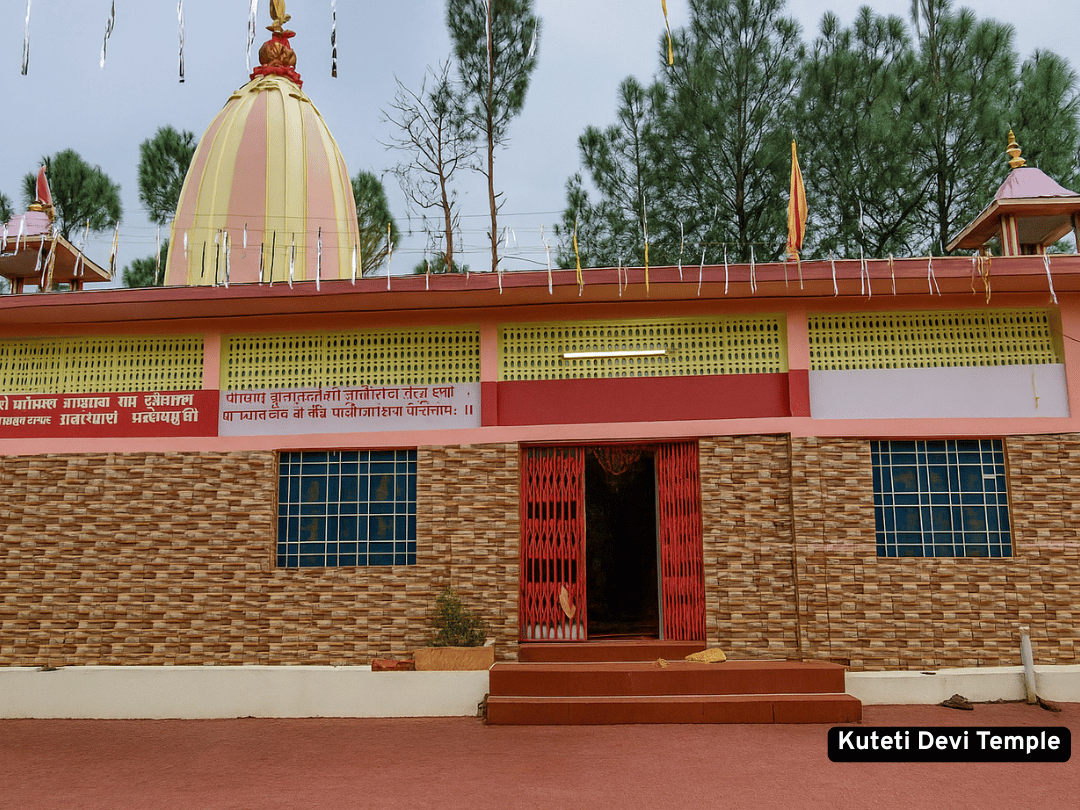
The temple's serene setting, spiritual aura, and mythological significance make it a must-visit destination in Uttarkashi. The architecture reflects traditional Himalayan styles with wooden carvings and a peaceful sanctum. Kuteti Devi is worshipped as the protective goddess of the region, and the temple becomes especially vibrant during Navratri, attracting devotees from nearby villages and towns. Whether you're a pilgrim, a history enthusiast, or a nature lover, the Kuteti Devi Temple offers a blend of mythology, culture, and natural beauty—making it a soulful stop on your journey through Uttarakhand.
Kuteti Devi Temple is a serene and sacred shrine situated on Hari Parvat, about 2 kilometers from the heart of Uttarkashi town in Uttarakhand. Surrounded by the lush green Himalayas and overlooking the holy Bhagirathi River, the temple is dedicated to Goddess Kuteti Devi—an incarnation of Goddess Durga who is believed to protect the region and its people.
The temple holds deep historical and spiritual significance. Legend says the daughter of a Maharaja from Kota, Rajasthan, received divine instructions in a dream to find sacred stones buried in a field near Uttarkashi.
Legend of Founding: Legend tells of a Maharaja from Kota who lost money on pilgrimage; after praying at Uttarkashi’s Vishwanath Temple, a priest found it. The king’s daughter, the Rajkumari, prayed with her husband for her Kuldevi. In a dream, Kuteti Devi guided them to three scented stones buried nearby, leading to the temple’s establishment on those stones Royal Ties: While local lore credits the Maharaja of Kota, some historical accounts attribute the temple’s construction or patronage to Maharaja Narendra Shah of Tehri Sacred Site: Though the structure appears modern, it rests on a deeply ancient sacred spot, with over fourteen generations of priests serving the temple .