
Treks by
March to June and September to November
By Road: Koteshwar Mahadev Temple is located about 3 km from Rudraprayag town and is easily accessible by road. Taxis and local autos are available from Rudraprayag market to the temple parking area. From there, a short trek or walk leads down to the cave shrine. By Train: The nearest railway station is Rishikesh (approximately 140 km). From Rishikesh, you can hire a taxi or take a bus to Rudraprayag. By Air: The nearest airport is Jolly Grant Airport, Dehradun (approximately 160 km away). From the airport, taxis and buses are available to Rudraprayag.
{}
875 meters
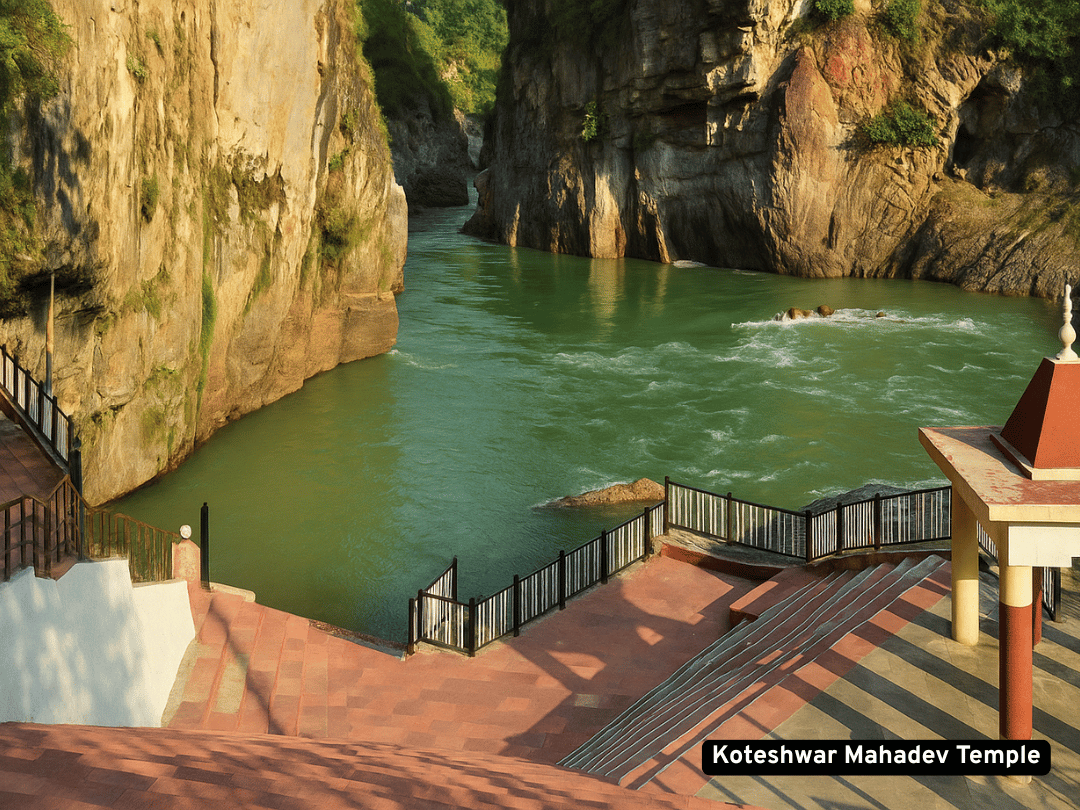
Koteshwar Mahadev Temple is a sacred cave temple dedicated to Lord Shiva, located on the banks of the Alaknanda River in Rudraprayag, Uttarakhand. Surrounded by natural rock formations and spiritual ambiance, this hidden shrine attracts devotees and spiritual seekers throughout the year.
Koteshwar Mahadev Temple is a revered cave temple dedicated to Lord Shiva, located near Rudraprayag in the Garhwal region of Uttarakhand. Unlike typical temples, Koteshwar Mahadev is naturally formed inside a cave on the banks of the Alaknanda River. The temple is believed to be the place where Lord Shiva meditated before heading to Kedarnath.
The cave houses naturally formed Shiva Lingams, idols, and rock formations resembling various deities, making it a spiritually powerful and geologically fascinating site. Devotees often visit the temple especially during the holy month of Sawan (Shravan) and on the occasion of Maha Shivratri, when grand celebrations take place.
Koteshwar Mahadev Temple holds great mythological and religious significance in Hinduism. It is believed that Lord Shiva meditated here en route to Kedarnath. According to legend, the demon Bhasmasura once tried to misuse a boon granted by Shiva, and to escape him, Shiva hid in this very cave. This sacred site is thus considered one of the important meditation spots of Lord Shiva. The temple is also part of the larger Shaivite tradition that marks many spiritual points across Uttarakhand’s Garhwal Himalayas. The natural cave temple houses self-manifested (Swayambhu) Shivlingas, and other rock formations resembling divine figures like Nandi, Ganesha, and various other deities, enhancing the sacredness and mystery of the location.