
Treks by
October to March – Ideal for sightseeing and pleasant weather. July to September – Green and fresh post-monsoon, but occasional heavy rain. April to June – Warm but suitable for spiritual trips and nature visits.
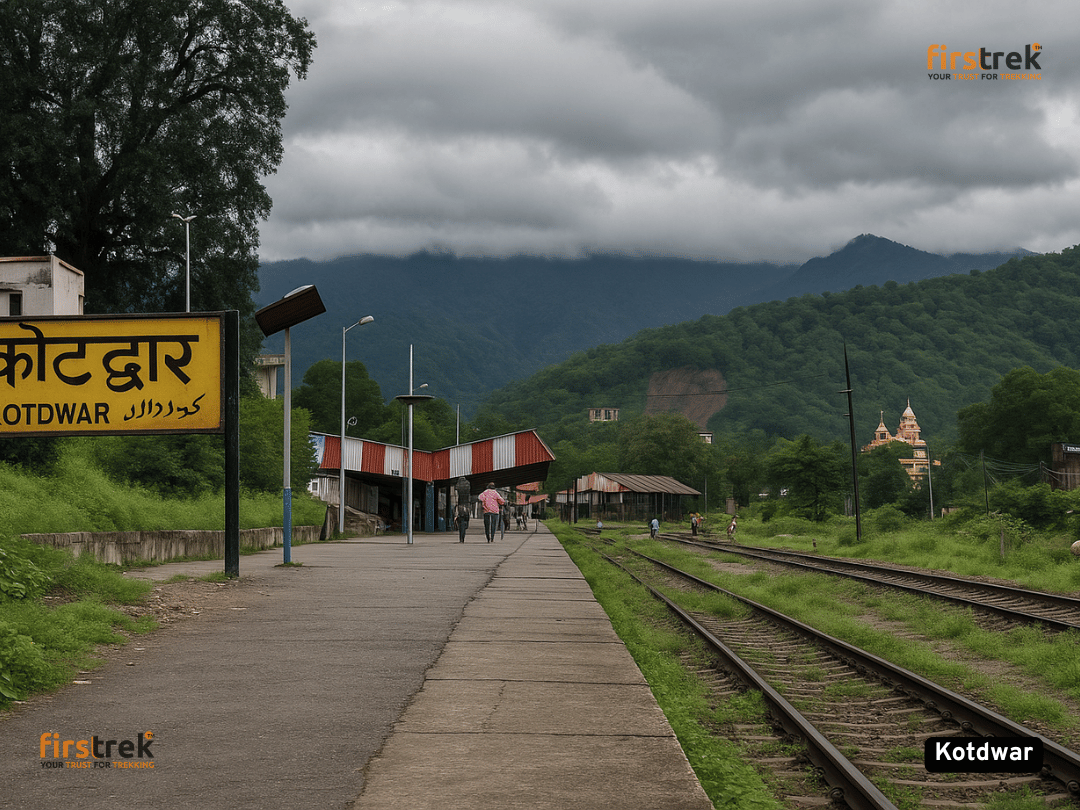
By Road: Kotdwar is well-connected by road via NH-119. Regular buses and taxis are available from Haridwar, Rishikesh, Dehradun, and Delhi. By Train: Kotdwar Railway Station is one of the oldest in Uttarakhand, with direct trains from Delhi (like the Mussoorie Express). It serves as a key railhead for the Garhwal region. By Air: The nearest airport is Jolly Grant Airport, Dehradun (approx. 95 km away). From there, one can hire a taxi or take a bus to reach Kotdwar.
{}
454 meters
Kotdwar, often referred to as the "Gateway to Garhwal," is a prominent city in the Pauri Garhwal district of Uttarakhand, India. Situated at the foothills of the Shivalik range, it serves as a crucial entry point to the Garhwal region and is renowned for its natural beauty, religious significance, and historical importance.
Kotdwar, meaning “Gateway to the Garhwal,” is a scenic town located in the Pauri Garhwal district of Uttarakhand. Nestled at the foothills of the Shivalik range, this peaceful town is surrounded by forests, rivers, and lush greenery. It is one of the primary entry points to the Garhwal region and holds historical, cultural, and religious importance.
Famous for the revered Sidhbali Temple and proximity to Lansdowne and Kanvashram, Kotdwar serves as both a spiritual and a nature lover’s retreat. With its accessible railway station and smooth road connectivity, the town acts as a base for exploring various nearby hill stations and pilgrimage sites. It is also known for its calm environment, local markets, and traditional Garhwali hospitality.
Kotdwar has a rich historical legacy as the ancient gateway to the Garhwal Himalayas. The name “Kotdwar” literally translates to "Gateway to the Fort" (Kot = fort, Dwar = gate), signifying its strategic location at the entrance to the hilly Garhwal region. Historically, the area was ruled by the Mauryas, followed by the Katyuri and Panwar dynasties. During the British era, Kotdwar gained significance with the construction of the railway line in 1890, which made it an important commercial and transit hub between the plains and the hills.