
Treks by
The most ideal times to visit Khajjiar Sanctuary are: March to June – Clear skies, lush green meadows, and comfortable temperatures September to November – Post-monsoon freshness, scenic views, and fewer crowds For snow lovers, December to February offers a magical winter landscape, though access can be limited due to snowfall.
By Air: The nearest airport is Kangra (Gaggal) Airport, located around 122 km from Khajjiar. Taxis are available from the airport to reach the sanctuary. By Train: Pathankot Railway Station (approx. 100 km away) is the closest major railway station. From there, buses or taxis can take you to Khajjiar via Dalhousie or Chamba. By Road: Khajjiar is well connected to Dalhousie (22 km) and Chamba (25 km). Regular taxis and buses operate from both towns. The sanctuary is easily accessible from the main road near Khajjiar Lake.
{}
2,000 meters
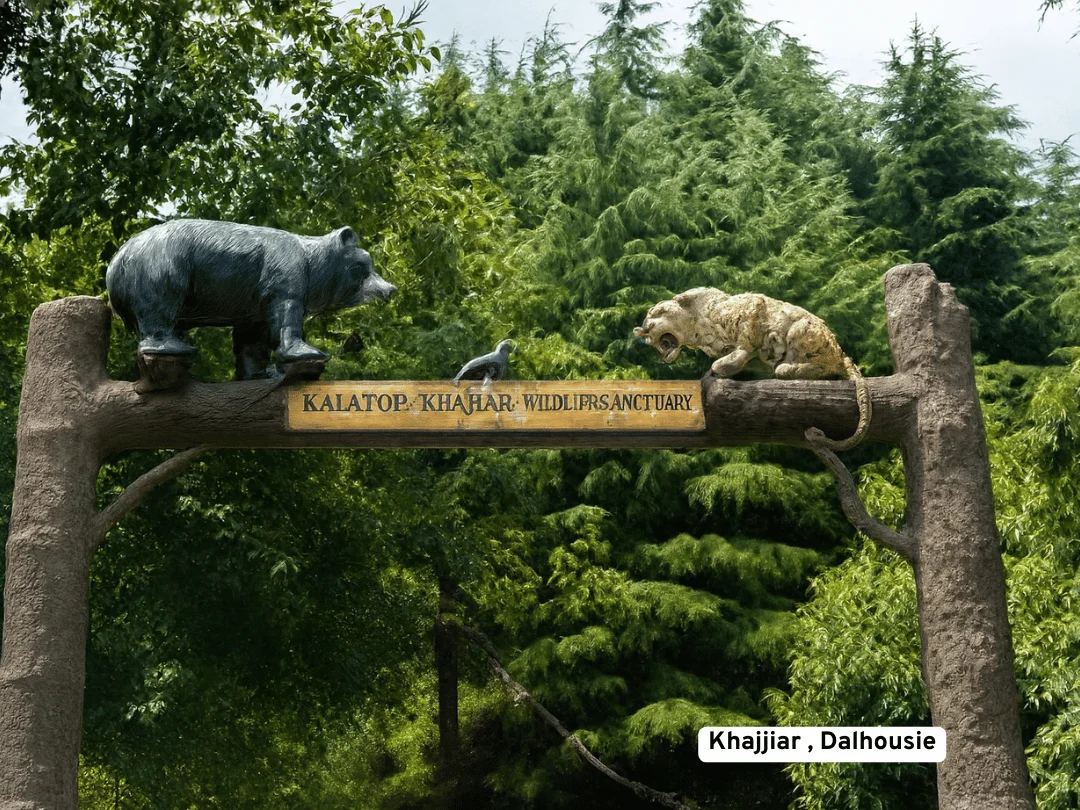
Khajjiar Sanctuary is a beautiful wildlife reserve located near the picturesque hill station of Khajjiar in Himachal Pradesh. Nestled at an altitude of around 2,000 meters, it forms part of the Kalatop-Khajjiar forest range and is known for its dense cedar forests, rolling meadows, and rich biodiversity. The sanctuary is home to a variety of wildlife including deer, Himalayan black bears, leopards, and many bird species, making it a paradise for nature lovers and birdwatchers. Surrounded by snow-clad peaks and lush greenery, Khajjiar Sanctuary offers peaceful nature trails and is often referred to as the “Mini Switzerland of India.” Its close proximity to Dalhousie and Khajjiar Lake makes it a popular destination for eco-tourism, trekking, and photography.
Khajjiar Sanctuary is a serene and lush wildlife reserve nestled in the northwestern part of Himachal Pradesh, near the charming town of Khajjiar. Located at an altitude of around 2,000 meters, this sanctuary lies within the Kalatop-Khajjiar forest range, spread across dense deodar and fir forests that offer an enchanting escape into nature.
Often referred to as the “Mini Switzerland of India”, Khajjiar is famous for its grassy meadows, peaceful surroundings, and snow-capped Himalayan backdrops. The sanctuary forms the green heart of this region, preserving the delicate ecosystem and providing shelter to various species of flora and fauna.
Khajjiar Sanctuary is home to a diverse range of wildlife and bird species, making it an ideal destination for wildlife enthusiasts, birdwatchers, and photographers. Some of the commonly spotted animals in the sanctuary include:
Himalayan Black Bear
Leopard
Barking Deer
Langur
Wild Boar
Jackal
The forest is also rich in birdlife, with species like pheasants, partridges, and magpies commonly sighted. Towering deodar (cedar) trees dominate the landscape, creating a peaceful canopy ideal for trekking and nature walks.
Visitors can explore the sanctuary via guided forest trails that offer panoramic views, fresh mountain air, and a chance to connect with untouched nature. Whether you are trekking, photographing wildlife, or simply enjoying a quiet walk through the woods, the sanctuary provides a rejuvenating experience.
It is especially beautiful during spring and summer, when the meadows are green and the skies are clear, but the misty monsoon and snowy winters also have their own unique charm.
Khajjiar Sanctuary is easily accessible from:
Dalhousie (22 km)
Chamba (25 km)
Pathankot Railway Station (approx. 100 km)
Local taxis, private vehicles, and tour operators provide easy connectivity. Khajjiar town is well connected by road, and the sanctuary is a short drive or walk from Khajjiar Lake.
Khajjiar Sanctuary is located in a region steeped in legend and natural heritage. The sanctuary lies in the vicinity of Khajjiar Lake and the Khajji Nag Temple, both of which have deep historical and religious significance. The name "Khajjiar" itself is derived from Khajji Nag, the serpent deity worshipped by locals. The ancient temple near the lake dates back to the 12th century and represents a blend of Hindu and Mughal architectural styles. The surrounding forests were once part of royal hunting grounds during the rule of the Chamba kings. Over time, the area was preserved for its ecological richness and wildlife, evolving into the protected Khajjiar Sanctuary we see today.