
Treks by
The best time to visit Khajjiar is from March to June and September to November. Spring–Summer (March–June): The meadows are green, flowers bloom, and the weather is ideal for sightseeing and outdoor activities. Autumn (Sept–Nov): Offers clear skies, pleasant days, and golden foliage around the forest. Winter (Dec–Feb): Cold with occasional snowfall, transforming Khajjiar into a snow-covered wonderland, though access may be limited during heavy snow.
By Road: Khajjiar is 21 km from Dalhousie and is well connected by road. Taxis and local buses run frequently between Dalhousie, Chamba (25 km), and Khajjiar. By Rail: The nearest railway station is Pathankot (approx. 95 km). From Pathankot, you can hire a taxi or take a bus via Dalhousie. By Air: The closest airport is Kangra Airport (Gaggal), around 120 km away. Taxis are available to Dalhousie and Khajjiar from the airport.
{}
1,981 meters
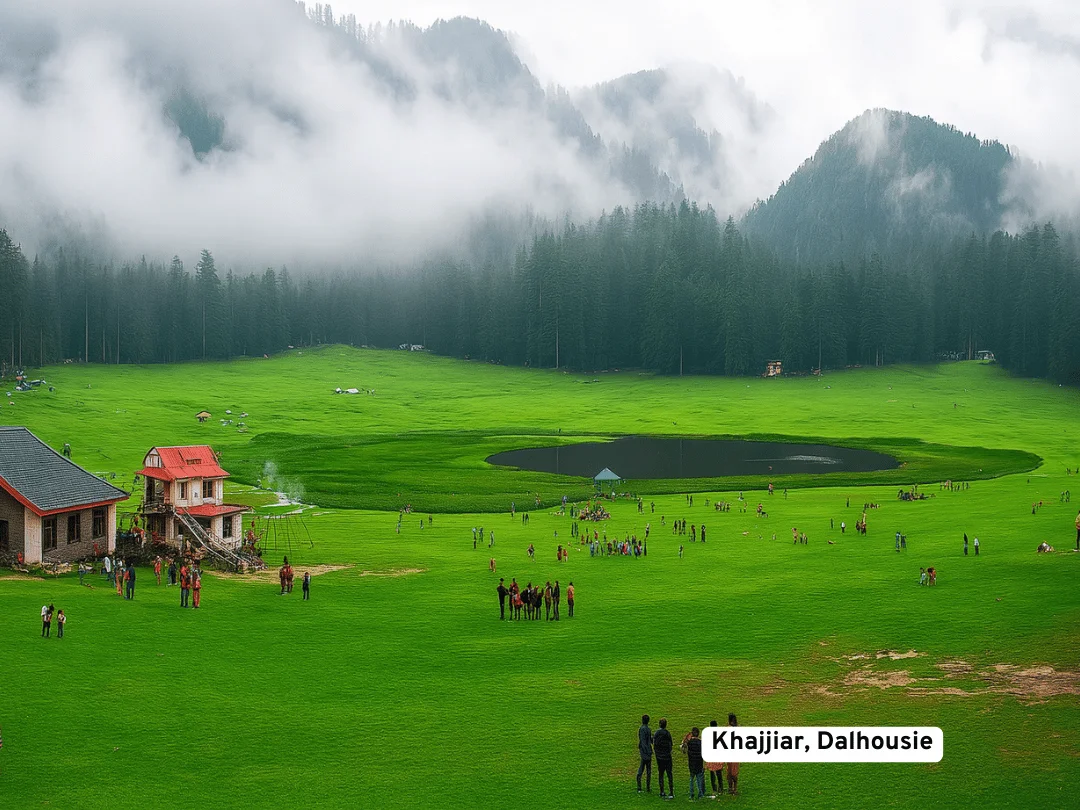
Nestled at around 6,500 feet above sea level, Khajjiar is a picturesque meadow near Dalhousie, often called the "Mini Switzerland of India" due to its lush green pastures, dense cedar forests, and snow-capped backdrop. At its center lies a small natural lake fringed with wildflowers and surrounded by deodar trees. Ideal for picnics, photography, horse riding, and nature walks, Khajjiar offers a serene retreat just 21 km from Dalhousie. Its charm lies in the perfect blend of natural beauty, spiritual sites like Khajji Nag Temple, and open landscapes that captivate every traveler.
Tucked away in the Dhauladhar mountain range, Khajjiar is one of Himachal Pradesh’s most captivating and serene hill destinations. Just 21 km from Dalhousie, this enchanting meadow is famously known as the "Mini Switzerland of India" for its breathtaking landscape, which closely resembles the meadows of Switzerland—with sprawling green grasslands, a tranquil lake, and towering deodar and pine trees all around.
At an elevation of about 6,500 feet (1,981 meters), Khajjiar offers an escape from urban chaos into a world of open skies, fresh mountain air, and scenic serenity.
The central attraction of Khajjiar is its natural saucer-shaped meadow with a floating lake at its heart. Surrounded by thick forests, this open ground is ideal for:
Picnics and nature walks
Horse riding and zorbing (seasonal)
Photography and drone videography
Relaxing amid untouched natural surroundings
Khajjiar Lake, although small, adds to the area's charm with its reflective waters and nearby forest trails. The entire region remains lush and vibrant through most of the year, especially during spring and post-monsoon.
A short walk from the lake brings you to the Khajji Nag Temple, believed to date back to the 12th century. Dedicated to the serpent deity (Nāga), this temple showcases a blend of Hindu and Mughal architectural elements, including wood carvings, ancient idols, and historical sanctity.
This fusion of nature and spirituality makes Khajjiar a unique cultural and natural gem of Himachal Pradesh.
Khajjiar is a great base for:
Short forest hikes and treks to nearby villages
Camping experiences in the open meadows
Paragliding (in summer) in nearby areas like Panchpula and Kalatop
Visiting wildlife reserves like Kalatop Khajjiar Sanctuary
During winters, the meadow is occasionally blanketed in snow, making it look like a postcard-perfect white paradise.
Khajjiar holds a deep historical and spiritual legacy. The region gets its name from the Khajji Nag Temple, a 12th-century shrine dedicated to the serpent god Khajjinag. Built by the rulers of Chamba, the temple reflects a unique blend of Hindu and Mughal architectural styles, with intricate wood carvings and ancient idols still preserved. Historically, Khajjiar was part of the princely state of Chamba, and served as a pastoral ground for shepherds and a sacred site for devotees. Over the centuries, it evolved into a favored retreat for royals, saints, and nature lovers.