
Treks by
March to June and September to November are the best months to visit Kausani.
By Road: Kausani is well-connected by road to major cities of Uttarakhand. It is around 52 km from Almora, 120 km from Nainital, and 413 km from Delhi. Regular buses and taxis are available from Kathgodam, Almora, and Bageshwar. By Rail: The nearest railway station is Kathgodam (approx. 132 km). From there, you can hire a taxi or take a bus to Kausani. By Air: The nearest airport is Pantnagar Airport (approx. 162 km). Taxis are available from the airport to Kausani.
{}
1890 meters
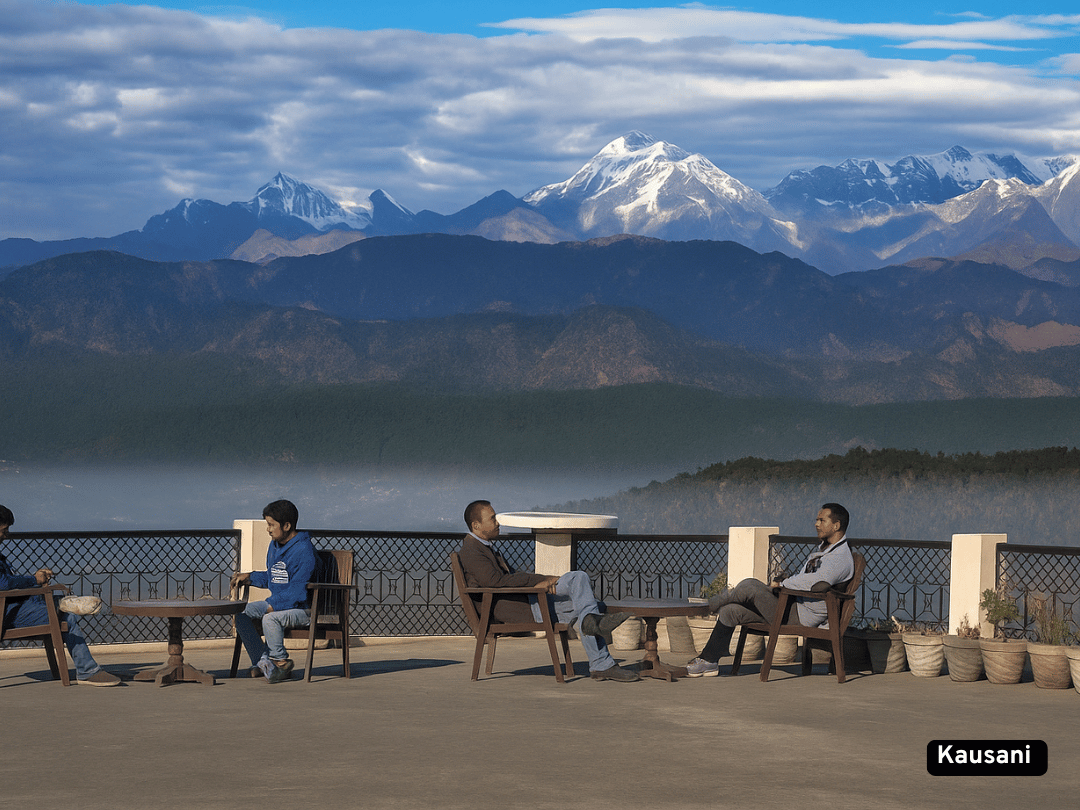
A serene hill station in Uttarakhand, Kausani offers panoramic views of the Himalayan peaks including Nanda Devi, Trishul, and Panchachuli. Known for its peaceful environment and scenic beauty, it's perfect for nature lovers and honeymooners.
Kausani, perched at an altitude of around 1,890 meters above sea level in the Bageshwar district of Uttarakhand, is a tranquil hill station celebrated for its breathtaking 300 km-wide panoramic views of the snow-clad Himalayan peaks like Nanda Devi, Trishul, and Panchachuli. Often referred to as the "Switzerland of India" by Mahatma Gandhi during his visit in 1929, this picturesque town is an ideal destination for nature lovers, honeymooners, poets, and seekers of peace.
Surrounded by dense pine forests and terraced fields, Kausani offers a calm and refreshing atmosphere away from the chaos of city life. The golden hues of sunrise and sunset over the mighty Himalayas make this place truly magical. It is also a hub for cultural tourism, with ashrams, tea estates, and ancient temples offering a mix of spirituality, heritage, and leisure.
Kausani holds historical significance due to its association with Mahatma Gandhi, who stayed here in 1929 at the Anasakti Ashram. Deeply moved by its natural beauty, he called it the "Switzerland of India." During his stay, he wrote his commentary on the Bhagavad Gita, known as Anasakti Yoga. Kausani also finds mention in the writings of famous Hindi poet Sumitranandan Pant, who was born here. Historically, the region was part of the Kumaon kingdom and was known for its scenic location along the trade routes between the Himalayas and the plains.