
Treks by
March to June – Pleasant temperatures, clear skies, ideal for exploring and photography. September to November – Post-monsoon freshness and mild weather. Avoid July–August due to heavy rainfall and slippery roads. Winters (December–February) are cold but offer a peaceful atmosphere.
By Road: Katarmal is around 19 km from Almora town. From Almora, you can take a taxi or local jeep up to Kosi village, and then a short 2 km uphill walk leads to the temple. By Train: The nearest railway station is Kathgodam (approx. 90 km away), connected to Delhi and other major cities. From Kathgodam, taxis and buses are available to Almora. By Air: The nearest airport is Pantnagar Airport (~125 km from Almora). After landing, hire a taxi to reach Almora and then Katarmal.
{}
2,116 meters
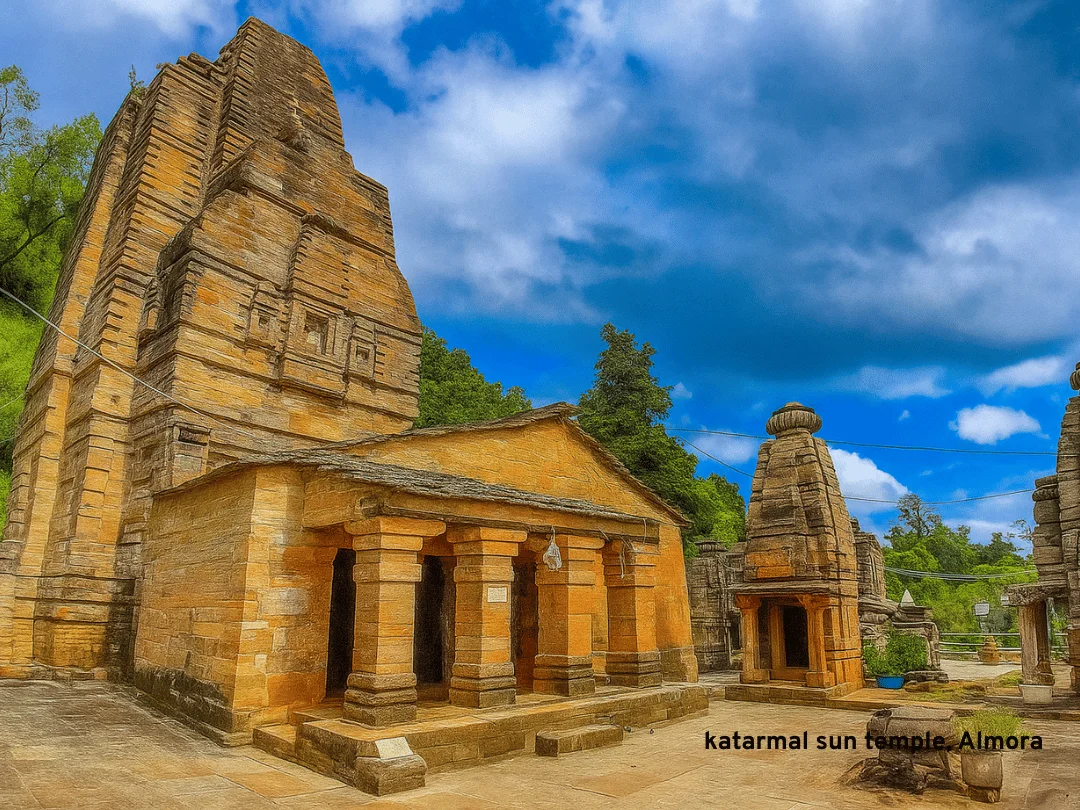
The Katarmal Sun Temple is a rare 9th-century shrine dedicated to Surya (the Sun God), located around 19 km from Almora in Uttarakhand. Perched at an altitude of 2,116 meters, this temple is one of the few sun temples in India—second in significance only to Konark's Sun Temple. It is renowned for its intricate stone architecture, detailed carvings, and historical significance from the Katyuri dynasty era.
Tucked away in the hills of Uttarakhand, the Katarmal Sun Temple is a 9th-century marvel dedicated to Surya, the Sun God. Built by the Katyuri king Katarmalla, this ancient stone temple stands as a rare tribute to solar worship in India. Surrounded by nearly 45 smaller shrines, the main structure is known for its massive stone walls, finely carved doorways, and intricate ceiling work. Though lesser-known than Konark, it holds deep historical and spiritual significance. Set amidst peaceful surroundings, the temple offers both panoramic views and a glimpse into the architectural brilliance of early Kumaoni craftsmanship.
The Katarmal Sun Temple was built in the 9th century by Katyuri king Katarmalla and is one of the oldest sun temples in India. It served not only as a place of worship for Surya (the Sun God) but also as a symbol of power and artistic expression during the Katyuri reign. The temple complex originally housed a grand idol of Surya, now preserved in the National Museum in Delhi, following theft concerns. The architecture reflects early medieval North Indian styles, with large stone structures, finely carved wooden doors, and a precise orientation that allows sunlight to directly fall on the deity’s idol during specific times of the day.