
Treks by
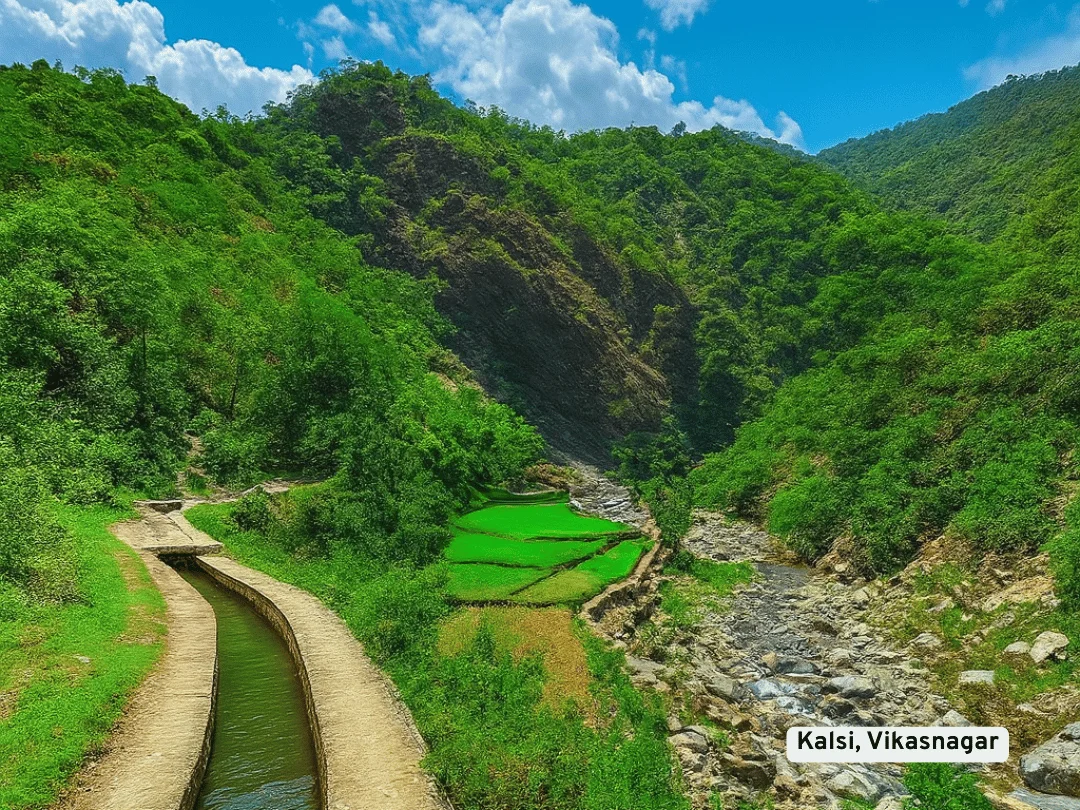
The ideal time to explore Kalsi–Vikasnagar is during: Spring and Summer (March to June): Clear skies, moderate temperatures, and ideal conditions for sightseeing and riverbank activities. Post-Monsoon and Early Winter (September to November): Lush landscapes, minimal rainfall, and opportunities for bird watching at nearby Asan Barrage. Avoid peak monsoon months (July–August) due to frequent showers and the risk of landslides in hilly areas.
By Air: The nearest airport is Jolly Grant Airport, Dehradun (approx. 70 km). Taxis and buses are available from the airport to Vikasnagar, followed by a short drive to Kalsi. By Train: The closest railway station is Dehradun Railway Station (approx. 45–50 km). Regular buses and private cabs operate from Dehradun to Kalsi via Vikasnagar. By Road: Well connected by road, Kalsi can be accessed from Dehradun via National Highway 72. State transport buses and shared jeeps frequently operate on this route. From Delhi, the drive takes around 6–7 hours via NH 334 and NH 72 through Saharanpur and Herbertpur.
{}
780 meters
Kalsi-Vikasnagar is a picturesque region located in the Dehradun district of Uttarakhand. Kalsi is historically significant for housing the Ashokan Rock Edict, the only one in North India, dating back to the 3rd century BCE. The town lies at the confluence of the Yamuna and Tons rivers, surrounded by lush hills and natural beauty. Vikasnagar, located nearby, serves as a commercial hub and entry point to the Jaunsar-Bawar region. The area is known for its cultural diversity, scenic landscapes, and opportunities for nature activities like picnicking and bird watching. Together, Kalsi and Vikasnagar reflect a unique blend of heritage and natural charm.
Kalsi and Vikasnagar are two prominent towns located in the western part of Dehradun district, Uttarakhand. Nestled in the foothills of the Himalayas, this region is known for its historical significance, natural beauty, and cultural richness.
Kalsi is best known for the famous Ashokan Rock Edict, which dates back to the 3rd century BCE. This inscription, engraved on a large rock in Brahmi script, reflects Emperor Ashoka’s message of peace, non-violence, and ethical governance. It is the only such edict found in North India and stands as a symbol of ancient Indian values and history. The town is situated near the confluence of the Yamuna and Tons rivers, creating a serene and refreshing atmosphere. The surrounding hills and riverbanks offer scenic views and peaceful spots ideal for relaxation and short treks.
Adjacent to Kalsi lies Vikasnagar, a bustling town that acts as a commercial and cultural center for nearby hilly regions like Jaunsar-Bawar. The town is known for its local markets, which are filled with traditional Jaunsari items, local crafts, and agricultural produce. Vikasnagar is also a gateway for many travelers heading to hill stations like Chakrata and other lesser-explored destinations.
The entire Kalsi-Vikasnagar area is rich in biodiversity and is a great place for nature lovers. Nearby attractions include the Asan Barrage—a well-known bird-watching site—and Dakpathar, which offers water-based activities. The local culture is influenced by the Jaunsari tribal community, known for their unique traditions, festivals, and cuisine.
In Essence:
Kalsi-Vikasnagar offers a rare combination of historical depth, natural tranquility, and cultural vibrancy. Whether you're interested in ancient monuments, riverside retreats, or mountain exploration, this region serves as a perfect blend of past and present in the heart of Uttarakhand.
Kalsi holds significant historical importance as the site of the Ashokan Rock Edict, carved in the 3rd century BCE during the reign of Emperor Ashoka. This ancient rock inscription, engraved in Brahmi script, is the only one of its kind in North India and serves as a testament to Ashoka’s commitment to dharma (moral governance), peace, and non-violence. The edict even references distant rulers of the Hellenistic world, highlighting the emperor’s vision of global harmony. The region was once part of the Yamuna Valley trade route and served as a cultural meeting point between the plains and the hilly tribes of the Jaunsar-Bawar area. Over time, Kalsi and its surrounding villages developed into a unique fusion of hill traditions and plains influence.