
Treks by
April to June and September to November are the best months to visit Kalpeshwar Temple. During these periods, the weather is pleasant, skies are clear, and the trek route is safe and scenic.
By Road: Reach Helang village, which is located on the Rishikesh–Badrinath Highway (NH 7). From Helang, take a shared jeep or taxi to Devgram village in the Urgam Valley. From Devgram, trek approximately 2.5 km to reach Kalpeshwar Temple. By Train: Nearest railway station: Rishikesh (approx. 270 km from Helang) From Rishikesh, take a bus or taxi to Joshimath or directly to Helang. By Air: Nearest airport: Jolly Grant Airport, Dehradun (~280 km) From the airport, travel by road via Rishikesh to Joshimath and then to Helang.
{}
2,200 meters
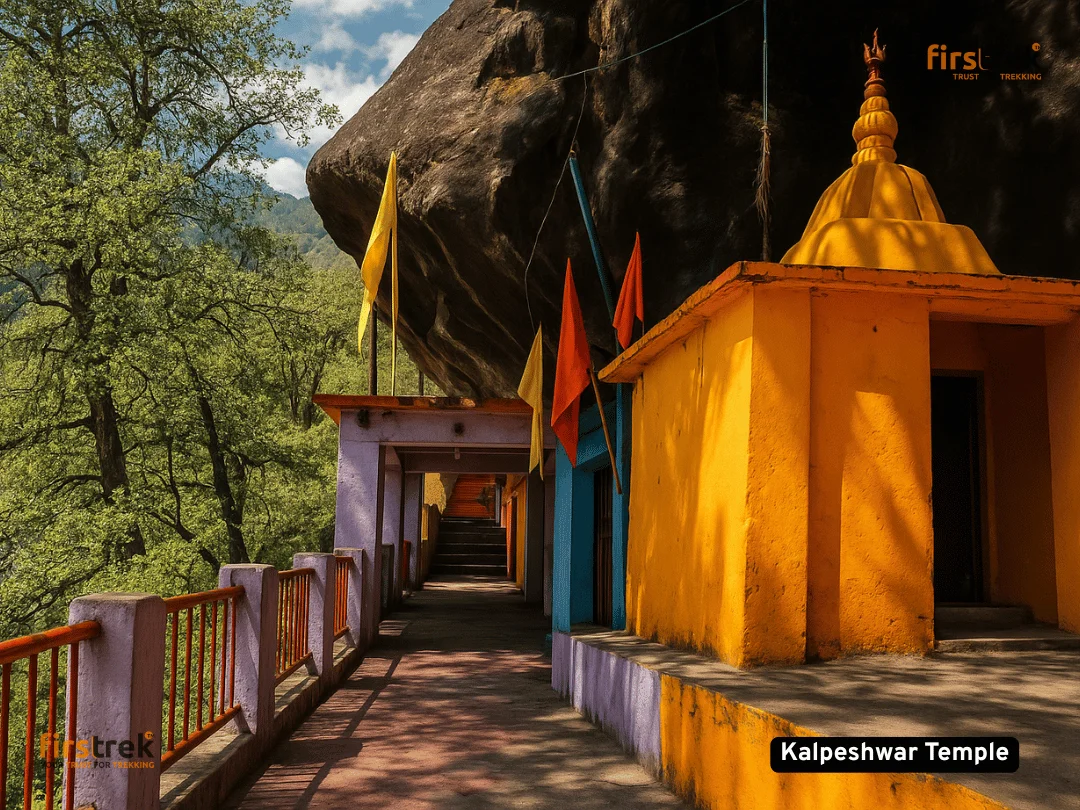
Kalpeshwar Temple (कल्पेश्वर मंदिर) is a serene and spiritually significant temple located in the Urgam Valley of Uttarakhand’s Chamoli district. It is the fifth and last temple in the famous Panch Kedar pilgrimage circuit and the only one that remains accessible throughout the year. Situated at an altitude of approximately 2,200 meters, Kalpeshwar is where Lord Shiva is worshipped in his jata (hair) form. The temple is surrounded by lush green forests, apple orchards, and terraced fields, offering a peaceful and offbeat spiritual escape in the Garhwal Himalayas.
Kalpeshwar Temple (कल्पेश्वर महादेव) is a revered Hindu shrine dedicated to Lord Shiva, nestled in the tranquil Urgam Valley of Chamoli district in Uttarakhand, India. It stands as the fifth and final temple in the Panch Kedar pilgrimage, and uniquely, it is the only Panch Kedar temple accessible throughout the year.
Perched at an elevation of around 2,200 meters (7,200 feet) above sea level, Kalpeshwar is surrounded by dense forests, cascading streams, and terraced fields, making it both a spiritual and scenic destination. Pilgrims and trekkers alike find peace in the quietude of this sacred place, far from the bustling tourist trails.
Kalpeshwar is one of the five temples of the Panch Kedar, associated with the Mahabharata-era legends of the Pandavas. After the great war, the Pandavas sought forgiveness from Lord Shiva for the bloodshed. Shiva, avoiding them, appeared in five places in different forms—at Kalpeshwar, he manifested as his jata (matted hair). This temple is believed to have been discovered and worshipped since ancient Vedic times. It is said that even sages like Durvasa and Adi Shankaracharya visited this site for penance and meditation.