
Treks by
March to June: Ideal for pleasant weather, blooming apple orchards, and clear mountain views September to November: Crisp post-monsoon air, autumn colors, and fewer tourists December to February: Snowfall season; picturesque but limited access Avoid July–August: Due to heavy rainfall and landslide-prone roads
By Air: Nearest Airport: Shimla Airport (~240 km from Kalpa) From Shimla, hire a cab or take a bus to Reckong Peo, then drive or take a local taxi to Kalpa By Train: Nearest Railhead: Kalka (~280 km) From Kalka, travel by road via Shimla → Rampur → Reckong Peo → Kalpa By Road: Well connected via NH-5 (Hindustan-Tibet Road) Buses and shared taxis available from Shimla, Rampur, and Reckong Peo Final ascent to Kalpa involves a steep yet scenic drive
{}
2,960 meters
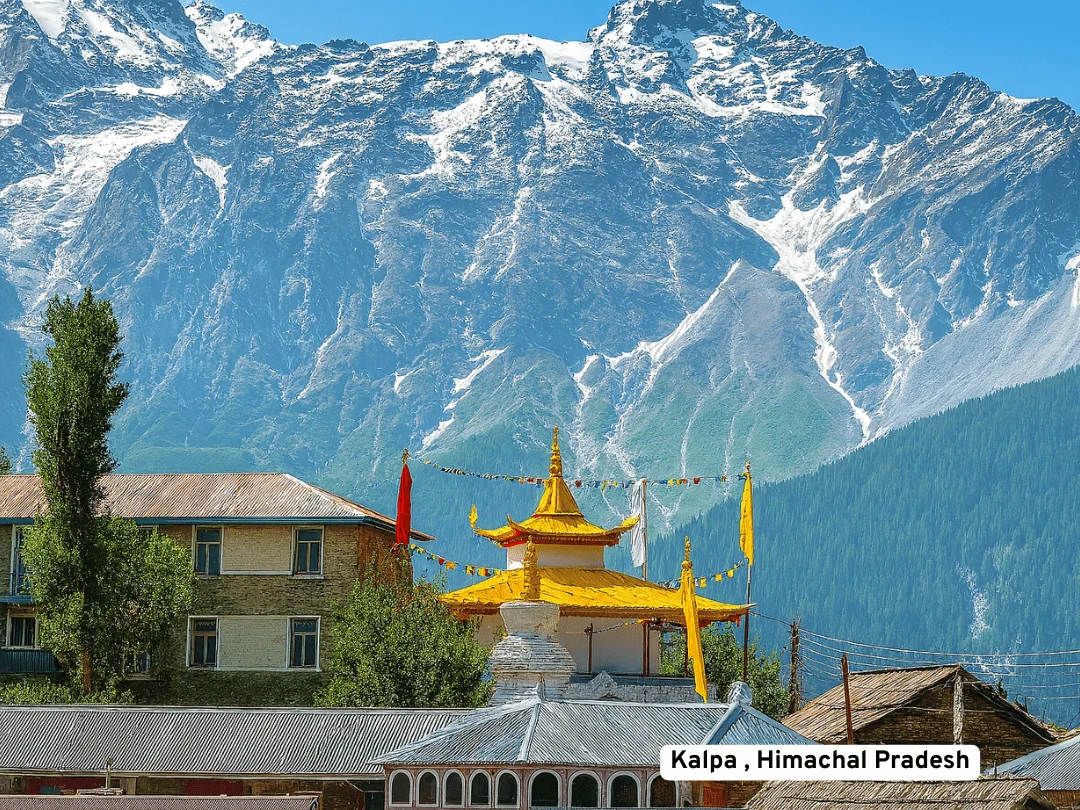
Kalpa is a scenic Himalayan village located in the Kinnaur district of Himachal Pradesh, known for its breathtaking views of the Kinnaur Kailash range. Perched at an altitude of around 2,960 meters, Kalpa is famous for its apple orchards, peaceful monasteries, and traditional wooden architecture. With a backdrop of snow-capped peaks and a serene atmosphere, it offers a perfect blend of natural beauty and spiritual charm. Kalpa is ideal for travelers seeking tranquility, mountain views, and a taste of Himachali culture.
Kalpa is a serene mountain village nestled in the Kinnaur district of Himachal Pradesh, sitting at an altitude of approximately 2,960 meters (9,711 feet) above sea level. Known for its panoramic views of the Kinnaur Kailash range, Kalpa offers an unforgettable blend of majestic Himalayan landscapes, deep-rooted local culture, and spiritual tranquility.
Kalpa is perched on a high ridge above the Sutlej River, with breathtaking views of snow-capped peaks including the sacred Kinnaur Kailash, which resembles a Shivling and is a pilgrimage destination for many. The changing colors of the mountains at sunrise and sunset are one of Kalpa’s most captivating sights.
Surrounded by apple orchards, pine forests, and peaceful meadows, Kalpa offers a quiet retreat far from tourist crowds. In spring and summer, the air is filled with the fragrance of blooming trees, while in winter, the entire village transforms into a snowy wonderland.
Kalpa is deeply rooted in Kinnauri traditions, with a unique blend of Hindu and Buddhist influences. The village is home to beautifully carved wooden houses, ancient temples, and serene monasteries that reflect its spiritual depth.
Locals speak Kinnauri and Hindi, wear traditional woolen clothing, and maintain a lifestyle centered around agriculture—mainly apple farming, which is the backbone of the local economy. Warm hospitality and a strong sense of community define everyday life in Kalpa.
Kinnaur Kailash Viewpoint: Iconic spot to view the revered Shivling-shaped peak
Narayan-Nagini Temple: A historic wooden temple showcasing Kinnauri craftsmanship
Hu-Bu-Lan-Kar Monastery: A peaceful Buddhist gompa believed to be centuries old
Suicide Point: A dramatic cliff offering expansive views of the valley (visited cautiously for its views)
Roghi Village: A short scenic drive away for more apple orchards and traditional homes
Photography: Capture stunning landscapes, local life, and architectural beauty
Nature Walks: Stroll through orchards, pine forests, and peaceful village lanes
Stargazing: Enjoy clear night skies and star-lit Himalayan backdrops
Cultural Exploration: Interact with locals, attend festivals, or learn about wooden architecture
April to June: Pleasant weather, blooming orchards, great for sightseeing
September to November: Crisp air, post-monsoon clarity, and apple harvesting season
December to March: Snow-covered terrain, fewer tourists, and winter charm (access may be limited due to snow)
Kalpa has long been an important spiritual and cultural center in the Kinnaur region. It was once part of the ancient Bushahr kingdom, and due to its location near the Indo-Tibetan trade route, it absorbed influences from both Hinduism and Tibetan Buddhism. Historical records and oral traditions point to Kalpa being a sacred site for centuries, especially because of its view of Kinnaur Kailash, a peak believed to be the winter home of Lord Shiva. The Kamru Fort, located a few kilometers away, served as the former capital of the Bushahr dynasty and is still revered today. The temples and monasteries in Kalpa reflect intricate woodwork, ancient rituals, and a deep connection to the divine.