
Treks by
March to June: The train journey is surrounded by blooming trees, warm sunshine, and fresh mountain air. September to November: Post-monsoon clarity, cooler temperatures, and fewer crowds make this a photographer’s delight. ❄️ Bonus: December to February is perfect for snow lovers, especially near Shimla—but be prepared for delays due to snowfall.
To Kalka Station (Starting Point): By Train: Kalka is well-connected to major cities like Delhi and Chandigarh via broad-gauge express trains. By Road: Buses and taxis are available from Chandigarh (around 30 km) and Delhi (approx. 270 km). From Shimla (End Point): After arriving in Shimla by toy train, travelers can explore the city’s attractions like Mall Road, Jakhu Temple, and The Ridge. Return journeys can be made via toy train, taxis, or by boarding buses from the Shimla ISBT.
{}
2,075 meters
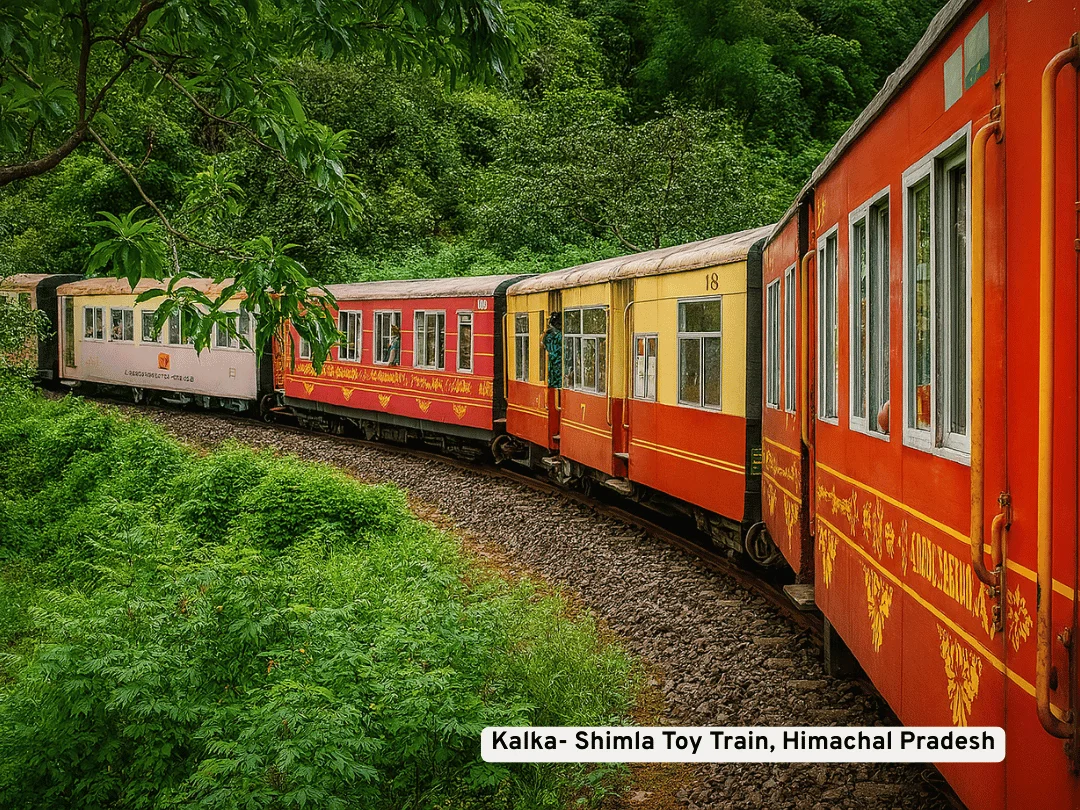
The Kalka–Shimla Toy Train is a heritage mountain railway known for its scenic journey through the lush hills of Himachal Pradesh. Starting from Kalka and ending in Shimla, this narrow-gauge train covers a distance of about 96 kilometers, passing through tunnels, curved tracks, and quaint hill stations along the way. Built during the British era and operational since 1903, the train offers a slow and peaceful ride, taking around 5 to 6 hours. The journey is a visual delight, with breathtaking views of pine forests, deep valleys, and colonial-era architecture. It's more than just a mode of transport—it's a nostalgic experience that connects travelers with the charm of old-world hill travel. Now recognized as a UNESCO World Heritage Site, the Kalka–Shimla Toy Train is a must-do experience for nature lovers, photographers, and anyone seeking a unique Himalayan adventure.
The Kalka–Shimla Toy Train is one of India’s most iconic heritage rail journeys, renowned for its breathtaking views, colonial charm, and engineering brilliance. Stretching across approximately 96 kilometers, this narrow-gauge railway connects Kalka in Haryana with Shimla, the capital of Himachal Pradesh. A marvel from the British era, this toy train offers travelers a slow, scenic ride through the Shivalik foothills of the Himalayas.
Commissioned in 1903 by the British to access their summer capital Shimla, the Kalka–Shimla Railway was an ambitious engineering project of its time. Built with the purpose of ensuring smooth administrative travel during the colonial period, the line gradually became a symbol of leisure travel and is today one of India’s few remaining toy trains.
In recognition of its cultural and historical value, the Kalka–Shimla Railway was declared a UNESCO World Heritage Site in 2008, alongside the Darjeeling and Nilgiri mountain railways.
The railway features:
102 tunnels (the longest being Barog Tunnel, over 1 km long)
Over 800 bridges
More than 900 curves
Elevation gain from 656 meters (Kalka) to 2,075 meters (Shimla)
Despite its age, the railway remains operational with regular passenger services, maintaining much of its original charm, including small colonial-era stations and vintage carriages.
The train winds through pine and oak forests, terraced fields, and mountain villages. Along the way, travelers can enjoy panoramic views, especially between Barog, Solan, and Kandaghat—stations that have retained their British-era architecture and relaxed atmosphere.
The pace of the journey allows passengers to truly absorb the changing landscapes, misty hills, and crisp mountain air.
Kalka: The starting point, connected to major Indian cities by broad-gauge rail.
Barog: Known for its curved tunnel and scenic beauty.
Solan: A vibrant hill town famous for its temples and breweries.
Kandaghat: A quiet station surrounded by forested hills.
Shimla: The final stop, a charming hill station with colonial buildings, The Ridge, and Mall Road.
Journey Duration: 5 to 6 hours
Popular Trains:
Shivalik Deluxe Express – Comfortable with large windows and onboard meals.
Himalayan Queen – Slower, more rustic, perfect for backpackers and photographers.
Rail Motor Car – Small and cozy, ideal for couples or small groups.
Booking: Tickets can be booked via IRCTC or Indian Railways booking counters.
Best Seats: Sit on the right side when traveling uphill for the best views.
Seasonal Beauty: The route is stunning year-round—lush green in monsoon, snowy white in winter, and colorful in spring.
The Kalka–Shimla Toy Train is more than a means of transport—it's a timeless experience that blends heritage, nature, and adventure. Whether you're a history enthusiast, nature lover, or someone seeking a slow travel escape, this toy train journey through the Himalayas is a must-do.
The Kalka–Shimla Railway was inaugurated in 1903 by the British colonial government to connect their summer capital, Shimla, with the plains. Designed to make the journey through the Himalayas more comfortable and accessible, the railway was a symbol of British engineering excellence at the time. Built as a narrow-gauge line, it features 102 tunnels, 800+ bridges, and 900 curves, and climbs from 656 meters at Kalka to over 2,000 meters in Shimla. In 2008, the route was recognized as a UNESCO World Heritage Site for its historical significance, preservation of original architecture, and contribution to mountain railway development in India.