
Treks by
November to June is the best time for wildlife sightings. Winter (Nov–Feb): Great for tiger tracking and birdwatching. Summer (Mar–June): Good for spotting animals near water sources. Monsoon (Jul–Oct): Park remains mostly closed due to rain, except Jhirna and Dhela zones.
By Air: Nearest airport is Pantnagar (80 km) By Rail: Ramnagar Railway Station (5 km) is well-connected to major cities By Road: Easily accessible via bus or taxi from Delhi (250 km), Nainital (66 km), and Haldwani (55 km)
{}
1,100 meters
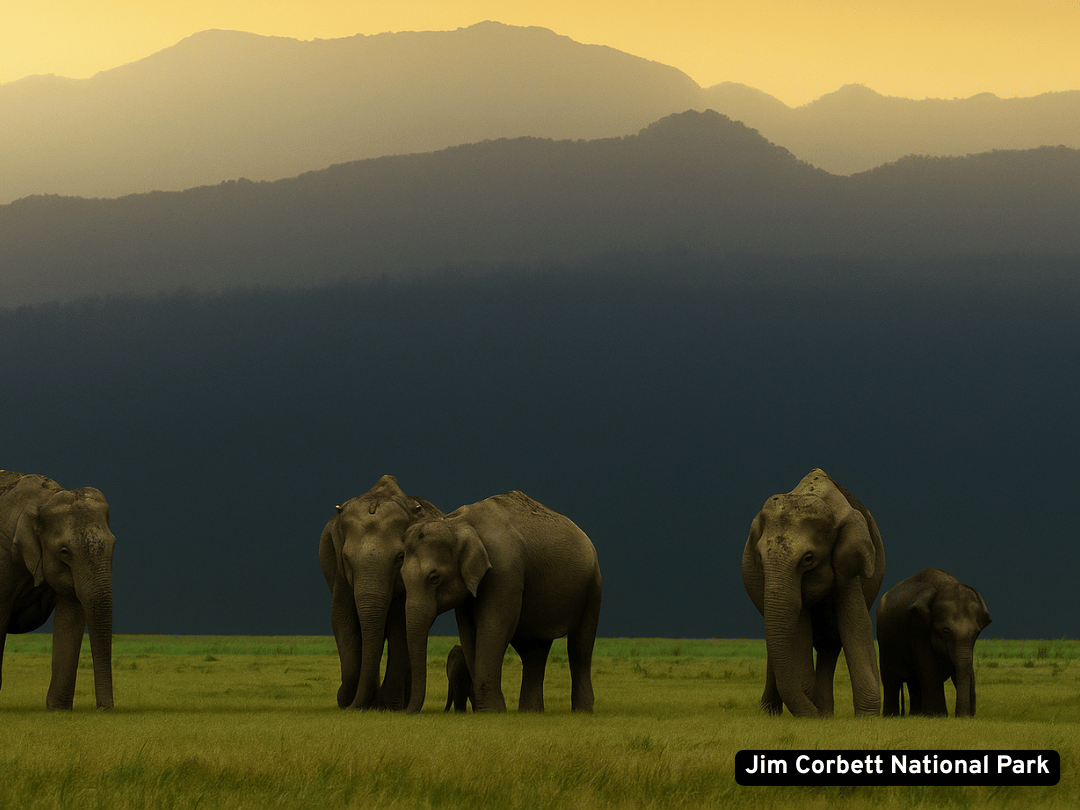
Jim Corbett National Park is India’s oldest and most iconic wildlife sanctuary, located in the Nainital district of Uttarakhand. Spread over 1,300 square kilometers, it offers a diverse landscape of dense sal forests, grasslands, rivers, and hilly terrains. Established in 1936 as Hailey National Park and later renamed in honor of the legendary hunter-turned-conservationist Jim Corbett, the park is famed for being the first to come under Project Tiger in 1973.
Jim Corbett National Park is a world-renowned tiger reserve located in the foothills of the Himalayas. Known for its rich biodiversity, it offers thrilling wildlife safaris, picturesque landscapes, and peaceful forest retreats. From spotting majestic Royal Bengal Tigers to listening to the symphony of chirping birds, the park provides a deeply immersive nature experience.
Jim Corbett National Park was established in 1936 as Hailey National Park, making it India’s first national park. It was renamed in 1956 in honor of Jim Corbett, a legendary hunter, author, and conservationist who spent much of his life in the Kumaon region protecting wildlife and advocating for their conservation. The park became the birthplace of Project Tiger in 1973, a landmark initiative aimed at saving the endangered Bengal tiger.