
Treks by
March to June (pleasant weather) and September to November
By Air: The nearest airport is Pantnagar Airport (PGH), around 150 km from Jageshwar. Taxis and shared cabs are available from the airport. By Train: The closest railway station is Kathgodam (KGM), about 125 km away. From there, you can hire a cab or take a bus to Almora and then to Jageshwar. By Road: Jageshwar is well-connected via road from major Uttarakhand towns like Almora (36 km), Haldwani, and Nainital. Regular buses and taxis are available from Almora to Jageshwar. A parking area is available 3 km before the temple, and a shuttle service takes visitors to the complex.
{}
1,870 meters
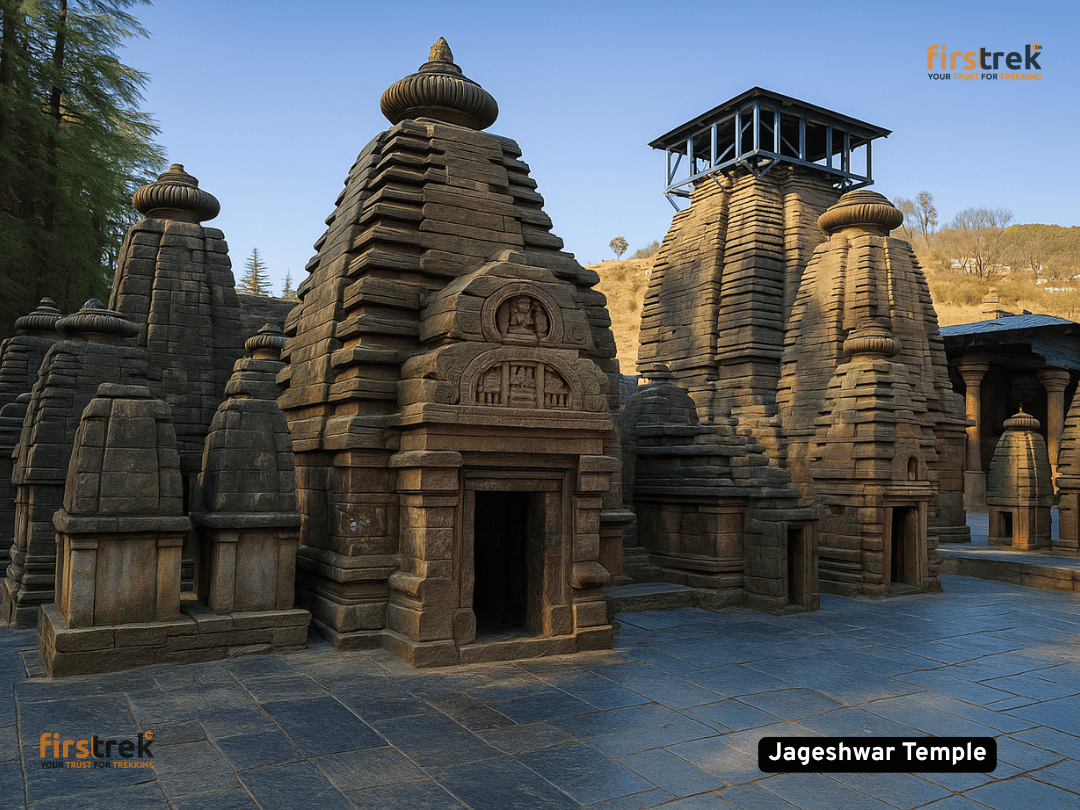
Jageshwar Temple, also known as Jageshwar Dham, is a revered Hindu pilgrimage site nestled in the Almora district of Uttarakhand, India. Situated approximately 36 kilometers northeast of Almora at an elevation of 1,870 meters, this ancient temple complex is enveloped by dense deodar forests and lies along the serene Jataganga river, offering a tranquil and spiritual ambiance.
The temple complex comprises over 125 small and large stone shrines, most of which are dedicated to Lord Shiva. These temples reflect the rich Nagara style of architecture and date back to between the 7th and 14th centuries AD. The main shrine houses a Swayambhu Linga (self-manifested Shiva Lingam) believed to be one of the 12 Jyotirlingas, making this site exceptionally sacred for devotees of Lord Shiva.
Legend says that Lord Shiva once meditated in the Jageshwar valley, which led sages to build shrines in his honor. The spiritual aura here is so intense that one feels an immediate sense of calm and connection with nature and divinity.
Jageshwar is one of the oldest and most revered temple complexes in India, dating back to 7th–14th century CE. According to archaeological and scriptural references, the region was once a major Shaivite pilgrimage center during the rule of the Katyuri dynasty and later the Chand rulers of Kumaon. The temples are built in the Nagara style of North Indian temple architecture. It is believed that Adi Shankaracharya visited Jageshwar during his mission to revive Hinduism. The complex was an important stop on the ancient pilgrimage route to Kailash–Mansarovar, and the central shrine is often associated with the eighth Jyotirlinga, though this is disputed among scholars.