
Treks by
March to June and September to November are ideal for visiting Jagannathi Temple. These months offer pleasant weather and clear views of the surrounding valleys and snow-capped peaks. Avoid the monsoon (July–August) due to slippery trails and winter (December–February) if you're not comfortable with snow or cold conditions.
By Road: Reach Kullu town by road via NH3 (formerly NH21) from Manali (40 km) or Mandi (70 km). From Kullu, take a cab or drive to Bekhli village (around 6 km). A 2 km uphill trek from the village takes you to the temple. By Bus: Kullu is well-connected by HRTC and private buses from major Himachal towns and Delhi. By Air: The nearest airport is Bhuntar Airport (KUU), about 14 km from the temple base. By Train: The nearest major railway station is Joginder Nagar (120 km), though Chandigarh Railway Station (270 km) offers better connectivity.
{}
1,800 meters
Jagannathi Temple, located in the quaint village of Bekhli near Kullu, Himachal Pradesh, is a centuries-old shrine dedicated to Goddess Jagannathi, a form of Goddess Durga. Perched atop a hill at around 1,800 meters, the temple offers panoramic views of the Beas Valley. A scenic 2 km uphill trek from Bhekhli village leads you to this peaceful temple, where ancient wooden architecture meets local folklore. It’s a spiritual and trekking destination wrapped in divine charm and natural serenity.
Perched gracefully on a lush green hilltop overlooking the Beas Valley, the Jagannathi Temple, also known as Bekhli Mata Temple, is one of the lesser-known yet spiritually significant shrines in the Kullu region of Himachal Pradesh. Dedicated to Goddess Jagannathi, believed to be an incarnation of Goddess Durga, this ancient temple is a revered site for locals and a hidden gem for travelers seeking peace, nature, and a touch of mythology.
Located at an altitude of approximately 1,800 meters, the temple is accessible by a moderate 2 km uphill trek from the Bekhli village, just 6 km from Kullu town. The trek winds through cedar trees, terraced fields, and picturesque hamlets, making the journey as fulfilling as the destination itself.
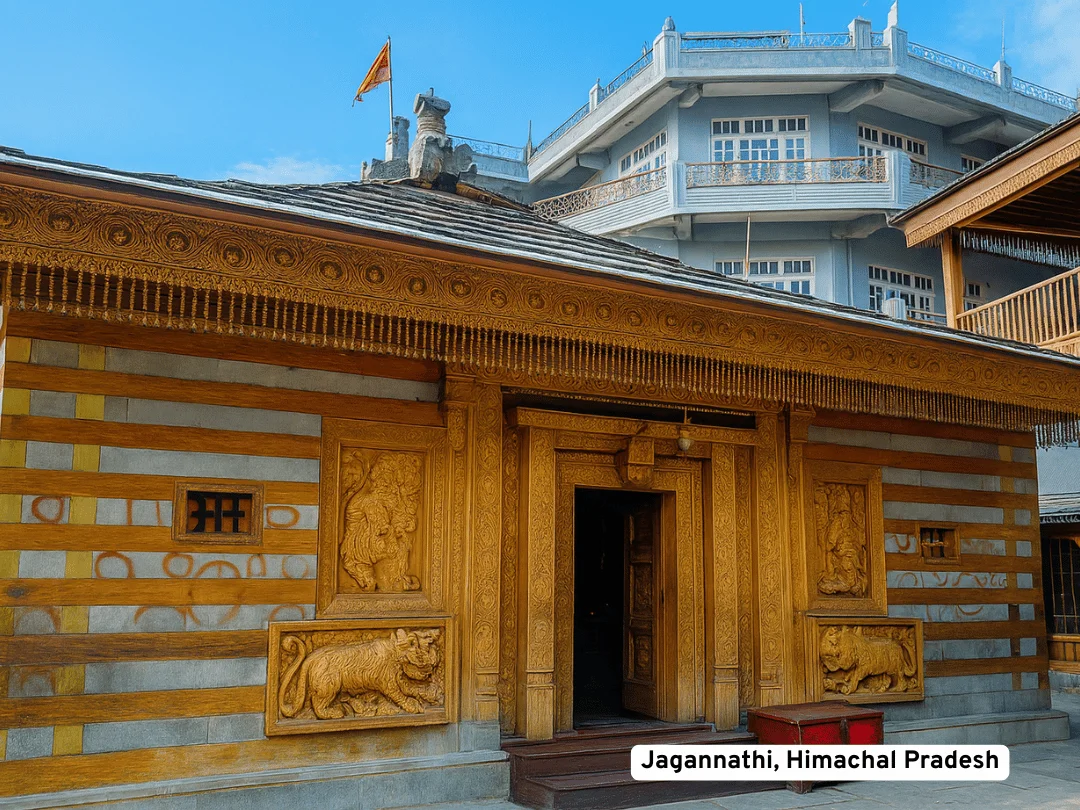
The temple structure reflects traditional Himachali wooden architecture, complete with intricately carved doors and sloping rooftops. Legend says the temple is over 1,500 years old, and the deity is deeply rooted in Kullu's mythological past. Locals believe that the goddess protects the valley and blesses her devotees with strength and courage.
Aside from its spiritual allure, the temple rewards visitors with 360-degree panoramic views of the Kullu Valley, snow-clad peaks, and charming villages nestled in the hills. It’s a perfect combination of devotion, cultural heritage, and nature’s embrace—ideal for pilgrims, trekkers, and photographers alike.
Jagannathi Temple is believed to date back over 1,500 years, making it one of the oldest temples in the Kullu Valley. According to local legend, it was built during the reign of the early kings of Kullu. The temple is dedicated to Goddess Jagannathi, a local manifestation of Goddess Durga, and is deeply rooted in the region’s mythological and spiritual traditions. The temple architecture reflects ancient Kathkuni-style wooden construction, which is typical of Himachal Pradesh. The temple is not only a religious site but also a guardian shrine for the region. Villagers believe the goddess protects the valley from evil forces and natural calamities. Its secluded location on a hilltop above Bekhli village gives it a mystical aura and makes it a favorite among spiritual seekers and trekkers alike.