
Treks by
October to April is the best time to visit IVRI Mukteshwar. During these months, the weather is pleasant, skies are clear for Himalayan views, and winter adds a charm with mist and occasional snowfall (especially
By Road: Mukteshwar is well-connected by road from major cities in Uttarakhand. 50 km from Nainital 70 km from Kathgodam 335 km from Delhi via Haldwani and Bhimtal By Train: Nearest railway station is Kathgodam (70 km away). Taxis and shared jeeps are available from there to Mukteshwar. By Air: The nearest airport is Pantnagar Airport (approx. 100 km). Limited flights operate from Delhi.
{}
2,319 meters
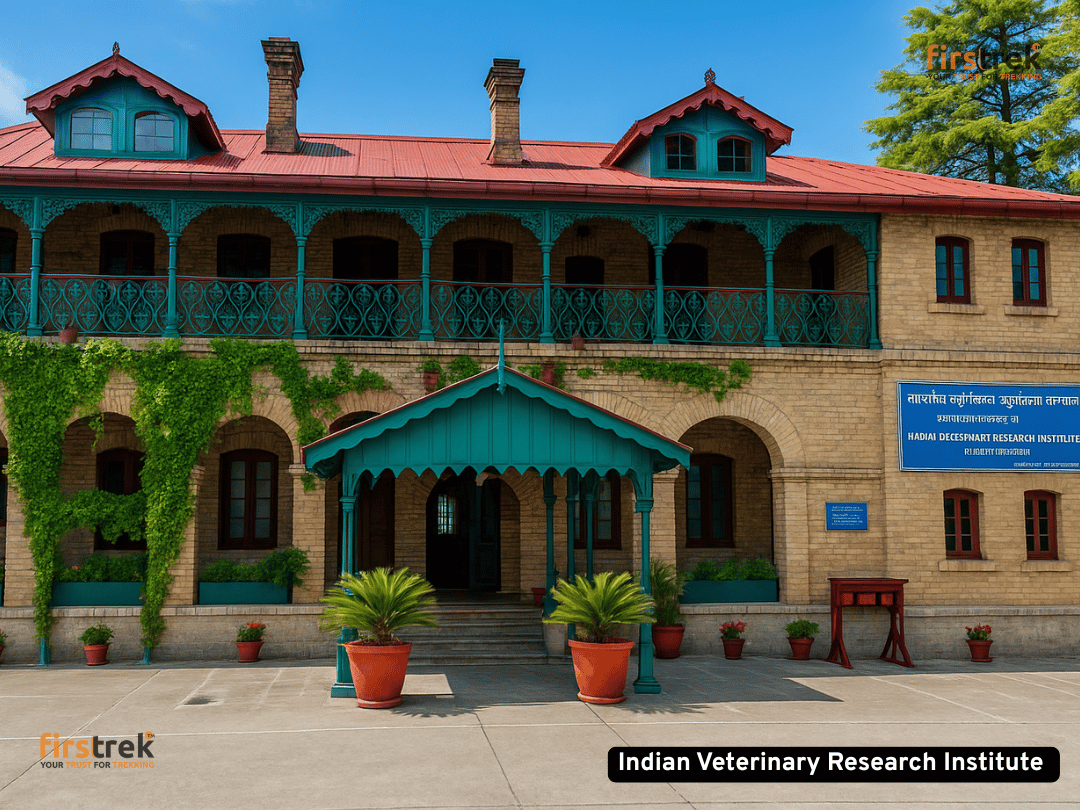
The Indian Veterinary Research Institute (IVRI) campus in Mukteshwar, Uttarakhand, stands as a cornerstone in the history of veterinary science in India. Established in 1893, it originated as the Imperial Bacteriological Laboratory, following recommendations from the Indian Cattle Plague Commission to combat rampant livestock diseases. The laboratory was relocated from Pune to Mukteshwar due to the region's favorable climate and isolation, which were ideal for vaccine preservation and disease research .
The institute played a pivotal role in controlling cattle plague outbreaks during British India.
Robert Koch, the Nobel Prize-winning German microbiologist, is said to have worked here briefly in 1897.
The campus holds a heritage museum, showcasing antique laboratory instruments, including Koch’s microscope.
A stone-carved cold room, used in pre-refrigeration days to preserve cultures and vaccines, is a rare architectural highlight.
The Indian Veterinary Research Institute (IVRI) at Mukteshwar traces its roots back to 1893, when it was established by the British as the Imperial Bacteriological Laboratory. The site was chosen due to its high-altitude isolation—ideal for handling contagious diseases and conducting vaccine research. It played a key role in controlling epidemics like rinderpest (cattle plague) that once ravaged Indian livestock. In 1897, Nobel Laureate Robert Koch, the father of modern bacteriology, is believed to have visited this lab. IVRI Mukteshwar became India’s first major research center for veterinary virology and bacteriology. Over the decades, it has grown into a historic institution of national importance under the Indian Council of Agricultural Research (ICAR).