
Treks by
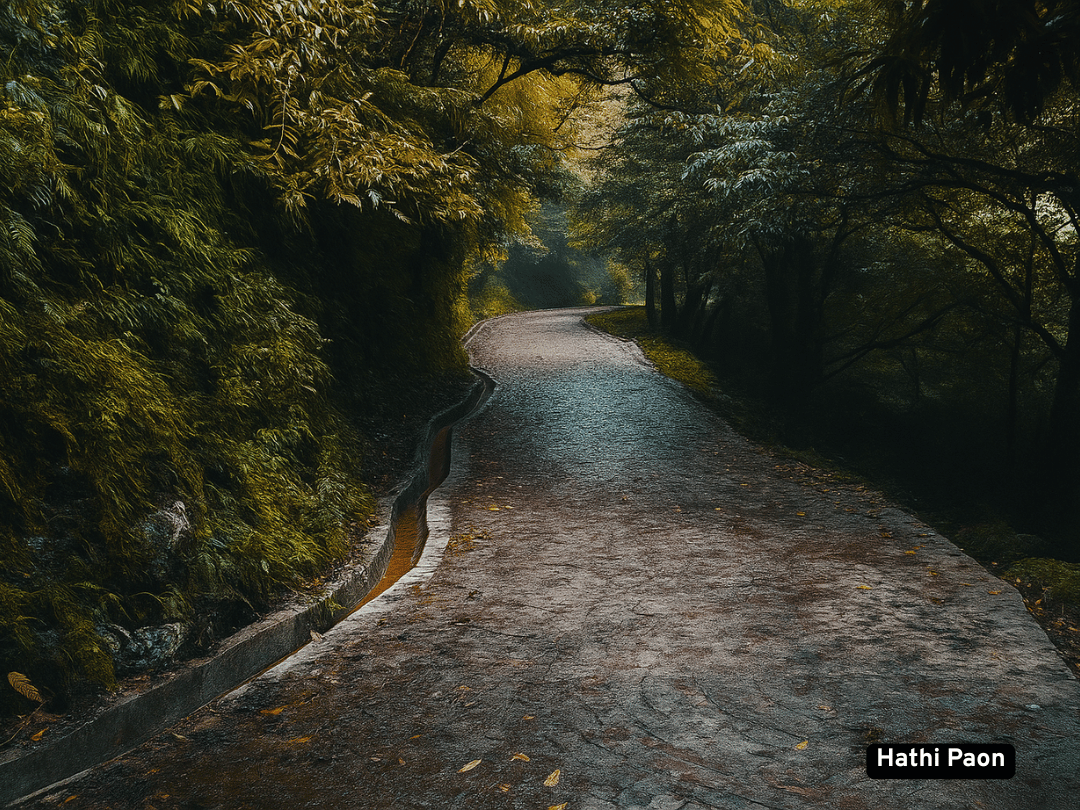
April–June: Pleasant days and clear mornings—ideal for views and outdoor adventures. September–November: Post-monsoon freshness and vibrant foliage with minimal rain. December–February (Winter): Potential snowfall offers scenic charm, but trails/roads may be slippery or inaccessible.
By Road (Taxi / Self-drive): Base: Mussoorie town (Library Bazaar or Gandhi Chowk). Route: A winding, mostly paved road climbs toward Hathi Paon; beyond that, it becomes a muddy dirt track—ideally navigated with high-clearance vehicles or on foot. Car hire from Mussoorie is common, though roads beyond Hathi Paon may be bumpy By Foot (Trek): Starting points: Library Bazaar/Mall Road/Gandhi Chowk → Hathi Paon (4–5 km). Continue uphill to George Everest House (~1 km further). Trail: Moderate incline through oak/deodar forest, roughly 1–2 hours, including short steep stretches; some concrete or dirt path sections Guided walking tours from places like Waverly begin at Hathi Paon, often continuing to Clouds End (~6 km round-trip) Nearest Transport Links: Airport: Jolly Grant Airport, Dehradun (~35 km). Railway: Dehradun Railway Station (~35 km). From either, take a taxi or bus to Mussoorie, then continue to Hathi Paon.
{}
2,005 meters
Hathi Paon, meaning "Elephant’s Foot", is a peaceful and lesser-known hilltop destination located about 4–5 km from Library Bazaar in Mussoorie. Surrounded by dense deodar and oak forests, it offers breathtaking panoramic views of the Doon Valley and the distant Himalayan ranges. Known for its tranquil environment, Hathi Paon is ideal for nature walks, trekking, camping, and photography.
Hathi Paon is one of Mussoorie’s most serene and offbeat attractions, nestled about 5 km from the bustling Library Chowk. Translating to “Elephant’s Foot,” this scenic plateau gets its name from a rock formation that resembles the footprint of an elephant. Surrounded by dense oak and deodar forests, it offers stunning views of the Himalayan ranges and the Doon Valley below.
A popular spot among nature lovers, trekkers, and photographers, Hathi Paon is also the gateway to the historic George Everest House – the former residence and observatory of Sir George Everest, the man after whom the world’s highest peak is named. The short hike to George Everest Peak from Hathi Paon is ideal for those seeking a moderate trail with rewarding views.
British Raj Heritage: Hathi Paon and the surrounding hill slopes were favoured retreats for British officials escaping the plains heat in the 19th century. Its name—literally “elephant’s foot”—stems from local lore that elephants once left deep imprints here, giving the place its evocative title George Everest Estate: Around 1832, Sir George Everest’s Park Estate and observatory were established atop this hill. His house, still preserved here, offers a glimpse into colonial life and ties Hathi Paon to the legacy of the man after whom Mount Everest is named Historic Trails: The plateau is interwoven with colonial-era pathways and nature trails, including ones used during the Great Trigonometric Survey. Today, guided heritage walks trace these paths and recount the stories of British-era surveying expeditions .