
Treks by
June to September is the ideal time to visit Hemkund Sahib. During this period, the snow has melted, the weather is relatively stable, and the trail is open. Avoid: October to May – The region remains covered in snow and the shrine is closed due to harsh weather.
By Air: Nearest Airport: Jolly Grant Airport, Dehradun (~295 km from Govindghat) From the airport, hire a cab or take a bus to Govindghat By Train: Nearest Railway Station: Rishikesh (~270 km from Govindghat) Regular buses and taxis are available to Govindghat By Road to Govindghat: Govindghat is well-connected by motorable roads from major cities like Dehradun, Rishikesh, Haridwar, and Joshimath From Govindghat, begin the trek Trek Route: Govindghat to Ghangaria (13 km): Trek or hire a mule/porter Ghangaria to Hemkund Sahib (6 km): Steep uphill trek through alpine terrain
{}
4,329 meters
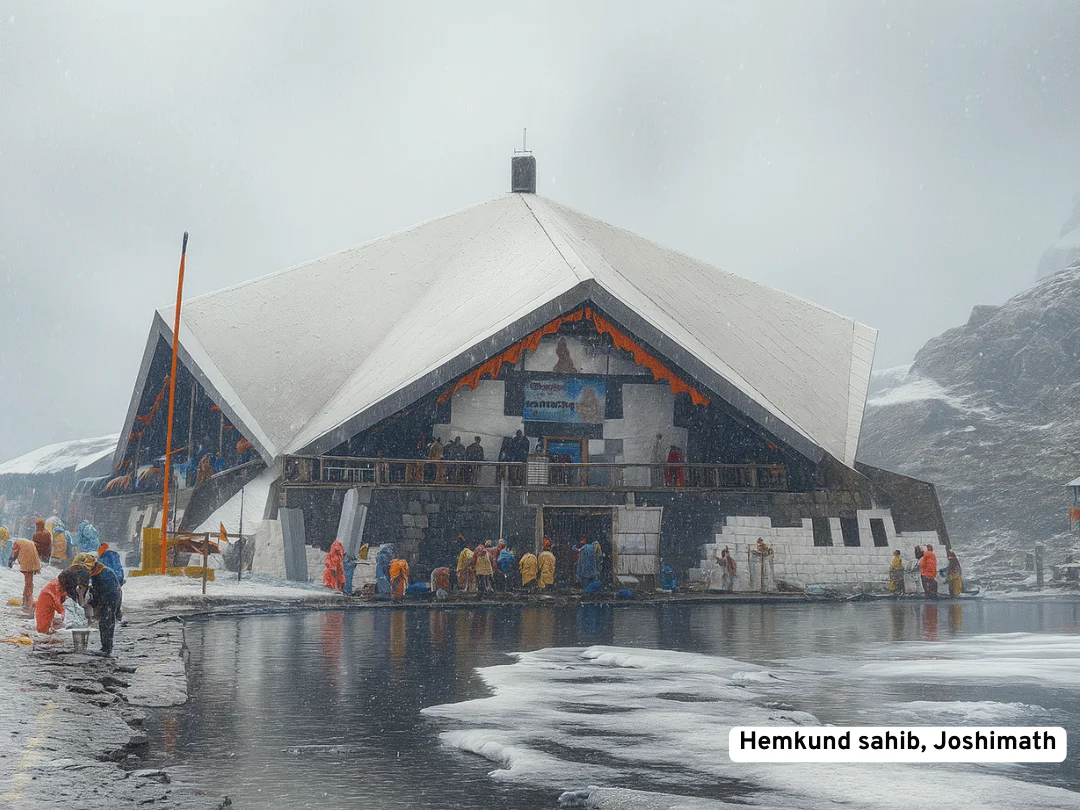
Hemkund Sahib is a revered Sikh pilgrimage site nestled in the Himalayas of Uttarakhand at an altitude of approximately 4,329 meters. Surrounded by snow-clad peaks and a serene glacial lake, it is dedicated to Guru Gobind Singh Ji, the tenth Sikh Guru. The gurudwara, accessible by a challenging trek from Govindghat via Ghangaria, offers spiritual peace and breathtaking natural beauty. Open only from May to October, Hemkund Sahib is visited by thousands each year for both religious devotion and high-altitude adventure.
Hemkund Sahib, also known as Gurudwara Sri Hemkunt Sahib, is one of the most revered Sikh pilgrimage sites in India, located in the Chamoli district of Uttarakhand. Perched at an altitude of approximately 4,329 meters (14,200 ft) above sea level, this spiritual site is nestled amidst the majestic Garhwal Himalayas, beside a pristine glacial lake surrounded by seven snow-capped peaks.
Hemkund Sahib is dedicated to Guru Gobind Singh Ji, the tenth Guru of Sikhism. According to the Bachitra Natak, a poetic autobiography attributed to the Guru, he meditated at this very spot in a previous life. The word "Hemkund" means "Lake of Snow," aptly describing the serene setting where the star-shaped gurudwara stands beside the calm, crystal-clear lake.
Built in the mid-20th century by Sikh organizations, the shrine is managed by the Shri Hemkunt Sahib Management Trust. A Lakshman Temple is also located nearby, believed to be the spot where Lord Lakshman meditated after the Lanka war in the Ramayana.
The journey to Hemkund Sahib is as spiritually fulfilling as it is physically challenging. The trek starts from Govindghat, with a stopover at Ghangaria (13 km), followed by a steep 6 km climb to Hemkund. The trail is well-paved and maintained by volunteers and the trust, with langars (community kitchens) offering free food along the way.
Pilgrims from all over the world undertake this yatra (journey), chanting prayers, singing hymns, and showcasing remarkable devotion despite the rugged terrain and high altitude.
The Hemkund Lake, fed by melting snow, reflects the gurudwara and surrounding peaks, creating a divine visual experience.
Just below the route to Hemkund lies the famous Valley of Flowers, a UNESCO World Heritage Site known for its vibrant alpine flora and rare Himalayan species.
The entire region blooms between June and early October, offering breathtaking views and cool, fresh mountain air.
Hemkund Sahib holds deep spiritual significance in Sikhism. It is believed to be the place where Guru Gobind Singh Ji, the tenth Sikh Guru, meditated in a previous lifetime. This belief is drawn from the Bachitra Natak, an autobiographical composition attributed to the Guru, which mentions a celestial lake surrounded by seven peaks—a description that matches Hemkund. Though the site was recognized as sacred for centuries, it wasn't until the 20th century that a formal gurudwara was built. Led by Sardar Modan Singh, a retired Indian Army havildar, and later managed by the Shri Hemkunt Sahib Management Trust, the modern-day pilgrimage infrastructure was developed. Today, Hemkund Sahib stands as a symbol of faith, perseverance, and high-altitude devotion.