
Treks by
The best time to visit Gurudwara Sahib in Chail is between March and June and September to November, when the weather is pleasant, the skies are clear, and the surrounding forest is lush and peaceful.
By Road: The Gurudwara is easily accessible from Chail town, located just 1–2 km away. Chail is connected by road to Shimla (45 km), Kalka (86 km), and Chandigarh (105 km). By Rail: The nearest railway station is Kalka, well connected to major northern cities. From there, taxis or buses can be taken via Kandaghat to Chail. By Air: The closest airport is Shimla Airport (Jubarhatti), located around 63 km away.
{}
2,250 meters
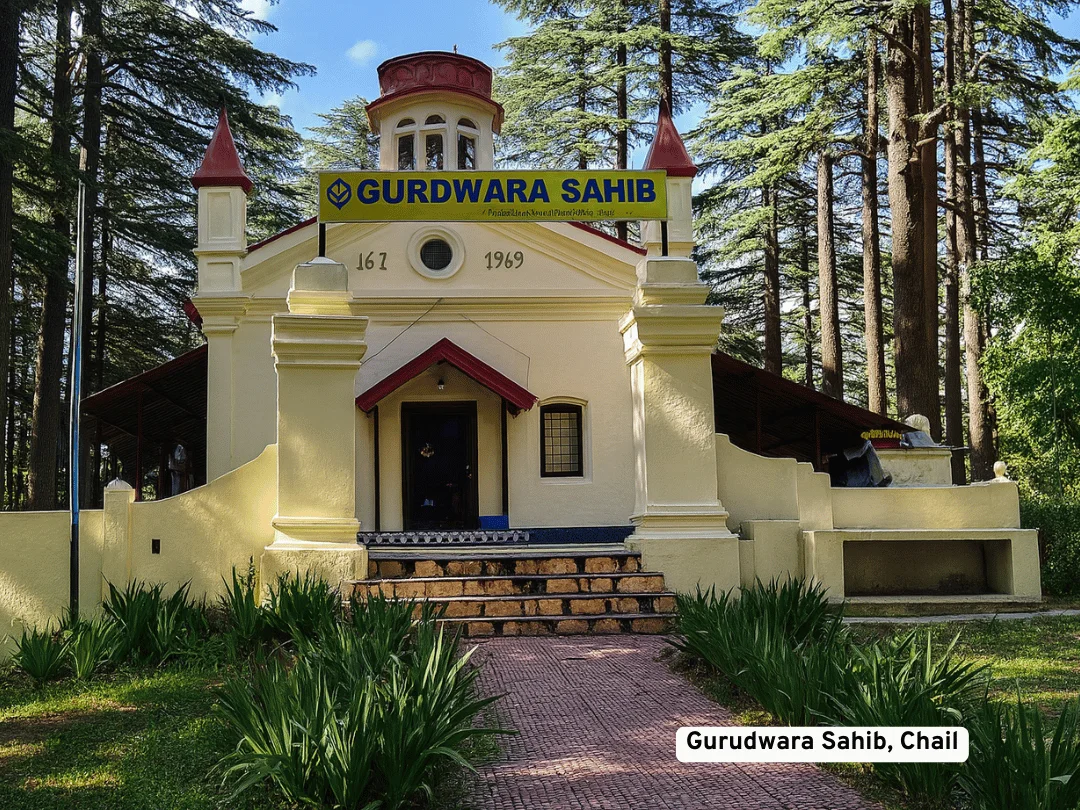
Gurudwara Sahib in Chail is a serene Sikh place of worship nestled amidst the deodar forests of Himachal Pradesh. Built in the early 20th century, the structure features a distinctive colonial-style design with a sloping roof and yellow walls, blending traditional and European architecture. Originally constructed by the Maharaja of Patiala for Sikh soldiers and residents, the Gurudwara has since become a peaceful retreat for visitors of all faiths. It is maintained by the local Sikh community and remains open to everyone, offering a warm langar (community meal) and a space for quiet reflection. Its peaceful setting, spiritual ambience, and historical charm make it a must-visit stop in Chail.
Gurudwara Sahib, located in the tranquil hill town of Chail, Himachal Pradesh, is a serene and spiritually uplifting Sikh shrine that holds historical and cultural significance. Tucked amidst towering deodar and pine trees, the gurudwara offers a peaceful retreat for devotees and travelers alike.
The Gurudwara Sahib was established in the early 20th century by the Maharaja of Patiala, who developed much of Chail after being exiled from Shimla by the British. Built originally to serve the spiritual needs of the Sikh community—especially soldiers and royal staff stationed in the region—the gurudwara was constructed in a colonial-meets-Sikh architectural style, featuring yellow-painted walls, high windows, and a sloping tin roof instead of traditional domes.
Though modest in size, the structure reflects simplicity and strength, symbolizing spiritual resilience and royal patronage. Over the years, the place has grown in significance and is now managed by the local Sikh sangat (community), who maintain it with devotion and care.
Set on a forested hillside, the surroundings of the gurudwara are peaceful, with the crisp mountain air and distant chirping of birds adding to the tranquil experience. The site is not overly crowded, making it an ideal stop for meditation, reflection, or a quiet moment away from the tourist buzz.
As with all gurudwaras, Gurudwara Sahib Chail welcomes people of all faiths and backgrounds. The daily prayer services are held in a simple and soulful manner. Visitors can also participate in langar, the free community meal, which is a hallmark of Sikh hospitality and equality.
Inside, the prayer hall is calm and clean, with the Guru Granth Sahib (holy scripture) placed respectfully at the center. Volunteers (sewadars) maintain the premises and assist guests with kindness and humility.
Gurudwara Sahib in Chail holds both religious and royal significance. It was built in the early 1900s by the Maharaja of Patiala, who played a major role in developing Chail as a hill retreat after his exile from Shimla during the British era. The gurudwara was constructed to serve Sikh soldiers and royal staff stationed in the region. Its colonial-style architecture—with sloping tin roofs and large windows—is a unique feature compared to the traditional domes seen in other Sikh shrines. Over the decades, this gurudwara has grown into a community space for worship, reflection, and service, maintained by local Sikh devotees and volunteers.