
Treks by
March to June and September to November
By Road: Gurdwara Reetha Sahib is approximately 16 km from Lohaghat and around 65 km from Champawat town. It is well connected by road, and taxis or buses are available from Lohaghat. By Train: The nearest railway station is Tanakpur (around 95 km), which is connected to major cities like Delhi and Bareilly. From Tanakpur, one can hire a taxi or board a local bus to reach Lohaghat and then continue to Reetha Sahib. By Air: The nearest airport is Pantnagar Airport (around 180 km). From the airport, taxis can be hired for Lohaghat via Haldwani and Champawat.
{}
600 meters
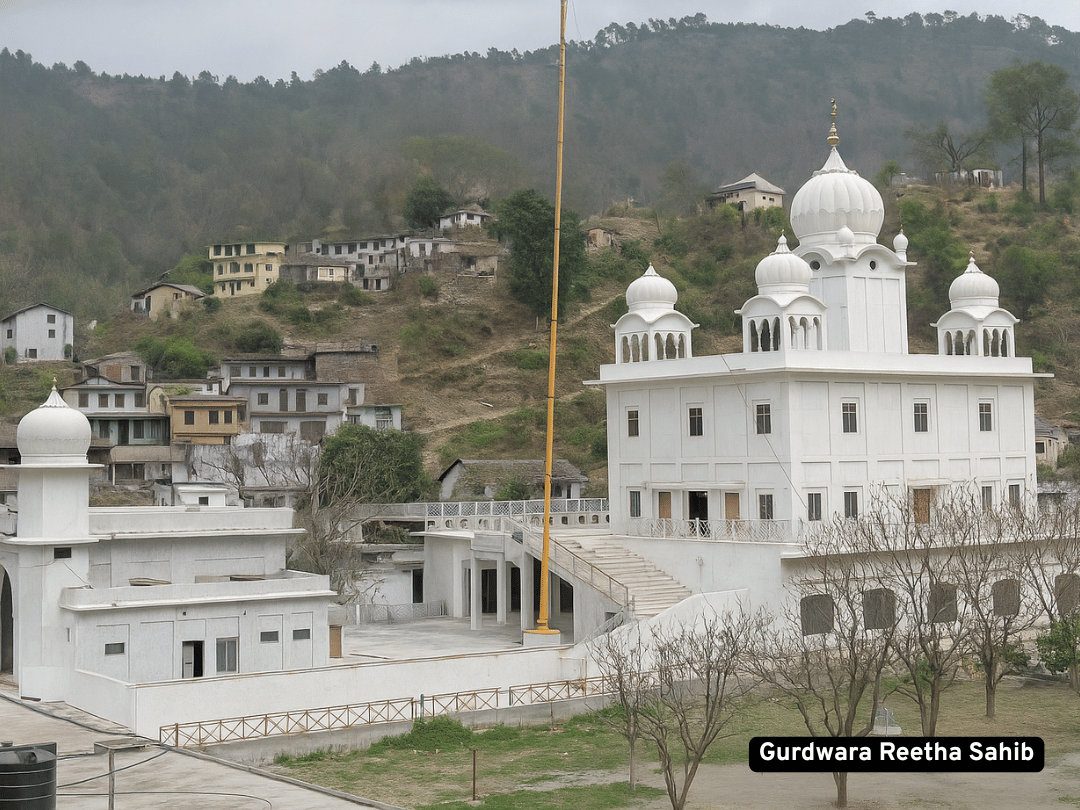
A sacred Sikh pilgrimage site nestled in the serene hills of Champawat, Uttarakhand, Gurdwara Reetha Sahib is renowned for its spiritual aura and the legendary Reetha (soapnut) trees said to have turned sweet by Guru Nanak Dev Ji’s blessing.
Gurdwara Reetha Sahib, located in the peaceful village of Deyuri near Lohaghat in Champawat district, is one of the most revered Sikh pilgrimage sites in Uttarakhand. This serene gurdwara commemorates the visit of Guru Nanak Dev Ji, the first Sikh Guru, during his third Udasi (spiritual journey). Surrounded by pine forests and nestled in the foothills of the Himalayas, Reetha Sahib is a place where spirituality blends beautifully with natural beauty.
The gurdwara is built near the confluence of the Lodhiya and Ratiya rivers and is maintained by the Sikh community. Its name, Reetha Sahib, comes from the soapnut (reetha) trees located near the shrine. According to Sikh tradition, Guru Nanak Dev Ji rested under these trees and miraculously turned the bitter reethas sweet – a few of which are still preserved and offered as Prasad (holy offering) to devotees visiting the gurdwara.
Gurdwara Reetha Sahib holds deep historical and spiritual significance in Sikhism. It is believed that Guru Nanak Dev Ji, the first Guru of the Sikhs, visited this place during his third Udasi (spiritual journey) in the 16th century. During his stay, Guru Nanak Dev Ji engaged in spiritual discussions with local sages and sat under a Reetha (soapnut) tree. When his companion Bhai Mardana felt hungry, Guru Ji asked him to pluck some reethas from the nearby tree. To everyone's surprise, the normally bitter fruits had turned sweet — considered a divine miracle. These sweet reethas are still preserved and distributed as Prasad to devotees. The gurdwara was later built to commemorate this sacred event. It is maintained by the Sikh community and supported by devotees from across India and Nepal.